Fungus could be the insecticide of the future
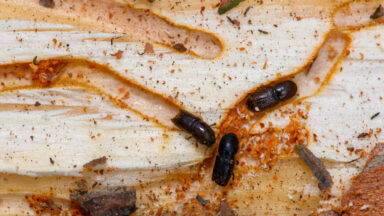
Extermination services are seeing an uptick in requests as wood-eating insects like beetles, termites, and carpenter ants wreak havoc on structures and trees. Traditionally, the battle against these pests has relied on harsh chemical insecticides. However, recent research suggests that certain types of fungi might offer a more natural and effective alternative. One of the most problematic pests is the Eurasian spruce bark beetle (Ips typographus), notorious for its destructive impact on spruce trees. These beetles feast on bark rich in phenolic compounds—organic molecules that serve as antioxidants and antimicrobial agents, providing protection against harmful fungi. Remarkably, the beetles have adapted by enhancing the toxicity of these compounds, making them seemingly immune to fungal infections. Yet, a breakthrough from a research team led by biochemist Ruo Sun at the Max Planck Institute for Chemical Ecology in Jena, Germany, reveals a way to penetrate this defense. Their study, published in PNAS, highlights that specific strains of the fungus Beauveria bassiana can infect and ultimately kill these resilient pests. "Insect herbivores have been known to utilize plant defense metabolites from their diet as a shield against their enemies," Sun explained. "However, as demonstrated with B. bassiana, certain fungal pathogens can bypass these dietary defenses to induce disease." The surge in bark beetle populations in temperate forests has been exacerbated by climate change. Among the trees they target is the Norway spruce (Picea abies), which produces organic phenolic compounds like stilbenes and flavonoids, both vital for their antibacterial and antifungal properties. When beetles metabolize these compounds, they undergo hydrolysis, transforming them into even more potent toxic substances against microorganisms. Despite this, some fungi, including strains of B. bassiana, have shown an ability to neutralize these compounds, leading to successful pest control in natural settings.
Unlocking the Secrets of Quantum Gravity: Can AI Help Physics Make a Leap?
The realm of scientific research is undergoing a profound transformation, fueled by the rapid advancements in artificial...
Business Today | Jul 25, 2026, 24:30
The Shift in Human Cognition: Embracing AI as a Collaborative Tool
As technology continues to evolve, a notable shift is occurring in the relationship between humans and artificial intell...
Business Insider | Jul 25, 2026, 09:50The Boring Company Eyes $4 Billion Funding Boost Amid Expanding Tunnel Ventures
Elon Musk's tunneling enterprise, The Boring Company, is reportedly negotiating a substantial funding round of $4 billio...
TechCrunch | Jul 25, 2026, 19:50
OpenAI's Micro Keypad: A Novelty for Coders or Just a Confounding Gadget?
Last week, OpenAI made its debut in the hardware landscape with the launch of Micro, a stylish keypad designed to integr...
TechCrunch | Jul 25, 2026, 24:40
Reclaiming Control: Librarians Host Workshops to Help People Navigate AI Tools
In a lively library setting in South Philadelphia, Charlie Bailey, a local librarian, humorously noted, "Everybody’s on ...
TechCrunch | Jul 25, 2026, 16:20