The virtuous cycle: Unlocking AI outcomes through better data and integration
In the realm of enterprise AI, the importance of data accuracy cannot be overstated. Manos Raptopoulos, SAP's Chief Revenue Officer for Asia, Europe, and the Middle East, often poses a thought-provoking question: "Have you ever attempted a word count using a generative AI tool?" Currently, these tools can miscalculate by as much as 10%, and even after improvements, that error might only decrease to 5%. Such inaccuracies can have significant repercussions in the business sector, particularly when it comes to financial metrics like EBITDA. Raptopoulos emphasizes that this level of inconsistency can sway analyst expectations and affect company valuations, creating considerable challenges for CFOs who rely on precise numbers. To transition from probabilistic to deterministic outcomes, SAP has integrated AI into its applications, leveraging the most robust business data available. The SAP Business Suite is uniquely positioned to connect all aspects of a customer's operations, enabling tangible business outcomes and comprehensive transformational value. Raptopoulos points out that AI-driven enterprise applications must find a balance between the deterministic nature of machine learning and the probabilistic aspects of generative AI. This is why he champions the need for a diverse and well-governed data pool accessible to enterprises. With SAP serving 84% of the global economy across over 180 countries, the company's expertise in compliance and regulations fortifies its applications, data, and AI capabilities. This convergence creates an unparalleled advantage, according to Raptopoulos, making the SAP Business Suite a pivotal tool for businesses. Addressing data quality has become a priority for IT professionals, as highlighted in the CIO Vision 2025 report, which surveyed 600 CIOs across various sectors. The findings revealed that 72% of respondents regard their data management protocols as either "reactive" or merely "aware," indicating a common misconception that data management is solely a tech partner's responsibility. The performance of AI hinges on the quality of its data, and SAP's extensive data resources are unmatched in the industry. Raptopoulos is committed to helping organizations realize concrete business outcomes by utilizing the SAP Business Data Cloud, which integrates data from both SAP and non-SAP systems. This data is then transformed into a centralized, semantically enriched layer, enabling advanced analytics and AI functionalities. "That last mile is crucial to get right," he asserts. An example of the significant impact of SAP's solutions can be seen with Cirque du Soleil Entertainment Group, which faced challenges in managing manual recordkeeping and travel logistics for thousands of annual trips. By implementing the SAP Business Suite, Cirque du Soleil streamlined its data management, reducing the number of cost objects per tour by nearly 80%. Furthermore, SAP's tools enhanced data integrity and governance, simplifying the management of the intricate costume collections the company designs and produces. Chantale Périgny, the accounts payable manager at Cirque du Soleil, noted, "Our workload is cut in half. Data flows easily and transparently through the system, allowing us to concentrate more on control rather than the process itself." For Raptopoulos, this success story exemplifies what SAP aims to deliver: the capability to navigate complexity, foster innovation, and secure lasting success by integrating applications, data, and AI into a cohesive system. By avoiding a black-box approach where users are left in the dark regarding model training, SAP's Business Data Cloud initiates what Raptopoulos describes as a "virtuous cycle." This cycle begins with high-quality foundational data that expands as customers utilize and trust it, feeding more data back into the ecosystem. This dynamic not only encourages innovation but also empowers users to explore new AI applications to address challenges by uncovering insights from extensive data sets. SAP's AI copilot, Joule, enhances this process by providing contextual understanding when responding to customer inquiries. Raptopoulos explained the significance of context in these interactions, highlighting that a well-trained generative AI model should quickly grasp the nuances of each situation. The insights gained from these interactions save both time and money, fueling growth momentum. When context and semantics align, businesses can fully harness the potential of AI, creating a virtuous cycle where enhanced data leads to more effective model training and the development of meaningful applications.
Midjourney Expands Horizons with Acquisition of Co-Star Astrology App
In a significant move to diversify its offerings, Midjourney, the AI lab renowned for its innovative image and video gen...
TechCrunch | Jul 24, 2026, 15:25
Tech Giants Unite to Advocate for Open-Weight AI Models Amid Regulatory Concerns
A coalition of major technology companies, including Nvidia, Microsoft, Meta, and Palantir, has issued a call to action ...
CNBC | Jul 24, 2026, 14:30
Elon Musk's Ambitious Leap: Can Tesla's Optimus Robot Revolutionize Work and Life?
Elon Musk has transformed Tesla into a leading automotive giant, but now he is staking the company's future on a groundb...
Business Insider | Jul 24, 2026, 09:10Blinkit Rises to Challenge Amazon in E-Commerce Landscape
In an impressive leap forward, Blinkit has significantly increased its operational scale, with the cost to establish a s...
Business Today | Jul 24, 2026, 09:35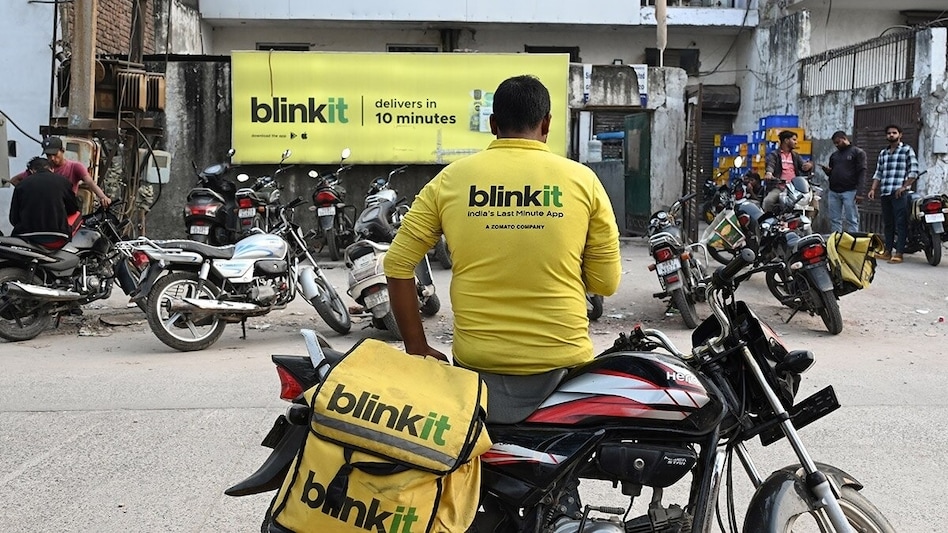
India Takes Action Against Jack Dorsey's Bitchat App Amid Protests
In a significant move, India's cybercrime agency, the Indian Cyber Crime Coordination Centre (I4C), has mandated GitHub ...
Business Today | Jul 24, 2026, 10:25