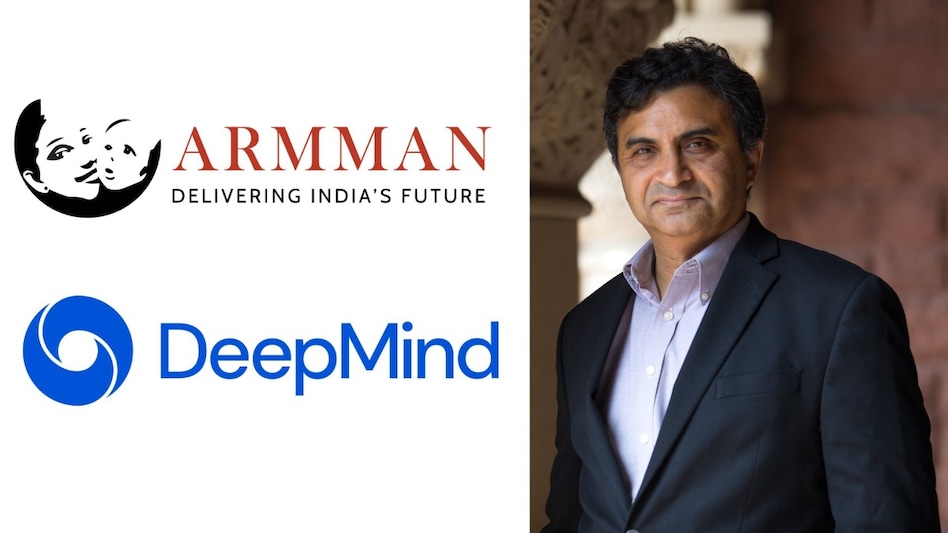
How AI is revolutionising maternal health: A conversation with Google DeepMind's Dr Milind Tambe
In today's tech landscape, laden with the buzz of generative tools and profit-driven innovations, a quieter yet impactful transformation is taking place. At the forefront of this movement is Dr. Milind Tambe, the Director of AI for Social Good at Google DeepMind. Collaborating with ARMMAN, a Mumbai-based nonprofit dedicated to maternal and child health, his team is employing advanced machine learning models to address a pressing public health crisis in India: maternal mortality. Dr. Tambe shared the origins of this initiative during a conversation that took place at a Starbucks in Mumbai. He recalled how Dr. Aparna Hegde, the founder of ARMMAN, informed him about the significant challenges their organization faced, particularly the alarming drop-off rates in maternal health programs like mMitra. This dialogue led to a partnership that is now making a tangible difference in the lives of many women across India. The mMitra program has been instrumental in delivering crucial health information to expectant and new mothers through regular voice calls. However, data indicated a troubling trend: 30-40% of women were disengaging prematurely, particularly those at higher risk. To combat this issue, Dr. Tambe's team developed a predictive AI model designed to identify these high-risk participants, facilitating targeted support. "We managed to lower the drop-off rate by approximately one-third for the most vulnerable mothers," Dr. Tambe explained. He highlighted that these women showed a marked improvement in adopting healthier behaviors, such as taking iron and calcium supplements, attending check-ups, and accurately monitoring their babies’ weight. A recent evaluation corroborated these findings. Among the women identified by the AI model as needing extra assistance, there was a 22% increase in the likelihood of taking iron supplements, a 28% rise in calcium intake, and a 9% improvement in tracking infant health metrics. Encouraged by these results, the partnership expanded to include 'Kilkari', a government-supported initiative that sends weekly health messages to pregnant and postpartum women across India. With over 60 million beneficiaries across 27 states, Kilkari has become the largest mobile-based maternal health information program globally. However, unlike mMitra, Kilkari initially lacked detailed demographic data about its users, relying solely on one behavior: the timing of phone calls. Dr. Tambe noted, "At first, it may seem like minimal information, but we discovered discernible patterns. Some women consistently answered calls in the morning, while others preferred evenings. By analyzing these behaviors, we could personalize call times to enhance engagement." A pilot study conducted in Odisha revealed compelling results. By optimizing call timings based solely on this behavioral data, there was a 12% increase in pickup rates during specific time slots. "This small adjustment could have significant implications," Dr. Tambe remarked. "Improved pickup rates mean that more women receive potentially life-saving information." For Dr. Tambe, the successes of Kilkari and mMitra extend beyond technological achievements. They serve as vital examples of how AI can be integrated thoughtfully and ethically into public health initiatives. He summarizes the key takeaways from their experience into three principal lessons for other AI practitioners: 1. **Strong Partnerships**: “AI cannot simply be introduced into communities. We relied on ARMMAN’s insights, their call center staff, and medical expertise. It’s a genuine collaboration.” 2. **Interdisciplinary Collaboration**: “We merged expertise from computer science, public health, and social sciences. AI alone does not solve problems; it requires human intervention.” 3. **Frugal AI**: “We adapted our approach to work within limited data and computational resources. This isn’t a challenge unique to Silicon Valley; we created efficient models that function effectively in resource-constrained settings.” This frugality and contextual awareness also enhance data privacy. As Dr. Tambe emphasized, Kilkari does not utilize any personal data—no age, income, or education levels are considered. The approach is purely behavioral, maintaining anonymity and privacy. While the team continues to focus on scaling Kilkari, Dr. Tambe envisions vast opportunities for similar AI applications on a global scale. He believes that AI could significantly optimize public health systems, from vaccine distribution to emergency response planning. "Healthcare systems worldwide face limitations, whether it's staffing shortages, limited hospital capacities, or inadequate outreach. AI can enhance these systems by prioritizing where to send medical personnel or structuring health campaigns more effectively. It’s about maximizing resources." Dr. Aparna Hegde echoed this vision, stating, "AI has proven to be a catalyst for progress. We’re not just tackling a health issue; we are also contributing to India’s national goals of reducing maternal and child mortality, which fills me with great hope." Dr. Tambe shares this optimism, stating, "There’s much work ahead, but we have already witnessed the potential of combining thoughtful technology with compassionate fieldwork. When used appropriately, AI is a profoundly human tool." As India strives to achieve its Sustainable Development Goals, the integration of AI into public health may not only be beneficial but also essential.
AI Giants Clash in Super Bowl Ads: Humor vs. Inspiration
As the Super Bowl approaches, the competition between AI titans is heating up with their respective advertisements takin...
Business Insider | Feb 09, 2026, 24:35Waymo's $16 Billion Gamble: Can It Thrive in the Robotaxi Race?
Welcome to the latest update on the evolving landscape of transportation. Waymo, a subsidiary of Alphabet, has seen rema...
TechCrunch | Feb 08, 2026, 17:40
Navigating the New Risk Landscape: Cybersecurity and AI Governance Challenges for Indian Businesses
A recent survey conducted by FICCI and EY highlights the pressing risks that Indian companies face, particularly in the ...
Business Today | Feb 08, 2026, 05:50
Anthropic's Daniela Amodei Advocates for Human Skills in the Age of AI
In a rapidly evolving technological landscape, Anthropic's Co-Founder and President, Daniela Amodei, is championing the ...
Business Today | Feb 08, 2026, 17:10
Empowering the Next Generation: A Father's Journey into AI Education
In today's rapidly evolving technological landscape, understanding artificial intelligence (AI) is becoming essential fo...
Business Insider | Feb 09, 2026, 24:10