How companies can use AI to identify gaps in their workforce talent and skills
As businesses strive to keep pace with technological advancements and evolving market demands, the necessity for a skilled workforce is more pronounced than ever. Many organizations are turning to artificial intelligence to identify and address talent and skills deficits within their teams. According to Lauren Winans, CEO of Next Level Benefits, AI can uncover significant patterns and gaps, allowing companies to benchmark their current workforce skills against the changing needs of the industry. While the concept of leveraging AI in human resources is not entirely novel, Will Howard, an HR trends expert at McLean & Company, emphasizes that AI enhances the feasibility and efficiency of this process through automation. HR professionals possess vast amounts of data—including job postings, performance evaluations, and employee training records—that can reveal critical skill gaps, notes Sanmay Das, Associate Director of AI for Social Impact at Virginia Tech. However, the quality of this data is paramount. Winans cautions that organizations must prioritize "good data hygiene" to ensure the information used in AI analyses is accurate and up to date. George Denlinger, operational president of US technology talent solutions at Robert Half, echoes this sentiment by highlighting that without reliable data, AI insights may be misleading. To effectively utilize AI, companies should establish standardized processes for data collection and management. This may involve creating consistent job descriptions that detail the required skills and knowledge, which will enable AI to make precise comparisons. Large language models such as ChatGPT can assist in summarizing data, but Howard suggests that specialized HR-focused AI tools, like Workday and Disco, are often necessary for deeper insights. AI tools can significantly enhance workforce planning by evaluating existing data to pinpoint strengths and weaknesses. For example, with access to employee performance data on specific projects, AI can suggest the necessary skills or roles to meet future organizational demands. Winans points out that AI can also assess employees' training histories to determine their potential for upskilling or reskilling. IBM exemplifies the effective use of AI by employing a system that analyzes employees' digital activities to assess their skills and predict proficiency levels. This analysis informs personalized educational opportunities and career coaching, ultimately increasing employee engagement by 20% in 2024. Despite its capabilities, AI may miss the subtleties that contribute to job success, such as unlisted tasks or essential soft skills, according to Das. Organizations must also address concerns regarding data privacy and the potential impact on employee roles. Winans advises transparent communication about how employee data will be utilized. The challenge of data literacy remains significant; HR teams must understand how to interpret AI results. Howard emphasizes that even the most advanced AI requires human insight to contextualize findings and inform actionable steps. The skills gap analysis performed by AI should guide decisions regarding new role creation and necessary training for current employees. Winans highlights that skill requirements are constantly evolving, making the use of AI to identify skill gaps an ongoing process rather than a one-off audit. While AI can effectively track these gaps, Denlinger notes that its application is still developing. Howard cautions against viewing AI as a quick fix, reiterating that organizations need to maintain foundational practices—such as clean data management and employee technology confidence—before AI can truly elevate workforce planning and data analysis.
From Code to Concrete: A Developer's Leap into Blue-Collar Work
Brian Gordon, once a passionate coder, found himself confronting an unexpected career shift after his job as a frontend ...
Business Insider | Jul 11, 2026, 09:15OpenAI Shifts Focus to Family-Centric AI Experiences
In a significant pivot, OpenAI is expanding its target audience from individual users to families as it seeks to enhance...
TechCrunch | Jul 11, 2026, 14:30
HDFC Bank Unleashes 'Neev': A Game-Changer in AI-Driven Banking
HDFC Bank is making a significant leap into the realm of artificial intelligence (AI) with the unveiling of 'Neev', its ...
Business Today | Jul 11, 2026, 07:30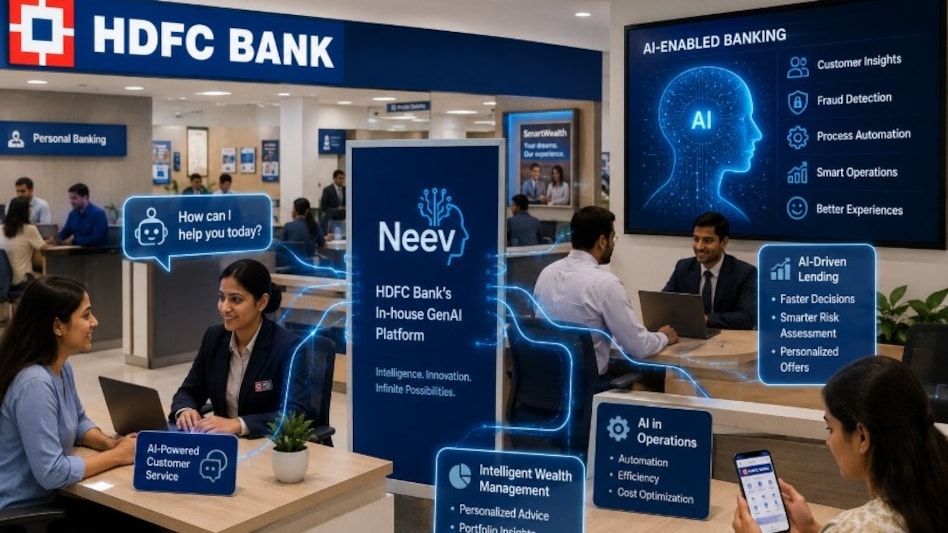
CISA Faces Setback After Lacking Prepared Cyber Incident Response Plan
The U.S. Cybersecurity and Infrastructure Security Agency (CISA) has revealed that it was unprepared to handle a signifi...
TechCrunch | Jul 11, 2026, 01:20
Kalshi's Innovative Management Structure: A Deep Dive into its Unorthodox Approach
At Kalshi, an emerging leader in the prediction market sector in the U.S., a strikingly unconventional management style ...
Business Insider | Jul 11, 2026, 13:15