Value Over Volume: How communicators can drive greater outcomes in an AI-led world
In today's fast-paced landscape shaped by artificial intelligence, communication leaders are finding new ways to maximize their impact. While AI enables teams to generate vast amounts of content at remarkable speed, the challenge lies in ensuring that this output resonates with audiences on a deeper level. Moira Gilchrist, Chief Communications Officer at Philip Morris International (PMI), emphasizes that the focus should not solely be on producing content quickly but rather on achieving meaningful outcomes. She advocates for a strategic approach that fosters a better understanding of audiences and aligns messages with public expectations. In a world where trust is becoming increasingly elusive, communicators must prioritize substance over sheer volume. Recent studies highlight a growing skepticism among consumers, with a 2024 Salesforce survey revealing that 72% of individuals have less trust in companies than a year ago. With 60% attributing this decline in trust to advancements in AI, the need for organizations to build genuine credibility is more critical than ever. Companies are encouraged to prioritize insightful communication that contributes positively to the conversation, rather than merely chasing metrics. Interestingly, while AI has facilitated a significant increase in content production—over 56% following the launch of ChatGPT—this does not automatically translate to credibility. A 2025 Raptive study found that nearly half of readers viewed AI-generated content as less trustworthy, and 60% felt a diminished emotional connection, resulting in a 14% drop in purchase intent. Gilchrist points out that the true potential of AI in communications lies in its ability to enhance understanding. When employed thoughtfully, AI can illuminate how various audiences interpret complex issues, providing a solid foundation for informed communication strategies. She believes AI should facilitate deeper listening, enabling communicators to engage more meaningfully with their audiences. This approach can manifest in various ways: leveraging feedback to evaluate which messages resonate, analyzing audience discussions around scientific topics for clearer communication, or identifying trusted channels for outreach. In an age where AI can generate a multitude of ideas, the real challenge is discerning which messages matter most and employing smart listening strategies. Ultimately, the success of communication in this AI-driven era hinges on human skills such as creativity, empathy, and connection. As Gilchrist aptly states, true progress requires innovative thinking and the willingness to take risks that may not seem intuitive. While AI can provide a wealth of options, it is the human element that drives impactful communication forward. Discover how PMI is leading the way in innovation and progress to create meaningful impact.
Unlocking the Secrets of Quantum Gravity: Can AI Help Physics Make a Leap?
The realm of scientific research is undergoing a profound transformation, fueled by the rapid advancements in artificial...
Business Today | Jul 25, 2026, 24:30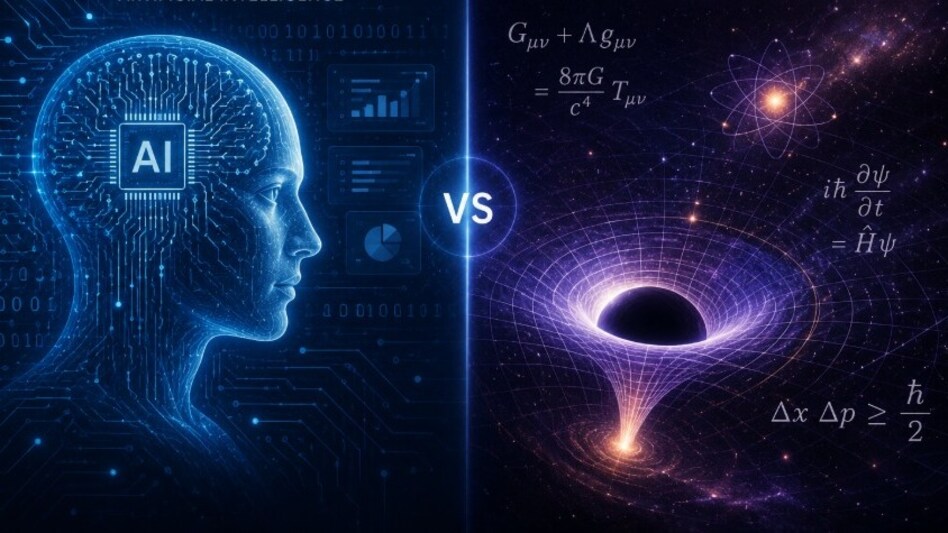
Market Turbulence: Four Key Factors Impacting Stocks This Week
This past week has been challenging for the stock market, driven by several significant forces that have created turbule...
CNBC | Jul 25, 2026, 20:05
Nvidia Strikes Major Deal with SK Hynix to Secure AI Memory Supply
Nvidia has successfully forged a significant partnership with South Korea's SK Hynix to secure memory supplies essential...
CNBC | Jul 25, 2026, 05:15
The Elusive Phineas Fisher: The Hacktivist Who Took Down Spyware Giants
In the realm of cybersecurity, few figures are as intriguing as Phineas Fisher, a hacker who has evaded capture for near...
TechCrunch | Jul 25, 2026, 21:00
Crisis Averted: Power Line Failure Highlights Urgent Need for Data Center Resilience
A power line failure near Washington, DC, recently showcased a significant challenge faced by the electrical grid due to...
TechCrunch | Jul 25, 2026, 13:50