
Group14 opens factory to produce battery materials for flash charging EVs
The excitement surrounding silicon anode batteries is reaching new heights among electric vehicle (EV) enthusiasts and high-demand smartphone users alike. These innovative batteries promise to enhance energy density significantly while reducing charging times. Various companies have been investing in silicon anodes over the past decade, and their technology is beginning to infiltrate consumer electronics. For instance, wearable technology company Whoop utilizes materials from Sila, while Group14's batteries are already featured in several smartphones. However, the true potential lies within the EV sector, which is vastly larger than consumer electronics, as noted by Benchmark Minerals. To penetrate this lucrative market, startups must scale up production of silicon anode materials substantially. In a significant move, Group14 announced that it has commenced operations at its new BAM-3 factory located in South Korea. This facility is designed to produce up to 2,000 metric tons of silicon battery materials each year, translating to about 10 gigawatt-hours of energy storage, sufficient for powering around 100,000 long-range electric vehicles. Rick Luebbe, co-founder and CEO of Group14, emphasized the importance of this development, stating, "It’s a big deal for us, and I think it’s a big deal for the industry, too." The BAM-3 factory originated as a partnership between Group14 and SK, a prominent Korean battery manufacturer. While SK initially held a 75% stake in the project, it sold its share to Group14 last summer due to financial challenges and a shift in strategic priorities. Luebbe noted, "It did open up a great opportunity for us to acquire it from SK." Group14 has been collaborating with several key players in the industry, including Porsche’s battery division, Cellforce Group, StoreDot, Molicel, and Sionic. Notably, Porsche has invested in Group14 through its venture capital arm. Traditional battery designs typically utilize carbon as the anode material, which is adequate but falls short compared to silicon. Silicon can hold up to ten times more lithium ions, yet it has faced durability issues, such as swelling and crumbling during repeated charge cycles. To tackle these challenges, Group14 employs a robust carbon scaffold that secures tiny silicon particles in place, mitigating the risks of swelling and degradation. This innovative structure features nanoscale openings that facilitate the movement of lithium ions and electrons, enabling faster charging without compromising the anode's integrity. Some of Group14's partners, like Sionic, are leveraging silicon anodes to enhance energy density by as much as 50%. Others, such as Molicel, are focused on harnessing the rapid charging capabilities of silicon, with designs capable of fully charging a battery in just 90 seconds. This advancement could significantly transform the EV market. Chinese EV manufacturer BYD recently unveiled a new battery pack with the capability to charge from 10% to 70% in only five minutes. Luebbe speculated that BYD is likely utilizing silicon-carbon technology in its battery design. If charging infrastructure evolves to support such rapid charging, the issue of range anxiety may soon become obsolete. Currently, automakers strive to achieve a range of 300 to 400 miles, which necessitates larger batteries that can increase costs and vehicle weight. However, with advancements in flash charging technology, the possibility of reducing battery size and weight could become a reality, leading to more cost-effective solutions. Luebbe remarked, "I’ve got a Rivian with a 130 kilowatt-hour battery in it, which is ungodly expensive," emphasizing the potential for more efficient designs. As flash charging technology progresses, concepts like inductive charging at traffic lights, which may seem far-fetched today, could become achievable, making the need for regular charging a distant memory.
Finland Unveils World's Largest Sand Battery to Tackle Renewable Energy Challenges
In a groundbreaking move to address the critical issue of renewable energy intermittency, a small town in southern Finla...
CNBC | Jul 25, 2026, 05:35
Unleashing the Power of AI: The 5 Smartphones Redefining Mobile Photography
Artificial Intelligence (AI) is transforming our daily experiences, permeating various aspects of technology, including ...
Business Today | Jul 26, 2026, 07:05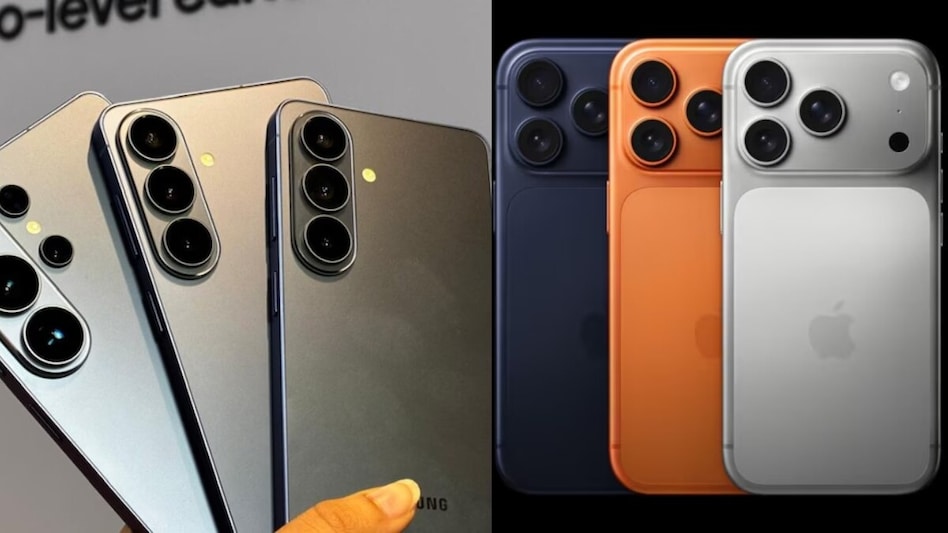
Linux Creator Challenges Developers: Embrace AI or Fork Off!
In a recent discussion surrounding the use of AI in software development, Linus Torvalds, the founder of Linux, voiced h...
Business Insider | Jul 26, 2026, 13:10Navigating the AI Landscape: Insights from a Former OpenAI Intern
As the demand for expertise in artificial intelligence surges, many are seeking ways to break into this dynamic field. H...
Business Insider | Jul 26, 2026, 10:10Reclaiming Control: Librarians Host Workshops to Help People Navigate AI Tools
In a lively library setting in South Philadelphia, Charlie Bailey, a local librarian, humorously noted, "Everybody’s on ...
TechCrunch | Jul 25, 2026, 16:20