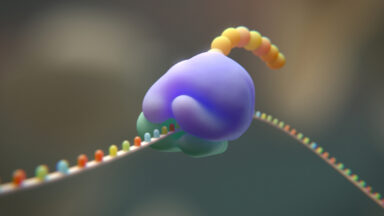
Researchers try to cut the genetic code from 20 to 19 amino acids
The genetic code is fundamental to life as we know it, utilizing sets of three DNA bases to encode a total of 20 amino acids. Despite extensive research revealing no significant exceptions to this rule, scientists believe this genetic framework dates back to the earliest common ancestor of all life on Earth. However, the origins of this genetic code remain a subject of intense speculation among researchers. A collaborative team from Columbia University and Harvard University has embarked on an ambitious project to investigate the potential of reducing the genetic code from 20 to 19 amino acids. Their initial experiment involved engineering a segment of the ribosome that operates without one essential amino acid: isoleucine. But why pursue this line of research? Traditionally, efforts in genetic code modification have focused on expanding the code to include more than 20 amino acids for enhanced biochemical applications. The researchers theorize that before the last common ancestor, organisms may have utilized a variety of genetic codes, incorporating a mix of proteins and catalytic RNAs to facilitate their metabolic processes. While there has been considerable research into catalytic RNAs, the possibilities of chemistry with a diminished genetic code remain largely unexplored. The team believes that advancements in artificial intelligence have now made it feasible to redesign proteins to function with fewer amino acids, a task that was significantly more challenging just a few years ago. Isoleucine, along with leucine and valine, belongs to a group of three structurally similar amino acids. These amino acids share a branched carbon and hydrogen composition that renders them hydrophobic, typically positioning them within the protein's interior to avoid the cellular aqueous environment. Consequently, logically eliminating one of these amino acids appears to be a promising avenue for further investigation.
New Safety Rules on the Horizon for Vehicle Exit Mechanisms Following Tesla Incidents
U.S. safety regulators are set to establish new standards aimed at ensuring that both drivers and passengers can safely ...
TechCrunch | Jul 23, 2026, 20:40
OpenAI's Latest Launch Sends Shockwaves Through Software Stocks
In a striking move, OpenAI has significantly impacted the software industry with its recent unveiling of a new enterpris...
Business Insider | Jul 23, 2026, 22:30Divorce Drama: Tech Mogul's Ex-Wife Faces Setback in AI Wealth Battle
The surge in wealth from the booming AI industry is reshaping fortunes, yet the former spouse of one of South Korea's le...
CNN | Jul 24, 2026, 05:45
Amazon Implements New Labeling Requirement for AI-Generated Images Following New York Legislation
In response to a recent New York law aimed at enhancing transparency in advertising, Amazon has announced a new policy r...
CNBC | Jul 24, 2026, 24:45
Strategic Payroll Solutions: Preparing for Future Growth
As businesses evolve, so do their payroll needs. Consider a mid-sized company that, after implementing a payroll system ...
Business Insider | Jul 23, 2026, 21:15