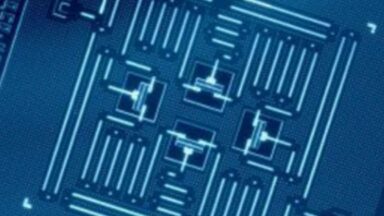
2025 Nobel Prize in Physics awarded for macroscale quantum tunneling
The 2025 Nobel Prize in Physics has been granted to John Clarke, Michel H. Devoret, and John M. Martinis for their pioneering work on macroscopic quantum tunneling and energy quantization in electrical circuits. During a recent press briefing, the Nobel committee highlighted that the laureates' discoveries pave the way for advancements in next-generation quantum technologies, such as quantum cryptography, quantum computing, and quantum sensors. The three scientists will share a prize of $1.1 million (approximately 11 million Swedish kronor), with the official award ceremony scheduled for December 10, 2025, in Stockholm. "To say it was a surprise would be an understatement," Clarke remarked during a phone call with reporters following the announcement. He emphasized that their findings are fundamentally linked to the principles of quantum computing, although he admits the precise implications of their work are still unfolding. The journey into the mysterious world of subatomic particles began in the early 20th century, revealing a reality where classical physics' deterministic laws give way to uncertainty. In this probabilistic realm, phenomena that seem impossible at a larger scale frequently occur. A prime example is the ability of subatomic particles to 'tunnel' through barriers that would otherwise be insurmountable. To visualize this, consider an electron as a water wave attempting to climb over a high barrier; even if its wave is shorter than the barrier, there remains a slight chance it can pass through. This phenomenon, known as quantum tunneling, has been validated through extensive experimentation. In the 1950s, researchers established a scenario where an electron flow encounters an energy barrier, causing some electrons to stop due to insufficient energy to overcome the obstacle. However, contrary to expectations, certain electrons managed to tunnel through the barrier, defying conventional understanding.
Revolutionizing Office Automation: Prentis Aims to Secure $100 Million in Funding
Prentis, a newly established AI research lab, is making waves in the tech industry as it prepares to raise $100 million ...
TechCrunch | Jul 25, 2026, 24:00
SpaceX Successfully Tests Starship Rocket, Launching New Era of Space Exploration
On Friday evening, SpaceX executed a significant milestone by launching its colossal Starship rocket from its facility i...
CNBC | Jul 25, 2026, 24:10
Volkswagen Engineers Indicted for Insider Trading Linked to Rivian Partnership
In a significant legal development, the U.S. Department of Justice has brought securities fraud charges against two engi...
TechCrunch | Jul 24, 2026, 20:30
Unlocking the Secrets of Quantum Gravity: Can AI Help Physics Make a Leap?
The realm of scientific research is undergoing a profound transformation, fueled by the rapid advancements in artificial...
Business Today | Jul 25, 2026, 24:30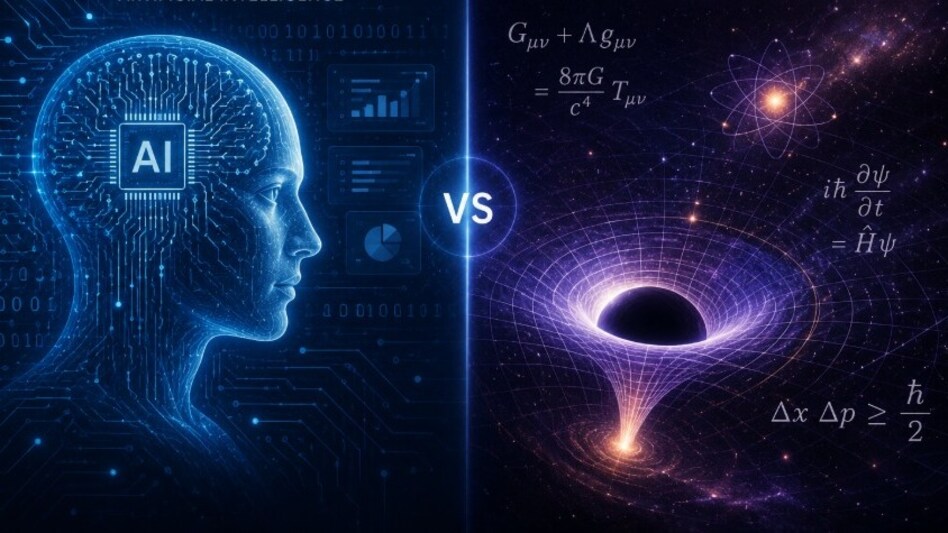
SpaceX's Latest Starlink Launch Marks Milestone Amid Booster Setbacks
On Friday, SpaceX marked a significant achievement by successfully launching its first batch of third-generation Starlin...
TechCrunch | Jul 24, 2026, 23:40