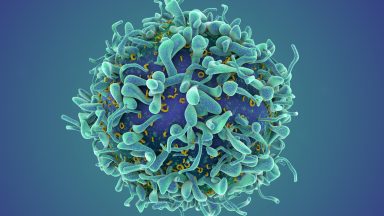
A revolutionary cancer treatment could transform autoimmune disease
At 49 years old, Jan Janisch-Hanzlik found her life profoundly affected by multiple sclerosis, which severely limited her freedom and ability to engage with her family. Transitioning from an active nursing career to a desk job, she faced challenges such as frequent falls that made her apprehensive about carrying her grandchildren. The prospect of needing a wheelchair loomed large, prompting a move to a larger home to accommodate her fears. Despite trying the most advanced medications available, Janisch-Hanzlik's condition showed little improvement, leaving her worried about the future. When she discovered a CAR T cell therapy trial at the University of Nebraska Medical Center in Omaha, she took action. Living near Blair, she contacted the clinic every couple of months until she was finally accepted as the first patient in the study. Originally developed to combat cancer by reprogramming patient immune cells, CAR T therapy is now being tested in numerous clinical trials for various autoimmune diseases, including multiple sclerosis, lupus, and Graves’ disease. The innovative treatment aims to replicate its success in blood cancers by targeting and destroying the rogue cells responsible for attacking the body in autoimmune disorders. If successful, CAR T therapy could effectively reset the immune system to a healthier state, akin to what it was before the disease manifested. However, this promising approach is accompanied by significant risks and uncertainties. Questions linger regarding its efficacy for autoimmune conditions, the duration of any positive effects, and potential long-term side effects. As Janisch-Hanzlik prepared to receive the experimental treatment on June 9, 2025, she experienced a whirlwind of emotions—hope intertwined with fear. She knew that the following week would involve close monitoring for side effects, including the risk of severe inflammation. With the stakes high, she embraced this new chapter in her battle against multiple sclerosis, holding onto the hope that this revolutionary therapy could change her life for the better.
Uber and Nuro Kick Off Driverless Trials for Lucid Robotaxis Ahead of 2027 Launch
Uber and Nuro have officially launched their driverless testing phase for the Lucid Gravity SUVs on the streets of the S...
TechCrunch | Nov 24, 2026, 17:15
Investing in the Future: Solar and Battery Solutions for AI Data Centers
The challenge of powering AI data centers has emerged as a pivotal issue in the current technological landscape. Over th...
TechCrunch | Nov 24, 2026, 16:25
Staggering Recovery Rates Highlight Digital Payment Fraud Challenges
The battle against digital payment fraud continues to be an uphill struggle for consumers, with official data revealing ...
Business Today | Nov 24, 2026, 09:30
Revolutionizing Cybersecurity: AI's Role in Modern Threat Detection and Defense
As businesses increasingly embrace digital transformation and artificial intelligence, the complexity of cybersecurity t...
Business Today | Nov 24, 2026, 08:30
Mathematicians React to Controversial Joke Over Lengthy Proof of Riemann Hypothesis
Tensions are rising in the mathematical community following a controversial comment made by Levent Alpöge, a researcher ...
Business Insider | Nov 24, 2026, 17:30