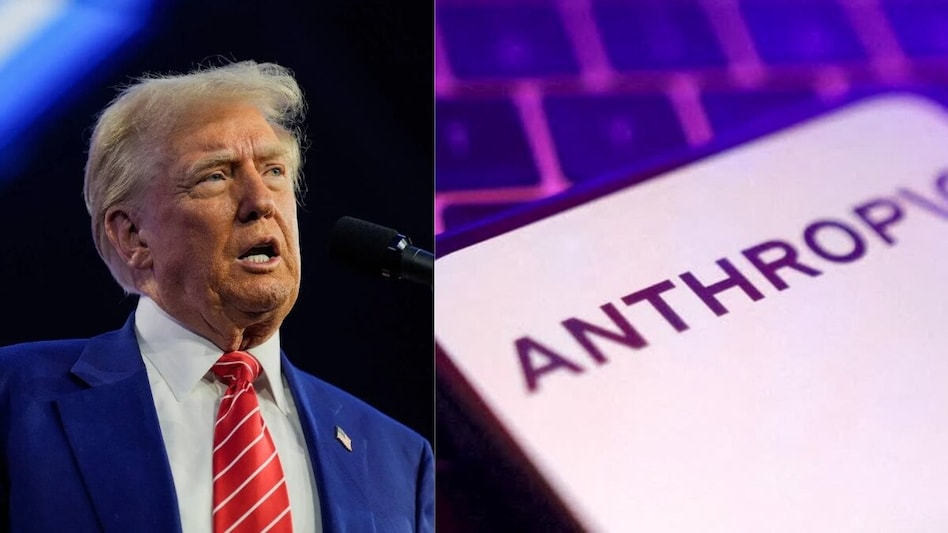
Anthropic labelled supply risk: Tech companies defend the label as State Department embraces OpenAI
The U.S. Department of Defense has classified Anthropic as a "supply-chain risk," prompting President Trump to mandate that all federal agencies halt the use of its products. As the Department of Defense formalizes its partnership with OpenAI, government entities, including the State Department, are now expected to exclusively utilize OpenAI’s AI solutions. In light of these restrictions on Anthropic’s offerings, many tech professionals are advocating for Congress to overturn this contentious designation. Consequently, Anthropic is experiencing a noticeable surge in user migration away from its platform, Claude. Meanwhile, Scott Bessent, Secretary of the Treasury, announced via social media that his department will discontinue the use of Anthropic products. He emphasized, “The American people deserve confidence that every tool in government serves the public interest, and under President Trump, no private company will ever dictate the terms of our national security.” Reports indicate that the Department of Health and Human Services has also instructed its employees to transition to alternative AI tools such as ChatGPT and Gemini. According to a memo from the State Department, the government is prioritizing OpenAI’s tools, stating, “For now, StateChat will use GPT4.1 from OpenAI.” This shift stems from the Department of Defense's concerns regarding Anthropic’s position on the use of AI for sensitive applications like autonomous weapon targeting and mass surveillance. Anthropic has insisted on stringent limitations regarding these applications, while the government desires increased adaptability. With Anthropic’s refusal to comply with the Department of Defense’s requests, OpenAI has stepped in with a new agreement, resulting in significant controversy. In response to the government's labeling of Anthropic, a coalition of tech workers from various prominent companies, including OpenAI, Slack, and IBM, has signed an open letter to Congress and the Department of Defense. The letter, endorsed by 121 signatories, argues against the punitive measures taken against Anthropic for its unwillingness to modify contract terms. The signatories contend, “We strongly believe the federal government should not retaliate against a private company for declining to accept changes to a contract.” Furthermore, the letter warns that the government’s actions could dissuade other tech firms from standing firm against federal demands, potentially undermining the United States' competitive edge in the AI arena. It concludes by stating, “The United States is winning the AI competition because of its commitment to free enterprise and the rule of law; undermining that commitment to punish one company is short-sighted and antithetical to our national security interests.”
Revolutionizing Interaction: ChatGPT Desktop App Introduces Voice Control
OpenAI has unveiled an exciting update for its ChatGPT desktop application, introducing a voice control feature that ena...
TechCrunch | Jul 24, 2026, 14:00
Bluesky's Attie Transforms into a Comprehensive Research Tool
Bluesky's AI assistant, Attie, is taking a significant leap forward by evolving into a versatile research tool aimed at ...
TechCrunch | Jul 24, 2026, 15:25
Infosys Appoints Veteran Leader to Navigate the AI Landscape
Infosys has made a significant move by naming Ashiss Kumar Dash, a long-time company insider, as its next Chief Executiv...
Business Today | Jul 24, 2026, 15:25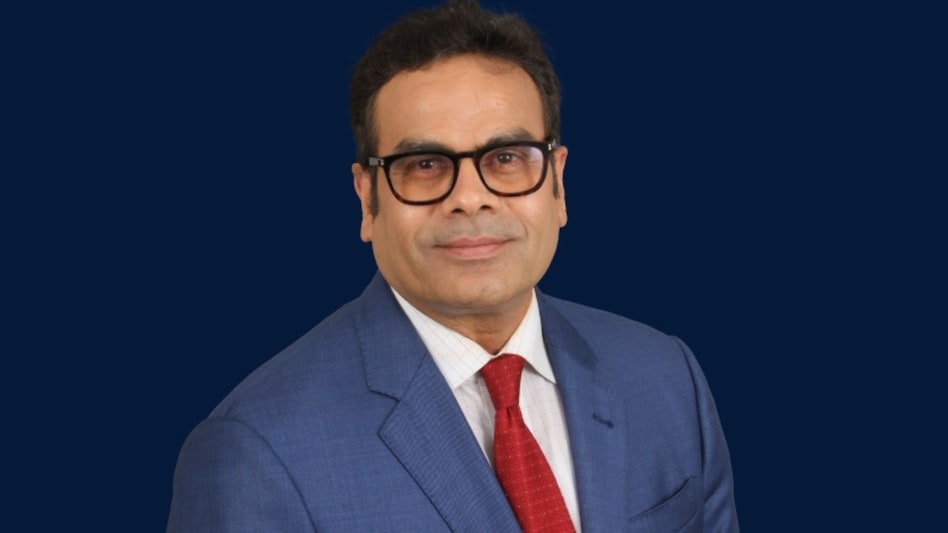
Anthropic Unveils Claude Opus 5: A Game-Changer in Cost-Effective AI
Anthropic has officially launched its latest AI model, Claude Opus 5, which the company claims is its most efficient and...
CNBC | Jul 24, 2026, 17:20
Sam Altman's World Secures $52.5 Million in Crypto Funding for Online Verification
World, an innovative online verification platform co-founded by Sam Altman of OpenAI fame, has successfully raised $52.5...
TechCrunch | Jul 24, 2026, 16:40