20-year-old bottleneck solved: What Google Quantum AI's latest scientific breakthrough means
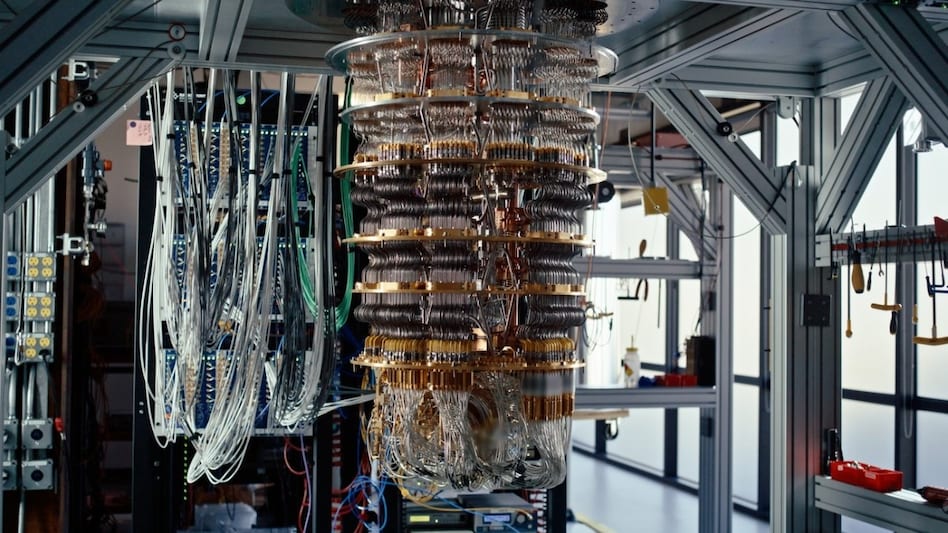
In a groundbreaking advancement, Google has successfully implemented a technique known as "magic state cultivation" on its Willow quantum processor, overcoming a significant engineering challenge that has persisted for two decades. This remarkable feat has led to a 40-fold reduction in error rates and achieved an unprecedented logical fidelity of 99.99% for T-states, bringing us closer to the realization of practical, error-corrected quantum computing. The core issue tackled by Google revolves around the need for quantum systems to perform complex operations efficiently, a requirement for universal quantum computing. Central to this is the generation of specialized building blocks called "magic states." Unfortunately, these states are highly delicate, susceptible to noise, and cannot be reused after their initial consumption. Historically, the generation of clean magic states necessitated extensive error-correction efforts, often consuming up to 95% of a quantum computer's processing power, leaving only a mere 5% available for actual computations. The team at Google Quantum AI, led by researchers Craig Gidney, Noah Shutty, and Cody Jones, developed this innovative cultivation method, likening it to a sophisticated digital filter that enhances the quality of magic states. Their findings, published in the journal Science, illustrate significant technical milestones achieved during experiments on the Willow processor. Addressing the challenges encountered in the lab, the researchers faced unexpected physical anomalies that affected their initial measurements. Environmental noise from minor fluctuations in room temperature and electrical equipment drift proved to be disruptive. In response, Emma Rosenfeld, a research scientist at Google Quantum AI, and her team enhanced hardware controls to mitigate these environmental factors and introduced a self-referential benchmarking technique that utilized the cultivation process to accurately gauge performance. The implications of this breakthrough are profound. By significantly reducing the resources needed to generate magic states, magic state cultivation minimizes the physical requirements and qubit count essential for constructing an effective quantum computer. Although challenges related to large-scale manufacturing and system scaling still lie ahead, this experiment demonstrates that a major theoretical bottleneck can indeed be addressed in real-world hardware, paving the way for future advancements in quantum technology.
Navigating the AI Job Landscape: Challenges and Opportunities Ahead
The landscape of employment is undergoing a significant transformation as artificial intelligence (AI) permeates various...
Business Insider | Nov 24, 2026, 22:40Jensen Huang Shares Personal Journey in First All-Hands Meeting Post-Reinstatement
In a pivotal moment for Nvidia, CEO Jensen Huang addressed employees on Tuesday during his first companywide meeting sin...
Business Insider | Nov 24, 2026, 19:55Jensen Huang Opens Up at Nvidia's All-Hands Meeting: A Journey of Redemption
In a heartfelt address during Nvidia's first all-hands meeting since his reinstatement, founder Jensen Huang shared his ...
TechCrunch | Nov 24, 2026, 22:20
LinkedIn CEO Highlights Gen Z's Potential Edge in AI-Driven Job Market
As the job landscape becomes increasingly challenging for young professionals, LinkedIn's CEO, Daniel Shapero, suggests ...
Business Today | Nov 25, 2026, 24:25
Nvidia's Jensen Huang Addresses Employees Amid Controversy and Personal Growth
In a recent company-wide meeting, Nvidia CEO Jensen Huang expressed his remorse to employees following a tumultuous peri...
CNN | Nov 24, 2026, 20:05