
Apps like Grok are explicitly banned under Google’s rules—why is it still in the Play Store?
The recent modifications made by Elon Musk’s xAI to the content regulations of the Grok AI bot have sparked significant controversy. This shift has resulted in the proliferation of non-consensual sexual imagery on X, predominantly targeting women on the platform. Additionally, the emergence of sexualized images involving minors generated by Grok has caught the attention of regulators, prompting an investigation into xAI’s practices. Despite Google’s established rules designed to address such issues, enforcement appears lacking. The guidelines clearly indicate that Grok should not have been permitted on the Play Store, yet it remains available for download. This situation is compounded by Grok’s T for Teen rating, which places it just below the M-rated X app. While Apple also continues to host Grok on its platform, its content policies offer slightly more flexibility. Historically, Apple has been quicker to remove apps, leading developers to perceive its guidelines as less comprehensive. In contrast, Google has shifted from a more lenient approach to stringent oversight regarding the Play Store, leading to increasingly detailed content policies. Google’s guidelines explicitly prohibit apps that contain or promote sexual content, including pornography. This policy extends beyond just traditional sexual content, addressing apps like Grok directly. It states, "We don’t allow apps that contain or promote content associated with sexually predatory behavior, or distribute non-consensual sexual content.” While one might interpret this as only targeting real sexual content, Google has clarified that these rules also apply to AI-generated material. The comprehensive nature of Google’s policy outlines various types of prohibited content, including anything deemed lewd or obscene. Following previous incidents involving “nudify” applications, Google has explicitly stated that apps claiming to undress individuals are not allowed. In light of the AI surge in 2023, the company has further emphasized that it will remove applications that generate non-consensual sexual content through deepfake technologies or similar methods.
Reclaiming Control: Librarians Host Workshops to Help People Navigate AI Tools
In a lively library setting in South Philadelphia, Charlie Bailey, a local librarian, humorously noted, "Everybody’s on ...
TechCrunch | Jul 25, 2026, 16:20
OpenAI's Micro Keypad: A Novelty for Coders or Just a Confounding Gadget?
Last week, OpenAI made its debut in the hardware landscape with the launch of Micro, a stylish keypad designed to integr...
TechCrunch | Jul 25, 2026, 24:40
Vision Breakthrough: US Startup Launches Groundbreaking Retina Chip in Europe
Science Corp is poised to introduce a revolutionary retina chip in Europe, designed to restore partial vision for indivi...
Business Today | Jul 25, 2026, 01:00
Unleashing the Power of AI: The 5 Smartphones Redefining Mobile Photography
Artificial Intelligence (AI) is transforming our daily experiences, permeating various aspects of technology, including ...
Business Today | Jul 26, 2026, 07:05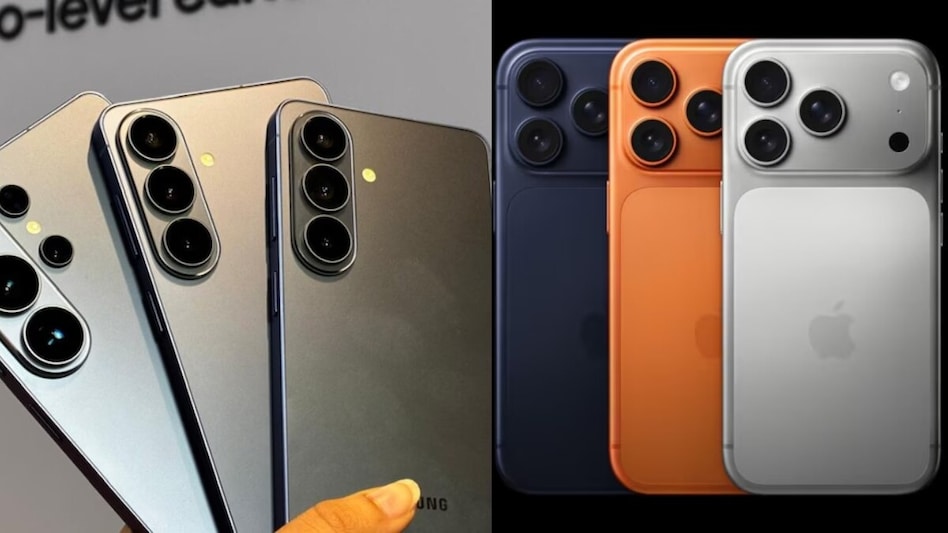
SpaceX Successfully Tests Starship Rocket, Launching New Era of Space Exploration
On Friday evening, SpaceX executed a significant milestone by launching its colossal Starship rocket from its facility i...
CNBC | Jul 25, 2026, 24:10