
India is teaching Google how AI in education can scale
As artificial intelligence continues to infiltrate educational settings around the globe, Google is discovering that some of the most valuable insights on scalability are originating not from Silicon Valley, but from schools in India. This nation has emerged as a vital testing ground for Google's educational AI amidst escalating competition from other tech giants like OpenAI and Microsoft. With over a billion internet users, India has reported the highest global usage of Google's Gemini AI platform for educational purposes. Chris Phillips, Google's Vice President and General Manager for Education, shared these insights during the AI for Learning Forum held in New Delhi. At the event, he engaged with various stakeholders, including K-12 school administrators and education officials, to understand how AI tools are being utilized in classrooms. India's extensive education system underscores why it has become such a significant site for testing AI applications. According to the Indian government's Economic Survey for 2025–26, the school system caters to approximately 247 million students across nearly 1.47 million schools, backed by 10.1 million educators. Additionally, the higher education landscape is among the largest globally, with over 43 million students enrolled in the academic year 2021–22, marking a 26.5% rise since 2014–15. This vast, decentralized system presents unique challenges for implementing AI tools effectively. One critical lesson Google has learned is that educational AI cannot simply be introduced as a uniform product. In India, where educational curricula are determined at the state level, Phillips explained that Google must adapt its AI offerings to allow schools and administrators to choose how to implement and utilize the technology. This marks a significant pivot for the company, which traditionally aimed for global scalability without necessarily accommodating the preferences of individual institutions. "We are not delivering a one-size-fits-all solution," Phillips stated. "The environment is very diverse across the globe." This diversity is reshaping Google's approach to AI-driven education. Phillips noted a quicker adoption of multimodal learning in India, which integrates video, audio, and images with text. This approach is essential for reaching students with varying languages, learning styles, and access levels, especially in classrooms that have not historically emphasized text-heavy instruction. Another key shift in Google's strategy is its focus on enabling teachers rather than students to control the AI tools. The company aims to provide educators with assistance in planning, assessments, and classroom management rather than creating direct-to-student AI experiences. "The teacher-student relationship is critical," Phillips emphasized. "Our goal is to nurture and enhance that relationship, not replace it." In many Indian classrooms, AI technologies are being introduced in environments where students do not have one-to-one access to devices or reliable internet connections. Phillips described scenarios where devices are shared among students, and learning transitions directly from traditional methods to AI tools. "Access is universally crucial, but the timing and manner of that access can vary greatly," he noted, highlighting the reliance on shared or teacher-led devices. Google is already implementing lessons learned from India into its broader initiatives, such as AI-powered preparations for the JEE Main exams through Gemini, a national teacher training program benefiting 40,000 Kendriya Vidyalaya educators, and collaborations with government institutions to enhance vocational and higher education, including the establishment of India's first AI-enabled state university. The experiences gained from India are expected to anticipate challenges that may arise as AI becomes more entrenched in public education systems globally. Google foresees that issues related to control, accessibility, and localization—currently evident in India—will increasingly influence the global scalability of educational AI. This shift also reflects a broader evolution in the way users are engaging with generative AI. Once dominated by entertainment, AI applications are now increasingly being utilized for educational purposes, particularly among younger audiences. As students turn to AI for studying and skill development, education has become a crucial area of focus for Google. Rival companies are also taking note of India's educational landscape. OpenAI has begun establishing a local presence focused on education, appointing former Coursera APAC managing director Raghav Gupta as its education lead for India and APAC. Microsoft has expanded its partnerships with Indian educational institutions and edtech companies to promote AI-based learning and teacher training, indicating that education is becoming a key competitive arena for AI firms. However, India's latest Economic Survey raises concerns about the uncritical use of AI, highlighting risks such as over-reliance on automated tools and potential negative impacts on learning outcomes. Citing research from MIT and Microsoft, the survey warns that dependence on AI for creative tasks may lead to cognitive decline and diminished critical thinking skills. As the race to integrate AI into classrooms continues, these insights from India serve as critical considerations for the future of educational technology. Whether Google's strategies can be replicated elsewhere remains uncertain, but the challenges observed in India are likely to be mirrored in other countries, making the knowledge gained there essential for the industry.
Warner Bros. Takes Legal Action Against Amazon Over Executive Poaching Allegations
Warner Bros. Discovery has initiated legal proceedings against Amazon, accusing the tech giant of unlawful interference ...
TechCrunch | Jul 25, 2026, 21:25
The Elusive Phineas Fisher: The Hacktivist Who Took Down Spyware Giants
In the realm of cybersecurity, few figures are as intriguing as Phineas Fisher, a hacker who has evaded capture for near...
TechCrunch | Jul 25, 2026, 21:00
The Rise of AI Distillation: A Controversial Technique Sparks Debate in Tech and Government
In recent discussions, a once-obscure topic in artificial intelligence has surged to the forefront of debates among tech...
CNBC | Jul 25, 2026, 12:15
Unlocking the Secrets of Quantum Gravity: Can AI Help Physics Make a Leap?
The realm of scientific research is undergoing a profound transformation, fueled by the rapid advancements in artificial...
Business Today | Jul 25, 2026, 24:30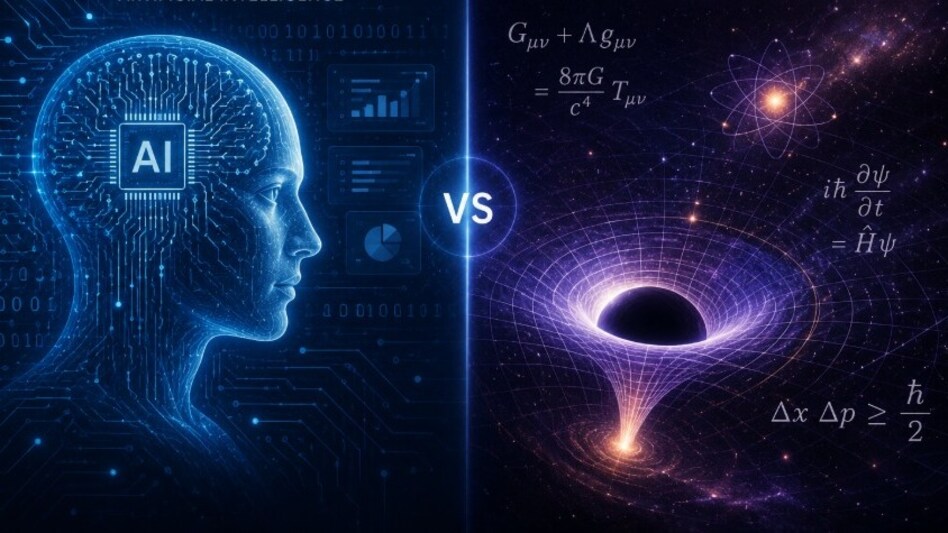
OpenAI's Micro Keypad: A Novelty for Coders or Just a Confounding Gadget?
Last week, OpenAI made its debut in the hardware landscape with the launch of Micro, a stylish keypad designed to integr...
TechCrunch | Jul 25, 2026, 24:40