
Meet Project Suncatcher, Google’s plan to put AI data centers in space
The tech landscape is rapidly evolving, with companies racing to establish AI data centers as land becomes increasingly scarce. High energy expenses and the complexities of managing terrestrial data centers have sparked interest in innovative, space-based alternatives. Industry leaders like Jeff Bezos and Elon Musk have previously speculated about deploying GPUs in space, and now Google has officially announced its initiative: Project Suncatcher. This groundbreaking project aims to create scalable networks of orbiting Tensor Processing Units (TPUs) in low-earth orbit. The recent advancements in satellite technology, exemplified by systems like Starlink, have proven that Internet communication can be effectively managed from space. Google asserts that utilizing space for AI computation may be the optimal solution for the industry's ongoing expansion. Project Suncatcher envisions a network of solar-powered satellites, connected through free-space optical links to form a comprehensive distributed system. However, several engineering challenges remain before this ambitious vision can be realized. Drawing parallels to its earlier moonshot project of self-driving cars, which has evolved into the nearly autonomous Waymo vehicles, Google acknowledges the extensive development required for Suncatcher. The advantages of this project are significant. According to a preprint study from Google, the satellites would be positioned in a sun-synchronous orbit, allowing them to harness nearly continuous solar energy. This is critical, as the cost of electricity on Earth poses a substantial challenge for large data centers. Interestingly, solar panels in space can be up to eight times more efficient than those on the ground, providing a robust solution for powering data processing needs. A major hurdle lies in maintaining high-speed communication between the orbiting satellites. On Earth, data center nodes utilize high-speed optical interconnects, but achieving similar speeds in space will necessitate advanced wireless technologies capable of handling tens of terabits per second. Initial trials on Earth have shown bidirectional speeds of up to 1.6 Tbps, and Google is optimistic about scaling this capability in the future.
Chamath Palihapitiya Takes the Helm of AI Coding Startup After Securing $135M in Series A Funding
Chamath Palihapitiya, renowned for his role in venture capital through Social Capital and as a host of the All-In podcas...
TechCrunch | Jun 29, 2026, 21:25
QuEra's Ambitious Plan: 10,000 Qubits by 2028 and Beyond
Recently, QuEra announced an exciting roadmap that outlines its goal to revolutionize quantum computing. The company is ...
Ars Technica | Jun 29, 2026, 18:05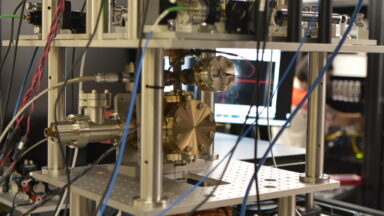
Cursor Launches Mobile App for On-the-Go Coding Assistance
Cursor is making waves in the tech world, undeterred by the recent $60 billion acquisition by SpaceX. The company reveal...
TechCrunch | Jun 29, 2026, 17:15
Kobo Joins Forces with StoryGraph to Challenge Amazon's Reading Dominance
In a significant move against Amazon’s established Kindle and Goodreads ecosystem, reading tracker StoryGraph has partne...
TechCrunch | Jun 29, 2026, 19:40
Solar Energy Surpasses Coal for the First Time, Yet Challenges Remain
In a remarkable shift within the U.S. energy landscape, preliminary reports reveal that solar power has officially eclip...
Ars Technica | Jun 29, 2026, 20:15