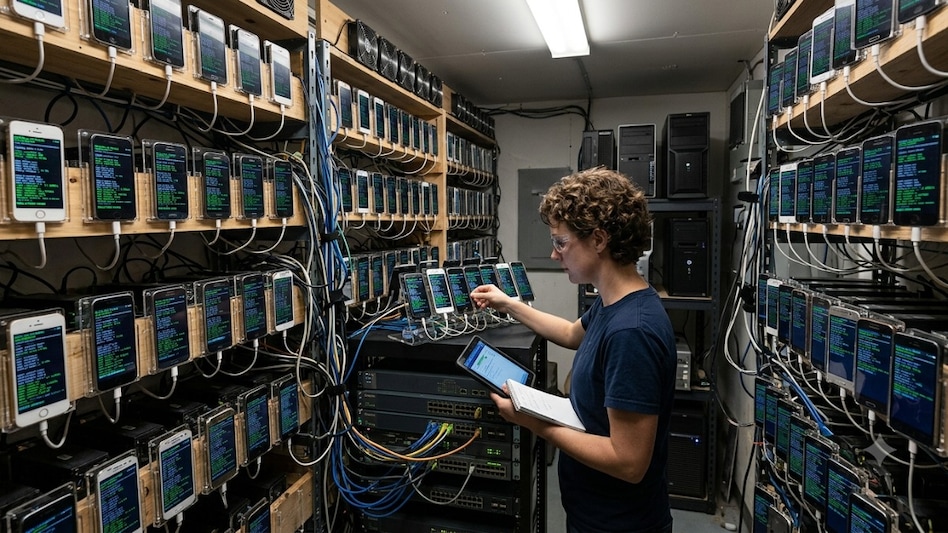
Why Google wants to use your old smartphone to run mini data centre
An old smartphone gathering dust in your drawer could soon play a pivotal role in a groundbreaking initiative. Google, in collaboration with researchers from the University of California, San Diego, is exploring the potential of repurposing outdated smartphones to create a mini data center. This innovative approach aims to provide a sustainable solution to the escalating environmental concerns associated with computing's carbon footprint. The researchers are pioneering a concept known as "phone cluster computing." This involves connecting thousands of motherboards from retired smartphones into a distributed computing network. By leveraging existing hardware, the initiative seeks to replicate the capabilities of traditional data centers or cloud computing systems while significantly cutting down on the need for new infrastructure. With Google's backing, the university's initial plan is to assemble a data center using 2,000 old Pixel smartphones. This setup is designed to offer affordable cloud computing resources to researchers and students, while also promoting the longevity of existing technology, minimizing electronic waste, and reducing carbon emissions. In preliminary experiments, a cluster of just 20 smartphones demonstrated the ability to manage the computing load for a university course with over 75 students, outpacing the processing speed of Amazon Web Services (AWS) in grading submissions. According to the blog post from Google, a deployment of 2,000 smartphones could support up to a hundred university classes simultaneously. Importantly, this initiative does not aim to rival the extensive AI data centers run by major tech corporations like Google and Amazon. Instead, it focuses on creating a cost-effective and environmentally responsible computing platform using retired devices. The significance of this experiment is underscored by two key points: first, millions of smartphones are discarded each year, contributing to electronic waste; second, the demand for computing power is surging due to the rising needs of artificial intelligence, cloud computing, and large-scale data processing. This initiative could address these pressing challenges. However, the project faces technical hurdles as it remains in the experimental stage. Yet, if successful, this approach could revolutionize computing infrastructure beyond the realm of conventional servers, potentially lowering costs and hardware requirements. Google anticipates that the complete system could be operational by Fall 2026.
Cognition Acquires Poke: Redefining AI Interaction for Enhanced Productivity
Poke, the friendly AI assistant that users interact with as if chatting with a friend, is set to embark on a new journey...
TechCrunch | Jul 24, 2026, 18:25
Waymo to Launch Standalone App, Ending Exclusivity with Uber in Major Cities
For the past three years, Uber and Waymo, the autonomous vehicle division of Alphabet, have collaborated to provide driv...
CNBC | Jul 24, 2026, 21:55
Alphabet Takes the Lead in AI Investment Amid Industry Competition
In a bold move that underscores its commitment to artificial intelligence, Alphabet has significantly ramped up its spen...
CNBC | Jul 24, 2026, 19:45
Volkswagen Engineers Indicted for Insider Trading Linked to Rivian Partnership
In a significant legal development, the U.S. Department of Justice has brought securities fraud charges against two engi...
TechCrunch | Jul 24, 2026, 20:30
Finland Unveils World's Largest Sand Battery to Tackle Renewable Energy Challenges
In a groundbreaking move to address the critical issue of renewable energy intermittency, a small town in southern Finla...
CNBC | Jul 25, 2026, 05:35