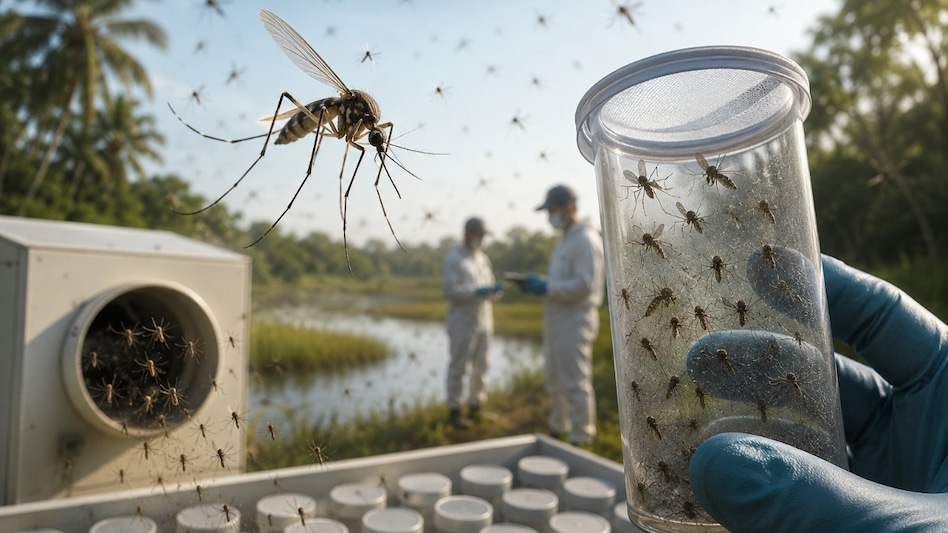
Why Google wants to release 32 million mosquitoes in the US
Google, renowned for its search engine, Android platform, and artificial intelligence, is venturing into an unexpected territory: mosquito management. Through its biotech subsidiary, Verily, the tech giant is seeking permission from U.S. regulators to release up to 32 million mosquitoes in California and Florida over the next two years. This initiative is part of the ongoing 'Debug Project,' which aims to suppress mosquito populations and mitigate the transmission of diseases linked to these insects. The rationale behind releasing these mosquitoes is not to increase their numbers but rather to decrease them sustainably. The strategy involves the deployment of specially bred male mosquitoes that cannot produce viable offspring. When these males mate with wild female mosquitoes, the resulting eggs fail to hatch, leading to a gradual decline in the population over successive breeding cycles. This approach is designed to lower the risks associated with diseases spread by mosquitoes. What sets these mosquitoes apart is their association with a naturally occurring bacterium called Wolbachia. Males infected with Wolbachia, when paired with non-infected females, lead to non-viable eggs. This innovative breeding method is a key component of the project. However, scaling up mosquito production poses a significant challenge, as these insects are fragile and difficult to breed in large quantities. To tackle this, Verily has developed automated systems capable of producing millions of mosquitoes efficiently. These systems also include machinery that separates male mosquitoes from females prior to their release, ensuring that only the sterile males are deployed to the wild. The Sterile Insect Technique, which underpins this project, has a historical precedent dating back to the 1950s. It has proven effective against various agricultural pests, including fruit flies and codling moths. Verily has previously tested this approach in Fresno County, California, releasing approximately 48 million sterile males between 2017 and 2019. Data from the trials indicated a remarkable decline in local populations of biting females, with reductions of up to 95% reported in certain areas. Currently, this proposal is under consideration by the U.S. Environmental Protection Agency (EPA), which is inviting public feedback before making a decision on whether to issue an experimental permit for the mosquito releases. If granted, the initiative could represent one of the largest efforts to control mosquito populations in the United States.
The Elusive Phineas Fisher: The Hacktivist Who Took Down Spyware Giants
In the realm of cybersecurity, few figures are as intriguing as Phineas Fisher, a hacker who has evaded capture for near...
TechCrunch | Jul 25, 2026, 21:00
Vision Breakthrough: US Startup Launches Groundbreaking Retina Chip in Europe
Science Corp is poised to introduce a revolutionary retina chip in Europe, designed to restore partial vision for indivi...
Business Today | Jul 25, 2026, 01:00
The Rise of AI Distillation: A Controversial Technique Sparks Debate in Tech and Government
In recent discussions, a once-obscure topic in artificial intelligence has surged to the forefront of debates among tech...
CNBC | Jul 25, 2026, 12:15
The Shift in Human Cognition: Embracing AI as a Collaborative Tool
As technology continues to evolve, a notable shift is occurring in the relationship between humans and artificial intell...
Business Insider | Jul 25, 2026, 09:50Nvidia Strikes Major Deal with SK Hynix to Secure AI Memory Supply
Nvidia has successfully forged a significant partnership with South Korea's SK Hynix to secure memory supplies essential...
CNBC | Jul 25, 2026, 05:15