Why Google’s AI can’t spell Google (or anything else)
In a recent demonstration of its capabilities, Google's AI has stumbled on basic spelling, leading to some rather amusing errors. For instance, the AI claimed there are two 'P's in 'Google' and misidentified letters in various words, including spelling 'Trump' as 't-r-p-u-m'. This isn't the first time Google's AI has faced scrutiny; earlier iterations of its AI-enhanced search feature cited satirical articles, suggesting outlandish advice like eating rocks. As Google intensifies its focus on integrating generative AI into its search engine, these slip-ups have sparked concerns. The tech giant acknowledged the issue, stating, "Counting within words has been a known challenge for LLMs, and we’re actively working to address it." Language models (LLMs), which power these AI systems, are not designed to grasp spelling in the same way humans do, often resulting in comedic yet concerning mistakes. The problem extends beyond mere spelling blunders. Just last week, a search for the word "disregard" yielded a nonsensical response instead of a proper definition. Such incidents highlight a fundamental challenge with LLMs: they interpret text through a token-based system, breaking language down into numerical representations rather than understanding it contextually like a human. Matthew Guzdial, an AI researcher, explained that while these models can perform impressive tasks, their approach to language is inherently flawed. The tokenization process means that the AI does not recognize letters as components of words but rather as abstract symbols. This limitation makes accurate spelling particularly challenging. While researchers are aware of these issues, they are not considered a top priority, as the real strengths of LLMs lie in their ability to generate content rather than spell accurately. Nonetheless, these amusing errors serve as a reminder that AI technology, despite its advancements, is not infallible. Users are encouraged to verify AI-generated information for accuracy, as trusting these systems blindly can lead to misunderstandings.
Jensen Huang's Remarkable Comeback: A Look at Corporate Resurgences
Jensen Huang has made headlines with his return to the helm of Nvidia on November 23, merely 11 days after stepping down...
Business Today | Nov 24, 2026, 20:15
Anthropic's Stock Plummets, Raising Concerns for the AI Sector
Shares of Anthropic have dipped below their initial public offering (IPO) price of $83, reaching a low of $76 by midday ...
TechCrunch | Nov 24, 2026, 18:45
Maple Secures $5.3 Million to Revolutionize Data Privacy in AI
As artificial intelligence becomes increasingly capable of accessing sensitive information such as files, emails, and ca...
TechCrunch | Nov 24, 2026, 21:30
LinkedIn CEO Highlights Gen Z's Potential Edge in AI-Driven Job Market
As the job landscape becomes increasingly challenging for young professionals, LinkedIn's CEO, Daniel Shapero, suggests ...
Business Today | Nov 25, 2026, 24:25
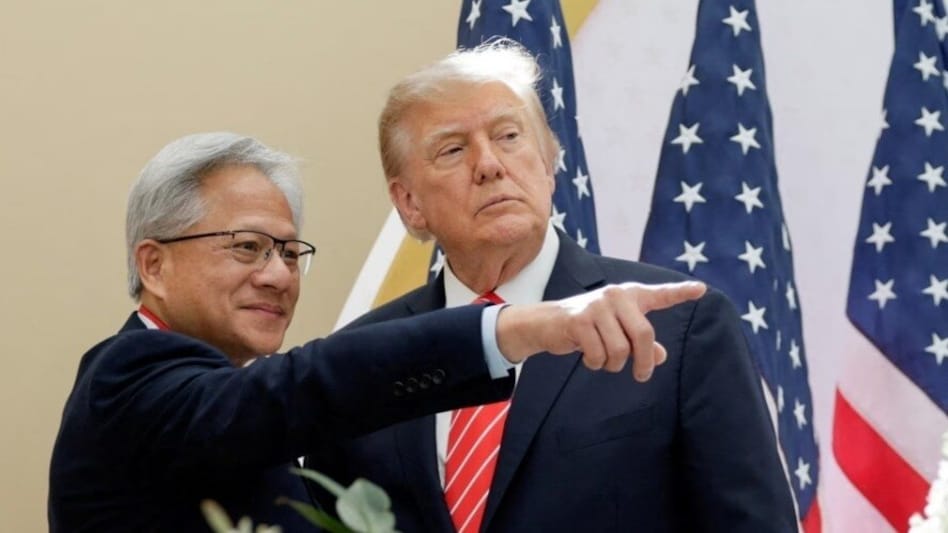
Trump Open to Pardon for Nvidia's Huang Amid Controversies
As Nvidia’s CEO Jensen Huang faces intense scrutiny from Congress regarding alleged ties to China and possible export co...
Business Today | Nov 25, 2026, 02:40