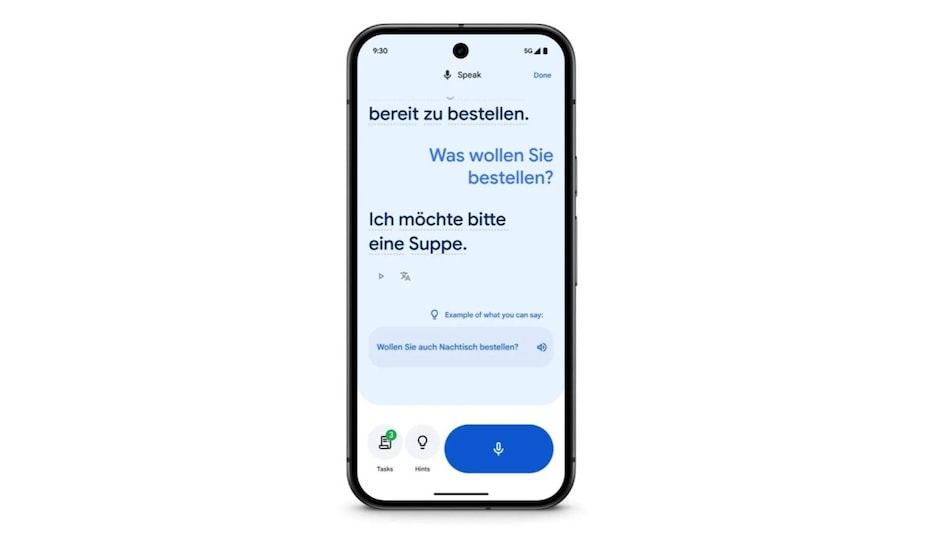
Google rolls out live headphone translations and Gemini-powered upgrades for translate
Google has initiated the rollout of an innovative beta feature that enables users to receive real-time translations directly in their headphones. This latest enhancement is powered by the advanced capabilities of Google's Gemini AI models, marking a significant leap forward for Google Translate. The new live translation feature is compatible with any headphones, delivering spoken translations while carefully retaining the original tone, emphasis, and rhythm. This development aims to facilitate smoother conversations, allowing users to grasp not only the content but also the nuances of how something is expressed. "Whether you're engaging in a conversation in another language, attending a speech abroad, or watching a foreign film, you can simply put on your headphones, launch the Translate app, select 'Live translate,' and receive real-time translations in your preferred language," explained Rose Yao, Google's Vice President of Product Management for Search Verticals. Currently, the beta feature is available for Android users in the United States, Mexico, and India, supporting over 70 languages. It operates as a one-way translation tool, enabling users to listen in their selected language while another party speaks. Google has plans to extend this feature to iOS and additional countries by 2026. In addition to live translations, Google is enhancing the Translate app with advanced Gemini capabilities. These upgrades are designed to make text translations more intuitive and context-aware, particularly when dealing with slang, idioms, and region-specific phrases. Instead of straightforward word-for-word translations, Gemini considers the surrounding context to provide interpretations that align more closely with the intended meaning. The Gemini-powered translation improvements are currently being rolled out in the United States and India, supporting translations between English and nearly 20 other languages, including Spanish, Arabic, Chinese, Japanese, and German. This feature is accessible across Android, iOS, and the web. Furthermore, Google is broadening its language-learning tools within Translate to nearly 20 new countries, such as India, Germany, Sweden, and Taiwan. English speakers will have the opportunity to practice their German, while speakers of Bengali, Mandarin Chinese (Simplified), Dutch, German, Hindi, Italian, Romanian, and Swedish can enhance their English skills. New feedback tools will offer detailed guidance during speaking practice, and a learning streak feature will help users track their consecutive practice days. These updates bring Google Translate closer to specialized language-learning applications, underscoring its strategic intention to compete more robustly in that domain.
The Impact of AI on Tech Hiring: A Shift Towards Engineering
The influence of artificial intelligence is significantly altering the landscape of hiring in the tech industry. Accordi...
Business Insider | Jul 11, 2026, 14:45Apple Takes Legal Action Against OpenAI Over Alleged Trade Secret Infringement
Apple has initiated a lawsuit against OpenAI, claiming that the AI company unlawfully acquired confidential information ...
Business Today | Jul 11, 2026, 06:35
The Fallout of Amazon's Mass Layoffs: A New Era in Tech Employment
In January, Jake Linsley received a text from Amazon that jolted him awake. Initially thinking it was about a package de...
CNBC | Jul 11, 2026, 12:20
The Legal Face-off: Apple Accuses OpenAI of Trade Secret Theft
In a dramatic turn of events reminiscent of a corporate thriller, Apple has filed a lawsuit against OpenAI, alleging tha...
Business Insider | Jul 11, 2026, 20:50Revolutionizing Productivity: Even Realities Unveils G2 Smart Glasses Without Cameras
In recent years, numerous tech leaders have suggested that smart glasses could become the next significant interface for...
TechCrunch | Jul 11, 2026, 17:55