
Google Tackles AIs Spelling Problem in New Image Generation Model
In a significant development for artificial intelligence, Google is addressing longstanding challenges associated with text generation in images. Historically, AI models have struggled with accuracy when it comes to producing text, often leading to typos or poorly rendered fonts. This inconsistency has hindered their use as reliable design tools for professionals. On Thursday, Google, a subsidiary of Alphabet Inc., introduced its latest image-generation model known as Nano Banana Pro. This innovative model promises to deliver high-quality visuals with improved text clarity across multiple languages. The enhancements stem from Gemini 3, the latest iteration of the company’s AI technology, which Google describes as a monumental leap in reasoning and coding capabilities. The announcement was met with enthusiasm from investors, propelling Alphabet’s stock to unprecedented heights. Google's strategic focus on monetizing its AI advancements is evident in this launch. Users of its complimentary Gemini model will gain access to Nano Banana Pro, albeit with certain usage limits, while subscribers of its paid plans will benefit from higher quotas. The new model is designed to integrate seamlessly with popular design platforms like Canva, Figma, Adobe Firefly, and Photoshop. According to a Google spokesperson, Nano Banana Pro excels at arranging text placement, font selection, and the spatial relationships of various image components before finalizing an image. This capability allows for creative applications, such as transforming recipe instructions into illustrated flowcharts or depicting real-time data like weather updates. Brands looking to innovate their marketing strategies can utilize the model’s ability to incorporate up to 14 reference images, blending them into fresh scenarios based on user-defined text prompts while preserving the original characteristics of the input visuals. Additionally, users can customize their images by specifying details like camera angles, depth of field, color grading, and aspect ratios, mimicking a photographic approach. In conjunction with this announcement, Google revealed that users can upload images to the Gemini app to verify whether they were created using its AI technology. The company plans to expand this verification feature to include audio and video in the near future. Google also ensures that all media generated by its AI tools are embedded with a subtle digital watermark, while a visible watermark is applied to images produced by free or Pro tier users. This visible mark is removed for those subscribed to the premium Ultra plan.
QuEra's Ambitious Plan: 10,000 Qubits by 2028 and Beyond
Recently, QuEra announced an exciting roadmap that outlines its goal to revolutionize quantum computing. The company is ...
Ars Technica | Jun 29, 2026, 18:05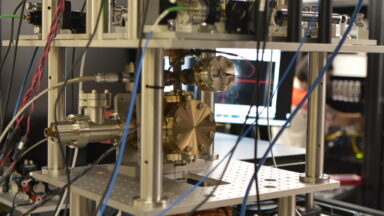
Solar Energy Surpasses Coal for the First Time, Yet Challenges Remain
In a remarkable shift within the U.S. energy landscape, preliminary reports reveal that solar power has officially eclip...
Ars Technica | Jun 29, 2026, 20:15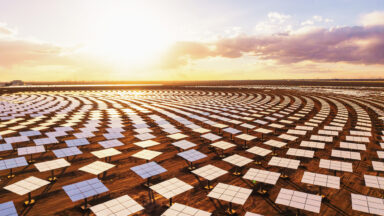
Kalshi Takes Legal Action Against Illinois Over Controversial Sports Betting Tax
The battle for control over sports betting regulation is intensifying as states challenge prediction markets like Kalshi...
Ars Technica | Jun 29, 2026, 17:55
Waymo and Uber Conclude Robotaxi Experiment in Phoenix
Waymo has announced that its automated vehicle services will no longer be accessible through the Uber app in Phoenix, Ar...
CNBC | Jun 29, 2026, 22:45
South Korea's Tech Titans Unite to Invest Over $550 Billion in Semiconductor Revolution
In a bold move to bolster its semiconductor industry, South Korea's leading memory chip manufacturers have unveiled plan...
TechCrunch | Jun 29, 2026, 18:20