
Google’s top hacker hunter explains why hacking groups get codenames
For over ten years, the cybersecurity sector has been assigning unique names to various hacking groups, some of which, like Fancy Bear, have gained notoriety due to their high-profile attacks. However, many groups remain obscure, even to industry insiders, as each organization tends to adopt its own naming conventions. To tackle this confusion, Google has recently revamped its naming system for these hacker collectives. The previous alphanumeric designations, such as APT1 or APT41, which originated from Mandiant—now a part of Google—are being replaced with a more straightforward approach. Each hacking group will now be given a memorable first name, followed by a second term that signifies its country of origin: for instance, Castle for China, Ion for Iran, Neptune for North Korea, and Relic for Russia. Shane Huntley, the Chief Technology Officer of Google’s Threat Intelligence Group, emphasized that this update was essential for enhancing clarity among security researchers, both internally and externally. Since the early 2010s, as reports on cyberattacks began to proliferate, the number of identified threat groups has skyrocketed, making it increasingly difficult to maintain an overview of the landscape. Currently, Google monitors over 5,000 distinct 'activity clusters' across various nations, as noted by John Hultquist, the Chief Analyst at Google Threat Intelligence Group. Huntley remarked that very few developed countries lack their own cyber capabilities, highlighting the global nature of these threats. The rationale behind naming these hacking factions extends beyond mere classification. It serves as a foundational tool for understanding the dynamics of cyber threats, enabling organizations to identify and respond swiftly to potential attacks. Huntley pointed out, "If you get hacked by them or are involved in an incident, understanding the actor's behavior and historical context is crucial for effective response and threat mitigation." Moreover, knowledge of groups like North Korea's Lazarus Group—including their typical objectives and affiliations—provides defenders with essential insights to combat these threats. While tracking state-sponsored hackers poses challenges, it is generally less complex than monitoring cybercriminal organizations, which often have fluid membership and activities. A prevalent question arises regarding the inconsistency in naming conventions among different organizations: why can’t everyone agree on a standardized set of names? Huntley acknowledges that this is a complex issue, as each company interprets data through its specific lens, resulting in divergent views of the same group. He stated, "No one has perfect visibility. We’re constructing our model, but we can never have a complete understanding of every activity." By harmonizing the naming conventions of Google's Threat Analysis Group and Mandiant, Google aims to simplify the landscape, creating a more unified approach for cybersecurity professionals to reference. For those seeking a comprehensive overview, an extensive list is available for consultation.
Samsung Galaxy Watch Ultra 2: A Solid Upgrade with Notable Trade-offs
Samsung has unveiled its latest rugged smartwatch, the Galaxy Watch Ultra 2, which prioritizes refinement over radical i...
Business Today | Oct 17, 2026, 04:25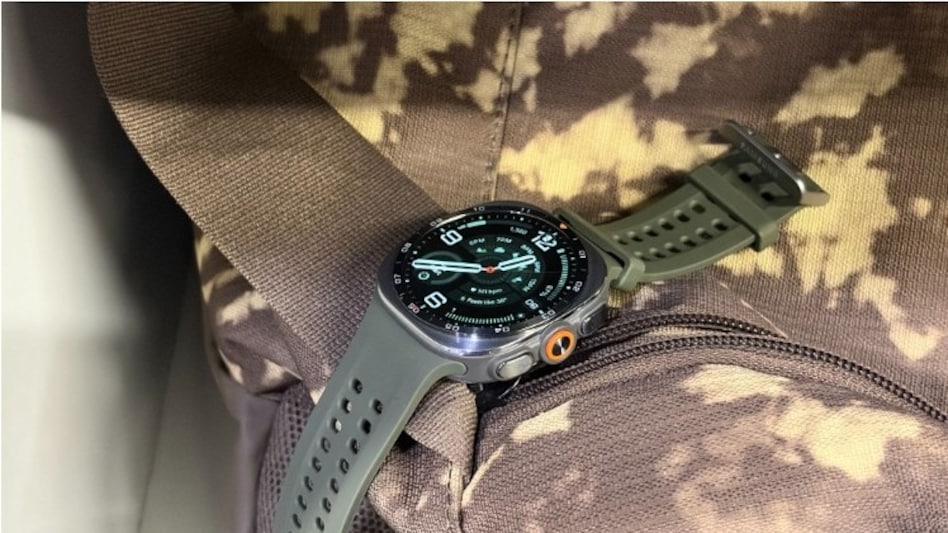
Mark Wahlberg Launches Affordable Gym Concept Aimed at Revolutionizing Wellness
Mark Wahlberg is venturing into the fitness industry with an innovative gym concept that promises to make wellness more ...
TechCrunch | Oct 17, 2026, 03:05
Trump Denies White House Involvement in Starlink Restrictions for Ukraine
President Donald Trump has publicly refuted claims that the White House was responsible for recent restrictions imposed ...
CNBC | Oct 16, 2026, 18:40
Elorian Unveils Innovative AI Model That Truly Sees: Glimpse
Elorian, a groundbreaking AI startup based in Palo Alto, has made waves in the tech world by launching its first AI mode...
TechCrunch | Oct 16, 2026, 16:40
Groundbreaking Research Reveals Insights into AI Neural Responses
A recent publication from an independent researcher who previously worked at OpenAI has stirred significant debate withi...
Business Insider | Oct 16, 2026, 16:25