
Google avoids break up, faces new oversight in search antitrust trial
In a significant ruling, Google will not face a breakup of its search operations, but a federal judge has indicated that the company must implement changes to its business practices to mitigate antitrust concerns. U.S. District Court Judge Amit P. Mehta announced preliminary remedies aimed at preventing Google from engaging in further anticompetitive actions. The judge's order includes prohibitions against Google entering or maintaining exclusive contracts that link the distribution of its services, such as Search, Chrome, Google Assistant, or Gemini, to other applications or financial arrangements. For instance, Google is barred from making Play Store licensing contingent upon the distribution of specific apps or from tying revenue-share payments to the maintenance of certain applications. Additionally, Google will be required to share specific search index and user interaction data with qualified competitors to foster a more competitive environment. The tech giant must also provide search and search ad syndication services to rivals at standard rates, enabling them to create quality search results while developing their own technologies. While a final judgment is still pending, Judge Mehta has instructed Google and the Department of Justice to collaborate and provide a revised final judgment by September 10 that reflects his recommendations. This ruling follows a previous determination in which the judge found that Google had illegally maintained a monopoly in online search. A technical committee will be formed to ensure compliance with the upcoming judgment, which is set to remain in effect for six years, taking effect 60 days post-implementation. The Department of Justice, which initiated its antitrust lawsuit against Google in 2020, had pushed for more stringent consequences. They sought to compel Google to divest its Chrome browser and potentially Android, as well as end its lucrative agreements with major partners like Apple and Samsung. The DOJ's proposals also included demands for Google to share its search index and user data with competitors under privacy-protected conditions. Google, which has held a dominant market share of around 90% in traditional search for the last decade, contends that such measures could hinder innovation, compromise user privacy, and limit its capacity for research and development. CEO Sundar Pichai previously stated that mandated data-sharing could equate to a 'de facto divestiture' of Google Search. The implications of Judge Mehta’s ruling could extend to a separate antitrust case concerning Google’s advertising technology. In April, Judge Leonie Brinkema found that Google had unlawfully monopolized ad-tech markets, with a remedies trial focused on proposed divestitures scheduled for late September. William Kovacic, a professor of global competition law at George Washington University and former FTC commissioner, highlighted the unprecedented nature of the DOJ's dual antitrust cases against Google. He noted that while Judge Mehta has issued significant remedies, the legal battle is far from over. Kovacic anticipates that appeals could prolong the proceedings until late 2027 or early 2028. This story is ongoing, and more updates are expected.
A Heated Exchange: Musk and Altman Clash Over OpenAI and Apple Lawsuit
In a recent exchange on the social media platform X, Elon Musk and Sam Altman engaged in a sharp verbal showdown, intens...
CNBC | Jul 12, 2026, 15:45
Navigating the New AI Landscape: Satya Nadella's Insights on Knowledge Ownership
In a thought-provoking discussion, Satya Nadella, Chairman and CEO of Microsoft, has ignited a crucial debate surroundin...
Business Today | Jul 12, 2026, 16:45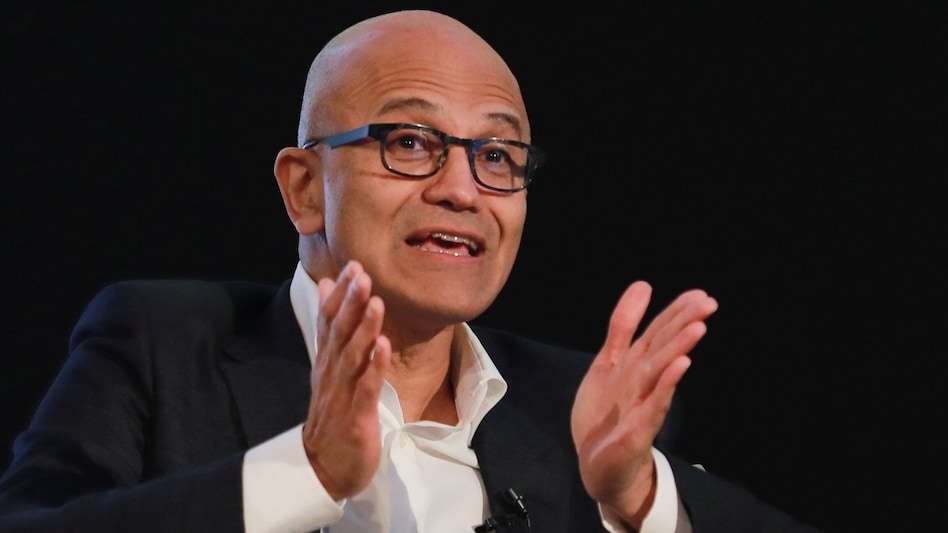
TSMC Sees Remarkable Revenue Growth Fueled by AI Demand
Taiwan Semiconductor Manufacturing Company (TSMC), the leading global contract chipmaker, announced a staggering 67.9% i...
CNBC | Jul 13, 2026, 05:55
Elon Musk and Sam Altman: The Ongoing Rivalry Intensifies Over AI Claims
In a renewed clash between tech titans, OpenAI CEO Sam Altman has claimed that the latest version of ChatGPT, 5.6, is th...
Business Insider | Jul 12, 2026, 22:15Gadget Prices Surge Amid Memory Chip Shortage: What Consumers Should Know
If you're considering purchasing a new laptop, gaming console, or tablet, brace yourself for higher prices. The surge in...
CNN | Jul 13, 2026, 09:10