
Google thinks SpaceX’s Starship has to launch 1,600 times before space data centers get off the ground
In a significant milestone for space technology, Google has successfully launched its prototype orbital compute satellite aboard a SpaceX rocket from California. This marks the tech giant's inaugural venture into sending its advanced chip technology into the cosmos. Designed by Planet Labs, this satellite aims to test whether Google's Tensor Processing Unit (TPU), a competitor to Nvidia's graphics processing units, can operate effectively in the harsh conditions of space. The ambitious project, known as Project Suncatcher, is led by Google executive Travis Beals. He emphasizes the importance of real-world testing, stating, "We’ve done testing on the ground, but there’s no test that’s completely as good as the real thing." The satellite will run its TPU in 15-minute intervals to manage power consumption and thermal requirements effectively. Planet Labs has created a standard platform for this satellite, but both companies are collaborating on a more sophisticated version expected to launch next year. This upcoming model will feature two satellites designed specifically for advanced computational tasks and will attempt to communicate using laser technology. Google's initiative stands out in a sea of over a hundred payloads on this SpaceX mission, which also includes projects from various startups. Unlike many of these short-term projects, Google's vision is long-term, focusing on the future infrastructure and AI workloads needed in space. The company envisions a constellation of 81 satellites working in unison to enhance processing capabilities. Beals explains the necessity of low latency and high bandwidth between TPUs when managing complex workloads, stating, "We’re trying to look ahead to not just what workloads exist today, but where they will be in five years." However, the company acknowledges that the rockets needed to make large-scale orbital data centers economically viable are still in development. In conjunction with the launch, Google released a peer-reviewed white paper on orbital data centers, providing one of the most detailed analyses of space-based computing to date. While not an economic feasibility study, it presents an intriguing view of how the cost of access to space may decline over time. Google, a significant investor in SpaceX, notes that the latter has achieved a 20% annual reduction in launch costs since the Falcon 1's inception. Looking ahead, Google researchers estimate that achieving a launch cost of around $200 per kilogram by 2035 will require SpaceX’s Starship to complete approximately 1,800 launches over the next decade, transporting a total of 370,000 tons of payload. This ambitious goal hinges on the ability to sustain a high launch frequency, which SpaceX has yet to demonstrate consistently. On a positive note, Google's recent studies indicate that its chips can endure the radiation of space. Initial tests were adjusted after realizing the chips had more shielding than anticipated, resulting in slight increases in error rates within the chip's circuitry. Nevertheless, Beals remains optimistic about the chips' performance for extended inference workloads, asserting, "The error rate is very low if you’re thinking about typical inference operations, right? Like one in a million." As the journey continues, Google’s foray into space computing could reshape the future of data processing in orbit, setting the stage for a new era of technological advancement.
Former OpenAI Engineer Granted Release on Bond Amid Espionage Allegations
Abdulrahman Alfozan, the ex-OpenAI engineer who was terminated and subsequently arrested last month, is poised to be rel...
Business Insider | Nov 24, 2026, 20:40Nvidia's Board Shake-Up: The High-Stakes Return of Jensen Huang
Nvidia's CEO Jensen Huang has received unwavering support from longtime board members Tench Coxe, Mark Stevens, and Harv...
CNN | Nov 24, 2026, 23:00
AI Assistants Struggle to Handle Everyday Tasks, New Research Reveals
In recent months, AI firms have been promoting personal AI agents as solutions to alleviate the mundane aspects of daily...
TechCrunch | Nov 24, 2026, 21:45
Nvidia's Jensen Huang Opens Up About Personal Struggles and Commitment to Improvement
In a heartfelt address to Nvidia employees, Jensen Huang revealed that he has been attending daily therapy sessions as h...
Business Today | Nov 25, 2026, 02:10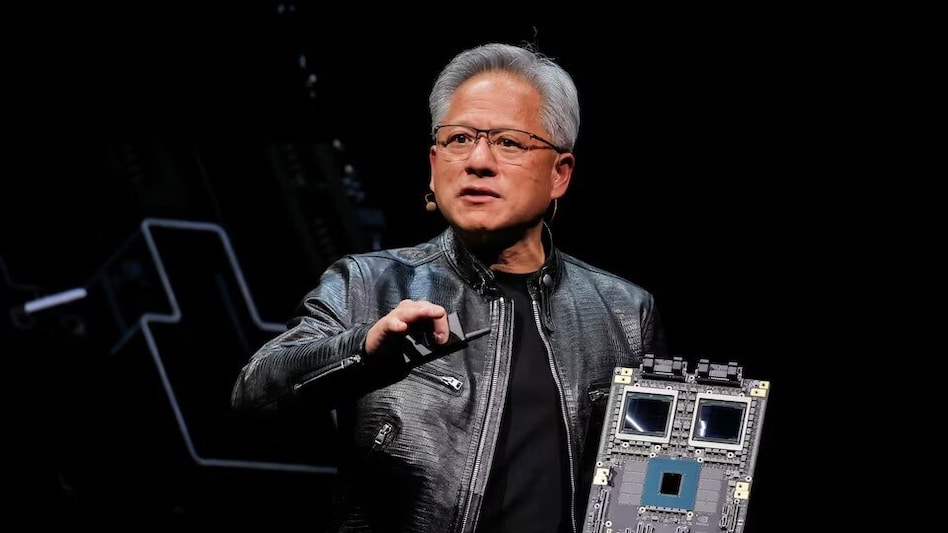
Jensen Huang Shares Personal Journey in First All-Hands Meeting Post-Reinstatement
In a pivotal moment for Nvidia, CEO Jensen Huang addressed employees on Tuesday during his first companywide meeting sin...
Business Insider | Nov 24, 2026, 19:55