If you want to satiate AI’s hunger for power, Google suggests going to space
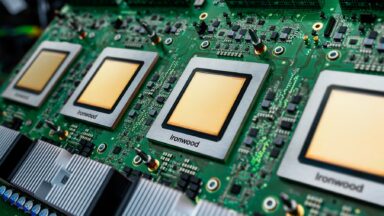
Google has officially joined the ranks of companies exploring the innovative concept of space-based data centers. On Tuesday, the tech giant unveiled Project Suncatcher, an ambitious initiative aimed at assessing the feasibility of deploying artificial intelligence technology in orbit. The project envisions launching fleets of satellites into low-Earth orbit, each equipped with Google’s Tensor Processing Units (TPUs). These powerful chips are designed to handle various AI tasks, including training, content generation, synthetic speech and vision, as well as predictive modeling. In a blog post, Google described Project Suncatcher as a 'moonshot' that seeks to combine solar-powered satellite constellations with TPUs and advanced free-space optical communication links to potentially enhance machine learning capabilities in space. Sundar Pichai, Google’s CEO, acknowledged the complexities ahead, stating, "Like any moonshot, it’s going to require us to solve a lot of complex engineering challenges." Early experiments have suggested that the TPUs can endure the harsh radiation of space, but significant hurdles remain, particularly regarding thermal management and the reliability of systems in orbit. In a conversation with Ars Technica, Travis Beals, a senior director within Google’s Paradigms of Intelligence research team, elaborated on the project's motivations. "We’re just seeing so much demand from people for AI," Beals explained. "So, we wanted to figure out a solution for compute that could work no matter how large demand might grow." As demand for AI continues to rise, the need for larger data centers becomes apparent, leading to increased electricity consumption. The MIT Technology Review estimates that AI could consume as much electricity as 22% of all U.S. households by 2028. Additionally, cooling these data centers poses significant challenges, often requiring extensive water resources, prompting concerns about environmental sustainability.
LTM Partners with Anthropic to Revolutionize Enterprise AI Integration
LTM, previously known as LTIMindtree, has joined forces with the AI startup Anthropic to seamlessly incorporate its Clau...
Business Today | Jul 13, 2026, 06:50
1X Unveils Revolutionary Humanoid Hand, Claims Major Breakthrough in Robotics
In an exciting development for the field of robotics, 1X has announced a new humanoid hand that it claims rivals and pos...
Business Insider | Jul 13, 2026, 09:10AI Titans Face Irony of Their Own Making in Content Scraping Debate
In a striking twist of irony, major AI companies, including Anthropic, OpenAI, and Google, are now confronting a predica...
Business Insider | Jul 12, 2026, 14:15A Heated Exchange: Musk and Altman Clash Over OpenAI and Apple Lawsuit
In a recent exchange on the social media platform X, Elon Musk and Sam Altman engaged in a sharp verbal showdown, intens...
CNBC | Jul 12, 2026, 15:45
Meta's Ambitious $50 Billion Data Center Expansion in Louisiana Set to Transform AI Landscape
Meta is significantly ramping up its Hyperion data center initiative in rural Louisiana, with the total investment proje...
CNBC | Jul 13, 2026, 09:45