The real reason Google DeepMind is working with a fusion energy startup
Commonwealth Fusion Systems (CFS), an innovative energy startup, announced its collaboration with Google’s DeepMind division to enhance the operation of its upcoming Sparc reactor through the application of artificial intelligence. This partnership aims to simulate the plasma that will be integral to CFS’s reactor by utilizing specialized software from DeepMind called Torax. The collaboration will not only refine the reactor's operations but also integrate AI models to assist CFS in optimizing its approach to achieving fusion energy. Fusion power, regarded as a game-changer, promises vast quantities of electricity with zero emissions, sourced from the abundant resource of water. Companies in the AI sector have shown increasing interest in fusion startups, viewing them as viable solutions to meet the energy demands of data centers, with Google also eyeing potential business opportunities in this area. This engagement marks Google’s continued exploration of nuclear fusion technologies. Previously, it has partnered with TAE Technologies to leverage AI in understanding plasma dynamics within TAE’s fusion systems. The persistent interest from Google underscores a significant challenge: maintaining the extreme temperatures required for fusion reactions, which are inherently unstable compared to nuclear fission. In CFS’s reactors, powerful magnets are employed to emulate gravitational forces, aiding in the containment of plasma. However, these magnets alone are not flawless, necessitating the development of advanced control software that can adapt to fluctuating plasma conditions. This complexity presents a perfect scenario for AI, which excels in managing intricate systems with numerous variables. Experts have recognized AI as a crucial technology facilitating significant progress in the fusion industry over recent years. Currently, CFS is in the process of constructing its demonstration reactor, Sparc, in a Boston suburb, with about two-thirds of the project completed. The startup anticipates that Sparc will become the first fusion reactor capable of generating more energy than it consumes by its projected completion in 2026. Google’s Torax is expected to utilize reinforcement learning and evolutionary search models to identify the most effective pathways to achieving net energy production. The two entities are also investigating the potential for AI to control the reactor's operations directly. In a show of confidence in CFS, Google participated in the company’s recent $863 million Series B2 funding round, alongside technology giant Nvidia. Additionally, Google has committed to purchasing 200 megawatts of power from CFS’s first commercial plant, Arc, which is scheduled for development near Richmond, Virginia. Google is also supporting TAE Technologies, a competitor in the fusion space.
Solar Energy Surpasses Coal for the First Time, Yet Challenges Remain
In a remarkable shift within the U.S. energy landscape, preliminary reports reveal that solar power has officially eclip...
Ars Technica | Jun 29, 2026, 20:15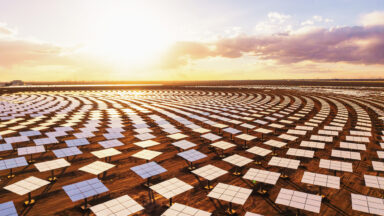
Google Raises Alarm Over EU's Proposed Regulations Impacting User Privacy
The European Commission is intensifying efforts to regulate Big Tech, with new proposals for Google set to be unveiled n...
Ars Technica | Jun 29, 2026, 18:30
Waymo and Uber Conclude Robotaxi Experiment in Phoenix
Waymo has announced that its automated vehicle services will no longer be accessible through the Uber app in Phoenix, Ar...
CNBC | Jun 29, 2026, 22:45
Chamath Palihapitiya Takes the Helm of AI Coding Startup After Securing $135M in Series A Funding
Chamath Palihapitiya, renowned for his role in venture capital through Social Capital and as a host of the All-In podcas...
TechCrunch | Jun 29, 2026, 21:25
Kalshi Takes Legal Action Against Illinois Over Controversial Sports Betting Tax
The battle for control over sports betting regulation is intensifying as states challenge prediction markets like Kalshi...
Ars Technica | Jun 29, 2026, 17:55