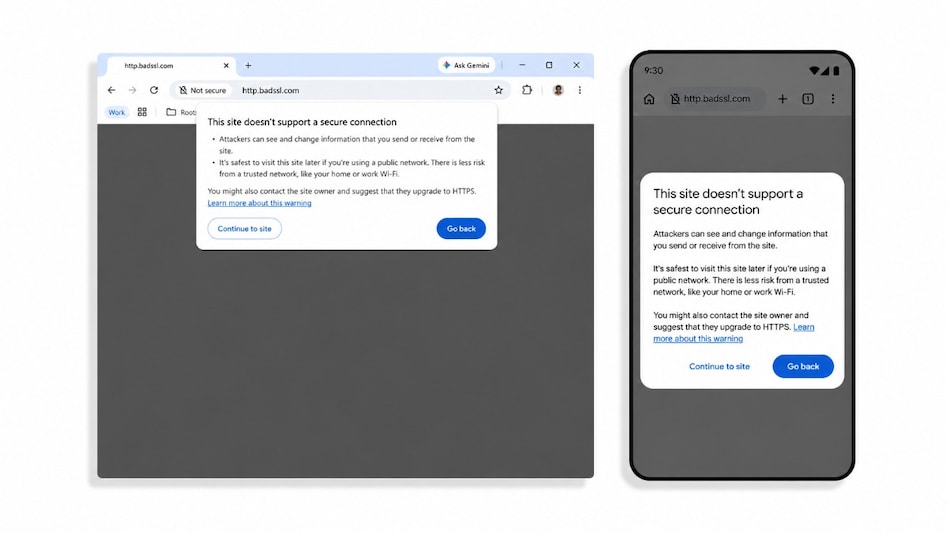
Google Chrome will ask before opening HTTP websites, adding a new layer of security to keep you even safer
In a significant move to bolster online security, Google Chrome is set to implement a new feature that will require user consent before connecting to websites that utilize the HTTP protocol. This initiative aims to improve upon the browser's existing 'Not Secure' warning, which can often be overlooked, especially during brief HTTP connections such as redirects. Initially rolled out earlier this year for users in Chrome’s Enhanced Protection mode within Safe Browsing, this feature is now being made available to all users by default. However, certain local addresses and hostnames that cannot obtain trusted HTTPS certificates will be exempt from this warning. The Chrome Security team highlighted that unencrypted HTTP traffic poses risks such as malware exposure, phishing attempts, and unauthorized access to personal data. Malicious actors can exploit these vulnerabilities by injecting harmful content into a user’s browsing session, often without their knowledge. In contrast, HTTPS provides encryption, safeguarding the information exchanged between users and websites. Despite the majority of Chrome connections already utilizing HTTPS, some sites still operate on HTTP. Google acknowledged that the previous 'Not Secure' label has its limitations, as users might miss the warning, and it can fail to appear during fleeting HTTP traffic. More critically, this label warns users after their connection has already been jeopardized, rather than allowing them to prevent such exposure. With the introduction of this new feature, Chrome will require users to approve an HTTP connection upon their first visit to a website. Once this approval is granted, the browser will refrain from displaying the warning again unless the user has not returned to that site for two weeks. There are specific exemptions to this warning, particularly for addresses that cannot obtain a publicly trusted HTTPS certificate, such as single-label hostnames like intranet/ and local IP addresses like 192.168.0.1, commonly used for home Wi-Fi router configurations. These connections are generally deemed lower risk because an attacker would need access to the local network to manipulate the traffic. Data from Google’s early rollout indicates that nearly 95% of desktop users do not encounter an HTTP warning in a typical week, with less than 1% experiencing three or more warnings. The rates are even lower on mobile devices, and Google anticipates these figures will continue to drop as more websites transition to HTTPS. This change is part of Google’s ongoing efforts over the past decade to enhance web security, marking Chrome as the first browser to adopt such a precautionary measure. The company hopes that this initiative will encourage other browsers to follow suit.
Staggering Recovery Rates Highlight Digital Payment Fraud Challenges
The battle against digital payment fraud continues to be an uphill struggle for consumers, with official data revealing ...
Business Today | Nov 24, 2026, 09:30
Supertake Secures $20 Million to Revolutionize AI-Driven Investment Portfolios
Supertake, an innovative AI investing startup, is on a mission to transform how individuals engage with the stock market...
TechCrunch | Nov 23, 2026, 22:10
Emerging AI Chip Design Revolution: A Challenge to Nvidia's Reign
Nvidia, under the leadership of Jensen Huang, faces a significant challenge from the very AI technology it helped to pop...
Business Insider | Nov 24, 2026, 10:10Saudi Engineer Faces Legal Battle Over Alleged Espionage Using AI Tech
A Saudi engineer employed by OpenAI, Abdulrahman Alfozan, is at the center of a legal dispute as prosecutors allege he u...
Business Insider | Nov 23, 2026, 23:50Amazon's $7.5 Billion Acquisition of Decart: A Strategic Move in the AI Chip Landscape
In a significant development for the tech industry, Amazon has announced its acquisition of Decart, a startup specializi...
TechCrunch | Nov 24, 2026, 15:55