Everybody's talking about AI, but Goldman Sachs says it's still not showing up in companies' bottom lines
In a recent analysis, Goldman Sachs highlighted a growing trend in corporate America: the surge in discussions around artificial intelligence. During the second quarter, a remarkable 58% of S&P 500 companies referenced AI in their earnings calls, revealing a significant interest in the technology. However, despite the enthusiasm, the financial benefits of AI remain largely unquantified. Analysts noted that only a handful of companies have successfully linked AI initiatives to increased profits. Echoing findings from a McKinsey survey, which showed that over 80% of firms felt generative AI had not yet impacted their financial performance, Goldman Sachs pointed out that the excitement surrounding AI has not translated into tangible earnings. Despite this disconnect, the stock market continues to favor AI-related companies, with shares of these firms rising by 17% this year, building on a 32% increase from the previous year. As the S&P 500 reaches one of its highest valuations in history, Goldman Sachs provided insights into the evolving landscape of AI investment. They categorized the AI trade into four distinct phases. The first phase was characterized by Nvidia, the key player in AI model technology. Currently, the market is in Phase 2, dominated by tech giants like Amazon, Microsoft, Google, Meta, and Oracle, who are projected to significantly increase their capital expenditures on AI projects in the coming years. However, the subsequent phases, which promise AI-driven revenue for software companies and broader productivity enhancements across various sectors, remain uncertain. The complexities of Phase 3 suggest that integrating AI into products to enhance sales could challenge existing software-as-a-service (SaaS) firms by intensifying competition and pressuring prices. Looking ahead, Goldman Sachs emphasizes that while the US economy is still in the early stages of AI adoption, the potential for a productivity surge is on the horizon. Yet, the analysts caution against allowing the hype to outpace the reality of AI's impact. They estimate that if AI investment were to drop back to 2022 levels, it could reduce 2026 sales forecasts by $1 trillion and significantly affect the S&P 500's market value.
TCS Sets Ambitious AI Hiring Goals Amid Industry Evolution
Tata Consultancy Services (TCS), a leading IT powerhouse in India, is planning to onboard up to 8,900 forward-deployed e...
Business Today | Jul 13, 2026, 06:55
Navigating the New AI Landscape: Satya Nadella's Insights on Knowledge Ownership
In a thought-provoking discussion, Satya Nadella, Chairman and CEO of Microsoft, has ignited a crucial debate surroundin...
Business Today | Jul 12, 2026, 16:45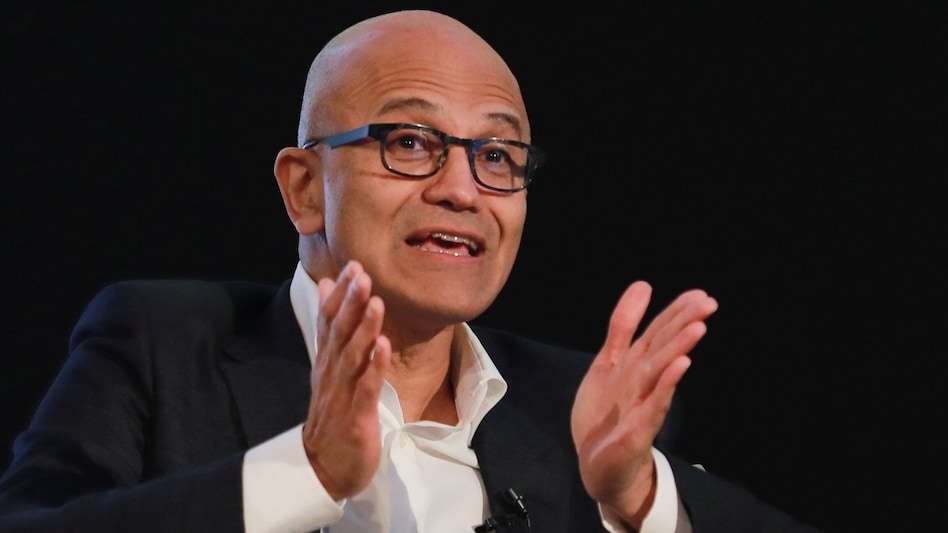
Apple Takes Legal Action Against OpenAI Over Alleged Data Breach by Ex-Employee
On July 10, Apple initiated a lawsuit against OpenAI, claiming that the company has profited from confidential informati...
Business Today | Jul 13, 2026, 05:45
Meta's Ambitious $50 Billion Data Center Expansion in Louisiana Set to Transform AI Landscape
Meta is significantly ramping up its Hyperion data center initiative in rural Louisiana, with the total investment proje...
CNBC | Jul 13, 2026, 09:45
TCS Overhauls Leadership Structure to Embrace AI and Market Growth
Tata Consultancy Services (TCS) has announced a significant leadership restructuring aimed at enhancing its operations a...
Business Today | Jul 13, 2026, 05:15