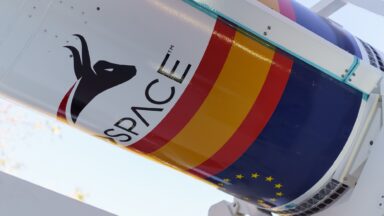
Which countries are actually serious about developing their own rockets?
While the United States and China continue to dominate the space launch sector, a number of U.S. allies are recognizing the importance of developing their own access to space as a matter of national security. Countries such as Australia, Canada, Germany, and Spain are investing significantly in commercial startups to create their own launch industries, despite currently lacking the independent capability to send satellites into orbit. These nations are taking proactive steps to harness private launch initiatives within their borders, channeling government funding to support the burgeoning space industry. This strategic shift reflects a broader trend among U.S. allies to bolster defense spending in light of increasingly strained relations with the Trump administration, characterized by tariffs, trade conflicts, and geopolitical tensions. In Europe, discussions are underway regarding the establishment of a nuclear deterrent that could operate independently from the U.S. military's nuclear umbrella, highlighting a growing desire for autonomy in defense matters. Additionally, the cooling relationship between Trump and key figures in the space sector, such as Elon Musk, has led many countries to reassess their reliance on U.S. launch services, particularly those provided by SpaceX. Despite the competitive landscape, commercial satellite operators will still seek the most cost-effective and reliable options for launching their payloads. As a result, SpaceX is likely to continue securing the majority of commercial launch contracts globally. However, many government-backed satellite projects may have a more limited market, often favoring national launch vehicles. U.S. satellites typically utilize American rockets, while Chinese satellites are launched on Chinese vehicles. The situation in Europe is less clear-cut; although the European Space Agency (ESA) and the European Union prefer to launch satellites using European rockets, they have resorted to SpaceX for several critical missions while awaiting the operational debut of the long-delayed Ariane 6 rocket. With the Ariane 6 now achieving reliable launches, Europe is poised to reduce its dependence on U.S. launch services.
Natural Secures $30 Million to Transform Payments for AI Agents and Challenge Stripe
In a rapidly evolving landscape where AI agents are taking on increasingly complex tasks—ranging from vendor identificat...
TechCrunch | Jul 20, 2026, 19:35
Cybersecurity Alert: Millions of WordPress Sites at Risk from Exploited Vulnerabilities
Recent cybersecurity reports indicate that hackers are actively targeting websites that utilize outdated versions of the...
TechCrunch | Jul 20, 2026, 15:55
Major $1.5 Billion Copyright Settlement Approved for Anthropic
Anthropic is set to disburse payments to a collective of authors and publishers following a significant $1.5 billion set...
TechCrunch | Jul 21, 2026, 24:40
Netflix Champions AI Literacy Among All Employees, Says Chief Product Officer
In a recent episode of 'Lenny's Podcast', Elizabeth Stone, Netflix's Chief Product and Technology Officer, emphasized th...
Business Insider | Jul 20, 2026, 20:25The Open-Weight AI Debate: Navigating Innovation and Regulation
The emergence of Kimi K3, a leading open-weight large language model developed by the Chinese lab Moonshot, has ignited ...
TechCrunch | Jul 20, 2026, 20:10