Chinese brain interface startup Gestala raises $21M just two months after launch
In a significant move within the brain-computer interface (BCI) sector, Chinese startup Gestala has successfully raised $21.6 million (CN¥150 million) just two months after its inception. The company, founded by serial entrepreneur Phoenix Peng, aims to develop non-invasive ultrasound-based BCIs, positioning itself as a competitor to established players like Elon Musk’s Neuralink and OpenAI-backed Merge Labs. The funding round, which attracted over $58 million in commitments, was co-led by Guosheng Capital and Dalton Venture, with participation from several other notable investors including Tsing Song Capital, Gobi Ventures, Fourier Intelligence, Liepin, and Seas Capital. This substantial investment marks the largest initial funding in China’s rapidly evolving BCI landscape. With this influx of capital, Peng plans to enhance research and development efforts, expand the team from 15 to around 35 employees by the end of the year, and establish a manufacturing facility in China. Gestala aims to complete its first-generation prototype within the year, seeking to capitalize on the growing interest in ultrasound technology within the global BCI market. As the first company of its kind in China, Gestala is optimistic about the potential of ultrasound to transform brain-computer interactions. According to Peng, non-invasive ultrasound could eliminate many risks associated with traditional brain surgeries, allowing for broader access and interaction with brain functions. This technology can monitor extensive parts of the brain, including deep neural pathways, and offers precise stimulation or suppression of neural activity without the need for invasive procedures. Despite the ongoing geopolitical challenges, Peng remains hopeful for collaborative opportunities between the U.S. and China in deep technology research, emphasizing that both nations possess unique strengths that could enhance scientific advancements. Gestala is currently focusing on several medical applications, with chronic pain management as its primary initiative. Studies indicate that ultrasound stimulation may significantly alleviate pain, which affects substantial populations in both the U.S. and China. The startup is also investigating potential uses in mental health, including conditions like depression, PTSD, and OCD, along with stroke rehabilitation. In total, the company is exploring six to eight potential applications, though most are still in the early research phase. Gestala believes its ability to leverage China's integrated manufacturing ecosystem will allow it to transition from development to production more efficiently than many international competitors. Additionally, the startup is partnering with major hospitals in China to expedite clinical trials at a reduced cost compared to similar studies in the U.S. and Europe. Furthermore, Gestala is developing an 'Ultrasound Brain Bank'—a comprehensive clinical dataset aimed at training AI models to decode brain signals and enhance future neurological diagnostics.
SpaceX Successfully Tests Starship Rocket, Launching New Era of Space Exploration
On Friday evening, SpaceX executed a significant milestone by launching its colossal Starship rocket from its facility i...
CNBC | Jul 25, 2026, 24:10
Finland Unveils World's Largest Sand Battery to Tackle Renewable Energy Challenges
In a groundbreaking move to address the critical issue of renewable energy intermittency, a small town in southern Finla...
CNBC | Jul 25, 2026, 05:35
The Aluminum Foil Trend: A DIY Shield Against Wireless Identity Theft
Have you noticed an unusual trend where people are wrapping their wallets in aluminum foil? This peculiar practice has e...
Business Today | Jul 25, 2026, 02:45
SpaceX's Latest Starlink Launch Marks Milestone Amid Booster Setbacks
On Friday, SpaceX marked a significant achievement by successfully launching its first batch of third-generation Starlin...
TechCrunch | Jul 24, 2026, 23:40
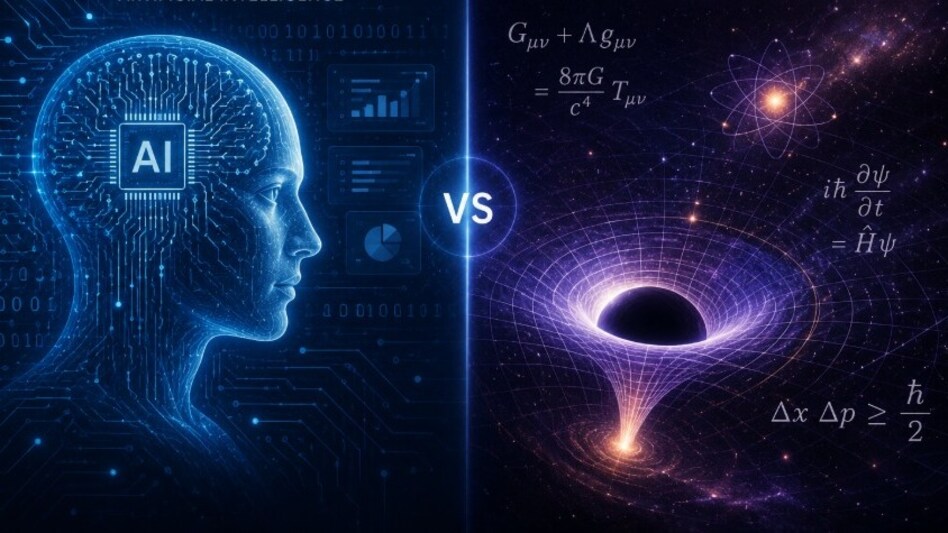
Unlocking the Secrets of Quantum Gravity: Can AI Help Physics Make a Leap?
The realm of scientific research is undergoing a profound transformation, fueled by the rapid advancements in artificial...
Business Today | Jul 25, 2026, 24:30