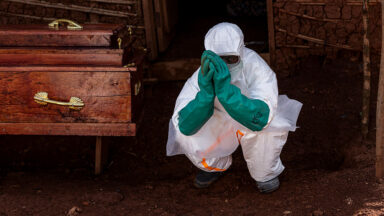
These researchers would be in Africa fighting ebola—but Trump cut their funding
As the escalating Ebola outbreak in the Ituri Province of the Democratic Republic of the Congo continues to pose a grave threat, a crucial network of research centers finds itself unable to respond effectively on the ground. This predicament arises from funding cuts implemented by the Trump administration, influenced by unfounded conspiracy theories regarding the origins of COVID-19. Founded in 2020 by the National Institutes of Health, the Centers for Research in Emerging Infectious Diseases (CREID) Network was dedicated to investigating viruses that emerge from wildlife and can spill over into human populations, including the Ebola virus. The network operates ten sites globally, strategically placed in regions prone to such disease outbreaks, notably in Central and East Africa. It was also engaged in research concerning hantavirus, which recently made headlines due to a rare outbreak on a cruise ship. Over the course of five years, NIH allocated approximately $82 million to the CREID initiative, with funding renewal anticipated in 2025. However, in June of last year, the centers received a stop-work order, which stated that their research was considered “unsafe for Americans” and not a prudent use of taxpayer resources, indicating a shift in the agency's priorities away from the network. Kristian Andersen, an evolutionary virologist at Scripps Research in La Jolla, California, and leader of one of the CREID centers in West Africa, expressed his astonishment at the rationale behind the cuts. He highlighted that the research was essential for pandemic preparedness. With no NIH funding available, Andersen has been unable to conduct critical work, such as diagnostics and genomic sequencing of the Ebola virus, which he previously led during past outbreaks. While Andersen remains in contact with colleagues in the DRC and is analyzing data related to the outbreak, he cannot offer practical assistance in testing or sequencing. “We sit here in San Diego and see this unfold,” he lamented. Robert Garry, a microbiology and immunology professor at Tulane Medical School and co-leader of the center with Andersen, affirmed that the entire network would have been mobilized to tackle the crisis if funding had not been withdrawn.
The Boring Company Eyes $4 Billion Funding Boost Amid Expanding Tunnel Ventures
Elon Musk's tunneling enterprise, The Boring Company, is reportedly negotiating a substantial funding round of $4 billio...
TechCrunch | Jul 25, 2026, 19:50
Nvidia Strikes Major Deal with SK Hynix to Secure AI Memory Supply
Nvidia has successfully forged a significant partnership with South Korea's SK Hynix to secure memory supplies essential...
CNBC | Jul 25, 2026, 05:15
The Aluminum Foil Trend: A DIY Shield Against Wireless Identity Theft
Have you noticed an unusual trend where people are wrapping their wallets in aluminum foil? This peculiar practice has e...
Business Today | Jul 25, 2026, 02:45
Finland Unveils World's Largest Sand Battery to Tackle Renewable Energy Challenges
In a groundbreaking move to address the critical issue of renewable energy intermittency, a small town in southern Finla...
CNBC | Jul 25, 2026, 05:35
Reclaiming Control: Librarians Host Workshops to Help People Navigate AI Tools
In a lively library setting in South Philadelphia, Charlie Bailey, a local librarian, humorously noted, "Everybody’s on ...
TechCrunch | Jul 25, 2026, 16:20