A Red Bull engineer got bored with Formula One. His robotics startup just raised $55 million.
A former engineer from Red Bull Racing has transitioned from the high-speed world of Formula One to a groundbreaking venture in robotics. Bercan Kilic, who worked as an aerodynamics engineer for the renowned racing team, has launched microagi, a startup dedicated to training robots for factory tasks. Recently, microagi secured an impressive $55 million in funding, marking one of the largest seed rounds for a German startup. The investment was led by Hummingbird, with contributions from prominent venture firms such as Northzone, LocalGlobe, Village Global, and redalpine. Although microagi has chosen not to disclose its valuation, its ambitious goals are clear. Kilic left his role in F1, which he described as exhilarating yet ultimately unfulfilling, to pursue what he perceives as a more significant engineering challenge: deploying robots to create a future of affordable goods and services. Microagi focuses on aiding manufacturers in training robots for specific roles without developing its own robotic hardware. The company captures data from human workers using advanced cameras and sensor-equipped gloves, utilizing this footage to instruct existing robotic systems on performing tasks effectively within factories. Currently, five companies are using microagi’s platform, with at least one on the brink of deploying robots in its operations. While microagi may be lesser-known, its consumer-facing initiative, shift, gained attention this year by offering free apartment cleaning services in exchange for capturing first-person video of cleaning tasks. Recently, shift expanded its offerings to include free private chefs in San Francisco, highlighting its innovative approach. The funding comes at a time when the robotics sector is experiencing a surge in investment, driven by the need for automation in response to labor shortages and the rising costs of manufacturing. Kilic views factory robots as essential to addressing these shortages, especially as the workforce in Europe and the US ages. He noted that while China installed a staggering 295,000 factory robots in 2024, the US only managed 34,200, as reported by the International Federation of Robotics. Kilic expressed concern for the future of labor in manufacturing, emphasizing that the aging workforce poses a significant challenge. He stated, "If you run factories, the math is already on your desk. Your most experienced workers are retiring this decade, and their replacements were never born. Reshoring only works if the robots do." Founded in a Munich hacker house last year, microagi aims to transition robotics from research labs to real-world applications. Kilic's philosophy is that AI models must be refined and streamlined to be deployed across millions of robots, as operating large models on numerous machines could be computationally prohibitive. Initially, microagi sought to focus solely on deploying existing robotic models but soon discovered that many were not sufficiently advanced. This realization led to the creation of shift, which collects valuable data by compensating individuals to record themselves performing various physical tasks, ultimately providing this data to AI and robotics companies. Kilic is optimistic about the future of robotics, drawing parallels to the advancements seen in language models. He believes the industry is nearing a pivotal moment, akin to that of GPT-2, where the combination of data and computational power can lead to significant improvements in robotic technology. Investors, including Hummingbird managing partner Firat Ileri, have been impressed by the ambition and dedication of Kilic and his co-founders, particularly in light of Europe's shrinking workforce. With an eye on the future, Kilic and his team aim to position microagi as a leader in the robotics industry, setting an audacious goal of deploying 20 to 30 million robots within the next five years. "If we haven't achieved that, it’s a big failure," Kilic asserted, reflecting his commitment to transforming the landscape of factory automation.
LinkedIn CEO Highlights Gen Z's Potential Edge in AI-Driven Job Market
As the job landscape becomes increasingly challenging for young professionals, LinkedIn's CEO, Daniel Shapero, suggests ...
Business Today | Nov 25, 2026, 24:25
Nvidia's Jensen Huang Opens Up About Personal Struggles and Commitment to Improvement
In a heartfelt address to Nvidia employees, Jensen Huang revealed that he has been attending daily therapy sessions as h...
Business Today | Nov 25, 2026, 02:10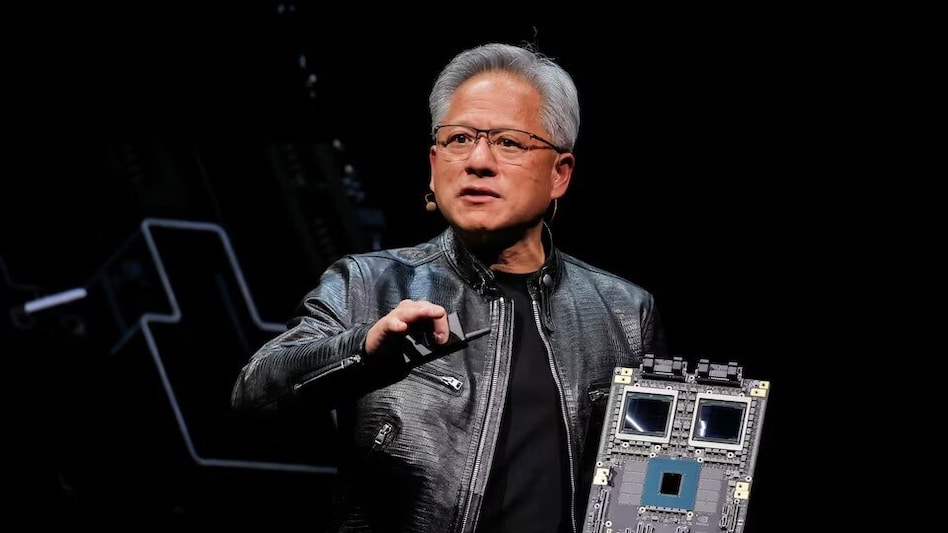
Trump Considers Pardoning Nvidia's Jensen Huang Amid Controversy
In a recent interview with the New York Post, former President Donald Trump expressed that pardoning Jensen Huang, the C...
TechCrunch | Nov 25, 2026, 24:25
Nvidia's Board Shake-Up: The High-Stakes Return of Jensen Huang
Nvidia's CEO Jensen Huang has received unwavering support from longtime board members Tench Coxe, Mark Stevens, and Harv...
CNN | Nov 24, 2026, 23:00
Yale Expert Warns Nvidia’s Leadership Changes Could Harm U.S. Tech Dominance
On Monday, the market's enthusiasm for Nvidia may have been misguided, according to Yale business scholar Jeffrey Sonnen...
TechCrunch | Nov 25, 2026, 24:35