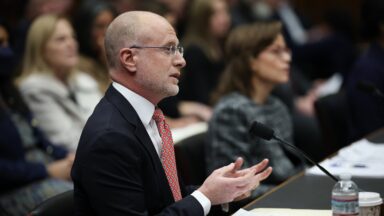
FCC chair fights Calif. governor over alleged Lifeline benefits for dead people
A new clash has erupted between the Federal Communications Commission (FCC) and California regarding the management of federal Lifeline funds. FCC Chairman Brendan Carr is advocating for fresh nationwide eligibility criteria, asserting that California has been improperly distributing benefits to deceased individuals. California officials have pushed back against these claims, arguing that the issues cited by the FCC stem from delays in account closures following a person's death, rather than systemic failures within the state’s Lifeline enrollment system. This disagreement intensifies as the FCC’s lone Democratic commissioner criticizes Carr’s proposed changes, labeling them as 'cruel and punitive' and suggesting they would increase costs for many eligible, living individuals. Carr's office announced plans for an FCC vote next month on amendments designed to ensure that Lifeline funds are allocated solely to eligible, living citizens who meet low-income criteria. The Lifeline program, which allocates nearly $1 billion annually, provides qualifying households with financial assistance of up to $9.25 each month for phone and internet services, or up to $34.25 in tribal regions. The proposed changes, detailed in a Notice of Proposed Rulemaking (NPRM), will invite public input on a series of alterations. Key recommendations include the requirement for applicants to submit full Social Security numbers, verification of eligibility through the Citizenship and Immigration Services’ Systematic Alien Verification for Entitlements program, and restrictions on state verification methods. Carr pointed to a recent Inspector General report revealing that Lifeline providers received close to $5 million in federal funds to supply services to over 116,000 deceased individuals in three states that opted out of federal verification processes. He noted that California accounted for more than 80 percent of these discrepancies, stating, 'Such waste, fraud, and abuse is wholly unacceptable.' The FCC revoked California's opt-out status last November due to alleged noncompliance with the program's regulations, with Texas and Oregon being the other two states that opted out.
The Future of Work: Executives Weigh In on AI's Impact on Gen Z Careers
As generative artificial intelligence continues to rise, uncertainty looms for the incoming Gen Z workforce. Leaders fro...
Business Insider | Jul 26, 2026, 10:15The Boring Company Eyes $4 Billion Funding Boost Amid Expanding Tunnel Ventures
Elon Musk's tunneling enterprise, The Boring Company, is reportedly negotiating a substantial funding round of $4 billio...
TechCrunch | Jul 25, 2026, 19:50
The Aluminum Foil Trend: A DIY Shield Against Wireless Identity Theft
Have you noticed an unusual trend where people are wrapping their wallets in aluminum foil? This peculiar practice has e...
Business Today | Jul 25, 2026, 02:45
Kalshi Challenges Netflix Over Controversial Documentary Trailer
Kalshi, the prediction market platform, has taken significant legal steps against Netflix, sending a cease-and-desist le...
TechCrunch | Jul 25, 2026, 17:10
Unleashing the Power of AI: The 5 Smartphones Redefining Mobile Photography
Artificial Intelligence (AI) is transforming our daily experiences, permeating various aspects of technology, including ...
Business Today | Jul 26, 2026, 07:05