
With recent Falcon 9 milestones, SpaceX vindicates its “dumb” approach to reuse
While the spotlight was on SpaceX's Starship this week, the Falcon 9 rocket was quietly achieving remarkable new milestones. During two recent launches of Starlink satellites, the Falcon 9 showcased the effectiveness of its first-stage reuse strategy, a pioneering approach that SpaceX has cultivated over the past decade. The first significant event took place on Wednesday morning with the launch of the Starlink 10-56 mission from Cape Canaveral, Florida. The rocket's first stage, known as Booster 1096, successfully completed its second launch and landed on the drone ship named Just Read the Instructions. This marked an impressive milestone as it was the 400th successful drone ship landing for SpaceX. Less than a day later, another Falcon 9 rocket lifted off from Kennedy Space Center for the Starlink 10-11 mission. Booster 1067, which has been in service since June 2021, returned to land on a different drone ship, A Shortfall of Gravitas. This particular booster has a diverse mission history, including transporting two Crew Dragon spacecraft to the International Space Station and launching Galileo satellites for the European Union. Notably, this launch marked Booster 1067's 30th flight, a first for any Falcon 9 booster. These achievements come a decade after SpaceX first explored the concept of first-stage reuse, which began with a successful controlled landing of the Falcon 9's first stage in September 2013. This groundbreaking moment demonstrated the feasibility of supersonic retropropulsion, a technique that allows a rocket's engines to ignite while traveling faster than sound through the atmosphere, despite extreme external temperatures exceeding 1,000 degrees Fahrenheit. Tom Mueller, SpaceX's former chief of propulsion, reflected on the initial challenges of this endeavor, recalling the skepticism surrounding the first attempts. Observing the launch from Vandenberg Space Force Base, he noted the complexity and risks involved, yet the first stage successfully returned intact, proving the technology's viability and setting the stage for the future of reusable rocketry.
The Boring Company Eyes $4 Billion Funding Boost Amid Expanding Tunnel Ventures
Elon Musk's tunneling enterprise, The Boring Company, is reportedly negotiating a substantial funding round of $4 billio...
TechCrunch | Jul 25, 2026, 19:50
Nvidia Strikes Major Deal with SK Hynix to Secure AI Memory Supply
Nvidia has successfully forged a significant partnership with South Korea's SK Hynix to secure memory supplies essential...
CNBC | Jul 25, 2026, 05:15
Vision Breakthrough: US Startup Launches Groundbreaking Retina Chip in Europe
Science Corp is poised to introduce a revolutionary retina chip in Europe, designed to restore partial vision for indivi...
Business Today | Jul 25, 2026, 01:00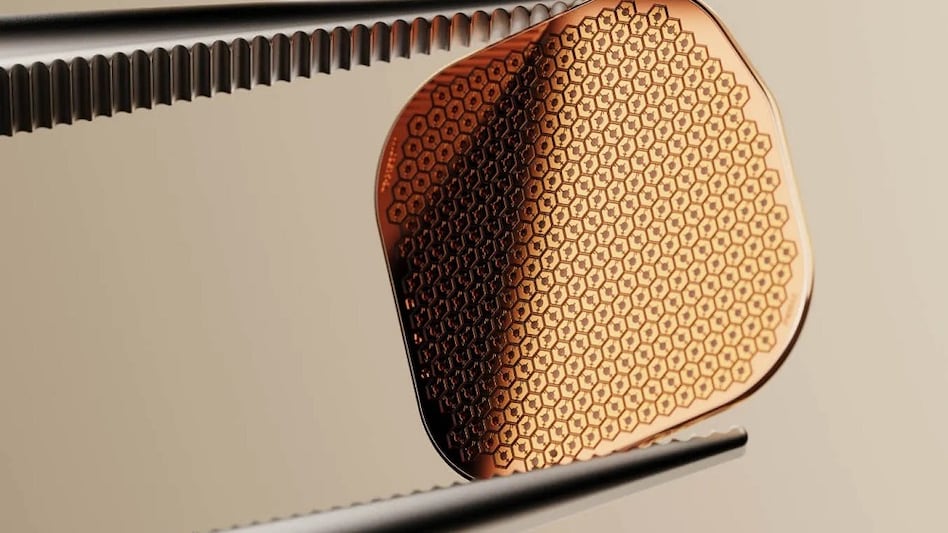
Market Turbulence: Four Key Factors Impacting Stocks This Week
This past week has been challenging for the stock market, driven by several significant forces that have created turbule...
CNBC | Jul 25, 2026, 20:05
Unlocking the Secrets of Quantum Gravity: Can AI Help Physics Make a Leap?
The realm of scientific research is undergoing a profound transformation, fueled by the rapid advancements in artificial...
Business Today | Jul 25, 2026, 24:30