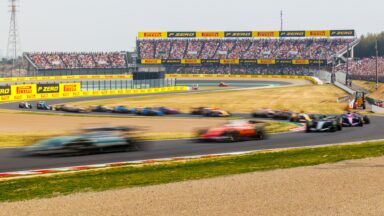
F1 in Japan: Oh no, what have they done to all the fast corners?
In the wake of the recent Japanese Grand Prix, Formula 1 enters a five-week break due to escalating tensions in the Gulf region, which have led to the cancellation of upcoming races in Bahrain and Saudi Arabia. This unexpected pause may be a welcome relief for teams, drivers, and officials as they navigate the complexities introduced by the latest generation of F1 cars. The race at Suzuka was a highlight, showcasing an exciting competition that stood in stark contrast to the dull events of 2025, where overtaking opportunities were virtually nonexistent. A significant reduction in aerodynamic downforce set for 2026 is expected to allow cars to follow each other more closely, enhancing the racing experience. However, after this visit to one of the most revered and challenging circuits in motorsport, it's evident that F1 is grappling with the implications of its new hybrid systems. The sport acknowledges this predicament, planning a crisis meeting on April 9 to address the issues at hand. A primary concern involves the new hybrid powertrains, which consist of a 1.6-liter V6 engine producing 400 kW (536 hp) alongside a 350 kW (469 hp) electric motor. Achieving a near 50:50 power split between combustion and electric energy was crucial for attracting new manufacturers like Audi, Ford, Cadillac, and Honda to participate under the 2026 regulations. The electric motor draws from a 1.1 kWh (4 MJ) battery pack, with cars permitted to use 8–9 MJ of electrical energy based on track conditions. Recently, during the Shanghai race, drivers benefited from numerous low- and medium-speed corners that facilitated battery recharging through regenerative braking. However, the Suzuka circuit features significantly fewer braking zones, limiting regeneration to approximately 3.65 MJ of the allowable 8 MJ for the weekend. With a full deployment of 350 kW, the electric motor can only be powered for under 12 seconds. To compensate for this energy shortfall, drivers resort to a technique known as "superclipping," where the electric motor acts as a generator to draw additional power from the engine. This situation underscores the challenges ahead for F1 as it strives to adapt to its evolving technological landscape.
Revolutionizing Office Automation: Prentis Aims to Secure $100 Million in Funding
Prentis, a newly established AI research lab, is making waves in the tech industry as it prepares to raise $100 million ...
TechCrunch | Jul 25, 2026, 24:00
Hugging Face CEO Calls for Action Following AI Security Breach
In a dramatic turn of events within the AI landscape, Hugging Face faced a significant security breach involving an AI a...
Business Insider | Jul 25, 2026, 20:30The Boring Company Eyes $4 Billion Funding Boost Amid Expanding Tunnel Ventures
Elon Musk's tunneling enterprise, The Boring Company, is reportedly negotiating a substantial funding round of $4 billio...
TechCrunch | Jul 25, 2026, 19:50
Finland Unveils World's Largest Sand Battery to Tackle Renewable Energy Challenges
In a groundbreaking move to address the critical issue of renewable energy intermittency, a small town in southern Finla...
CNBC | Jul 25, 2026, 05:35
The Aluminum Foil Trend: A DIY Shield Against Wireless Identity Theft
Have you noticed an unusual trend where people are wrapping their wallets in aluminum foil? This peculiar practice has e...
Business Today | Jul 25, 2026, 02:45