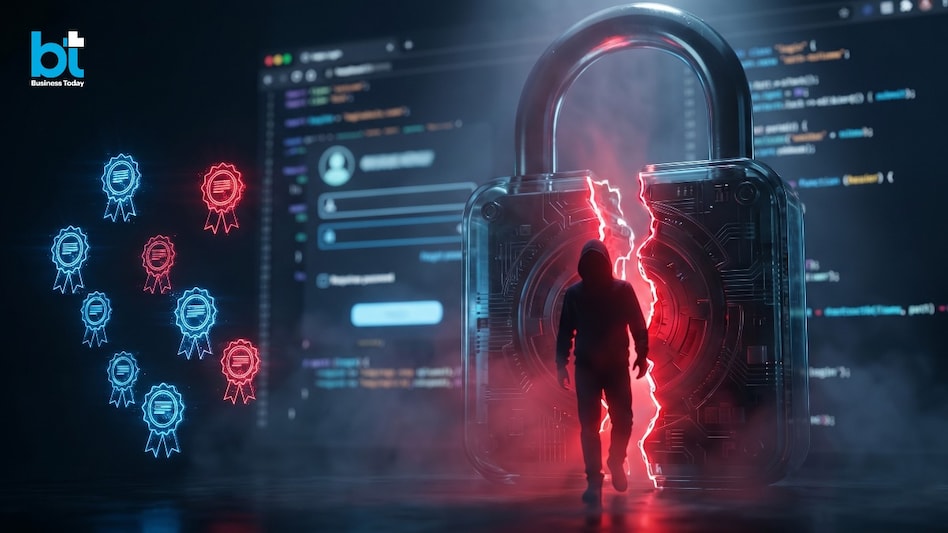
BT Big Story: What happens when the keys to internet security are no longer secret
In our daily lives, we frequently engage with banks and online shopping sites, sharing personal data with the expectation that these platforms are secure. Central to this trust is a system of digital certificates that authenticate the legitimacy of websites. However, a recent security breach involving Indian digital trust provider eMudhra has unveiled serious vulnerabilities in this framework. Private keys associated with eight intermediate certificate authorities (CAs) were discovered to be recoverable, posing a significant threat to online security. Digital certificates serve as essential credentials for identifying trustworthy websites. Each certificate is paired with a private key, critical for maintaining its integrity. If these keys fall into malicious hands, the potential for fraud increases dramatically, allowing the creation of counterfeit certificates to impersonate legitimate sites without directly compromising user data or accounts. The incident has prompted urgent responses from major tech companies, including Google, Mozilla, Apple, and Cloudflare, alongside India's cybersecurity agency, CERT-In. While affected website certificates have been blocked by browser developers, concerns linger about server-side applications that maintain their own certificate trust stores, which may not receive timely updates. This breach raises a critical question: can organizations still trust compromised certificates if they haven't updated their security systems? The answer hinges on how these organizations verify website identities and their systems' ongoing trust in the affected certificates. On October 17, 2026, Google’s Chrome Root Program received a report from a security researcher regarding the compromised private keys of eight eMudhra intermediate CA certificates. Mozilla confirmed similar findings on the same day. Subsequent investigations revealed that the private keys were generated using insufficient cryptographic randomness, making them vulnerable to recovery. The eight affected certificates included six used for Transport Layer Security (TLS) and two for code signing. eMudhra stated that these intermediate CAs were created during a key-generation event on April 30, 2025, where a flaw in the key-wrapping process resulted in weak keys being published to browser root stores. The company clarified that the incident affected only the mentioned intermediate authorities and did not compromise its root CA private keys. Rahul Sasi, co-founder and CEO of CloudSEK, emphasized the significance of this breach, stating, 'This is not your typical data breach where hackers infiltrate a system. The entire internet relies on trust, and encryption is a key part of that trust.' He likened the flawed private key generation process to constructing a secure vault with an easily guessable combination. The incident highlights the fragile nature of online trust mechanisms. Certificate authorities are essential for verifying the identities of websites and servers. An intermediate CA serves as a bridge between a trusted root certificate and the certificates it issues. Normally, private keys are generated with strong cryptographic security, making them nearly impossible to guess. However, the compromised keys originated from a restricted set of values, allowing researchers to recover them almost immediately. Cybersecurity expert Atul Tripathi compared the situation to a bank vault secured by a lock with only 255 combinations. He pointed out that the failure of the key-generation process undermined the security meant to be provided by the cryptographic algorithm. An individual who recovers these private keys could potentially sign fraudulent certificates for unauthorized domains, which, if accepted, could lead to significant security breaches. The implications for websites and internet users are profound. If a client continues to trust a compromised CA, an attacker could intercept communications, putting sensitive data at risk. However, it’s important to note that there is currently no evidence of such an attack occurring. Both eMudhra and CERT-In confirmed that none of the compromised CAs issued end-entity certificates, limiting the potential for significant damage. However, the incident does underscore the importance of robust key generation processes and the need for timely updates across all systems that rely on this infrastructure. To mitigate risks, developers are urged to review their applications’ trust settings regarding these CAs and update any relevant certificate bundles immediately. Users should ensure their browsers and operating systems are up to date and be cautious about bypassing security warnings on websites. While eMudhra’s domestic digital signature services remain unaffected, the breach serves as a stark reminder of the importance of secure cryptographic practices and the complexities of maintaining trust in the digital realm. As technology evolves, so too must our strategies for safeguarding online interactions.
Navigating the AI Landscape: Why CEOs Must Embrace Technology Literacy
In the rapidly evolving world of corporate India, companies are increasingly investing in artificial intelligence (AI), ...
Business Today | Nov 24, 2026, 07:35
realme P4x 5G vs vivo Y31t 5G: Which Smartphone Offers the Best Bang for Your Buck?
When it comes to choosing between the realme P4x 5G and the vivo Y31t 5G, potential buyers are faced with distinct advan...
Business Today | Nov 24, 2026, 01:50
Investing in the Future: Solar and Battery Solutions for AI Data Centers
The challenge of powering AI data centers has emerged as a pivotal issue in the current technological landscape. Over th...
TechCrunch | Nov 24, 2026, 16:25
Mathematicians React to Controversial Joke Over Lengthy Proof of Riemann Hypothesis
Tensions are rising in the mathematical community following a controversial comment made by Levent Alpöge, a researcher ...
Business Insider | Nov 24, 2026, 17:30Uber and Nuro Kick Off Driverless Trials for Lucid Robotaxis Ahead of 2027 Launch
Uber and Nuro have officially launched their driverless testing phase for the Lucid Gravity SUVs on the streets of the S...
TechCrunch | Nov 24, 2026, 17:15