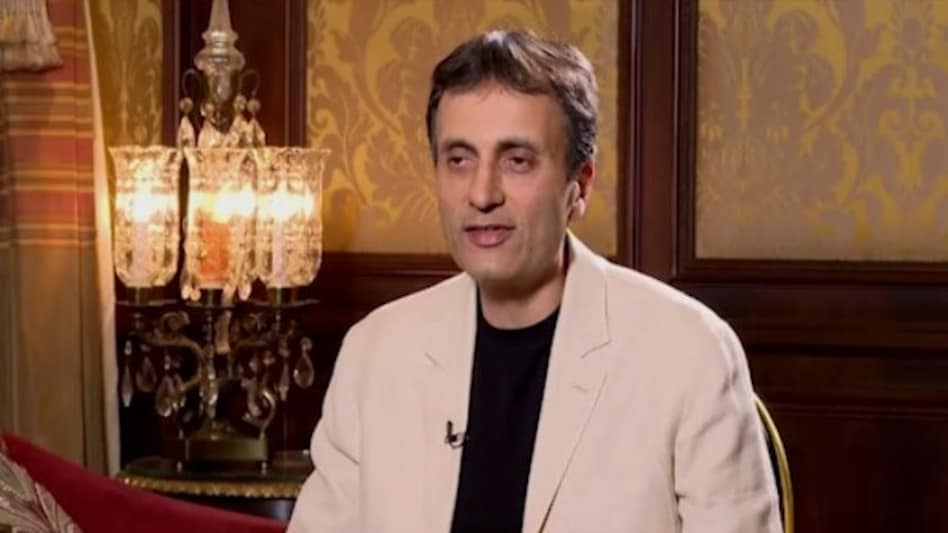
Rockefeller's Ruchir Sharma warns of AI bubble, says India seen as ‘anti-AI play’ by global investors
Ruchir Sharma, chairman of Rockefeller International, has expressed concerns about the sustainability of the current artificial intelligence (AI) investment surge. He argues that the global focus on AI has become overly narrow, reminiscent of the dot-com bubble in the late 1990s. In an interview with the Indian Express, Sharma highlighted that while previous technology cycles provided India with clear opportunities through its IT services sector, the current AI wave leaves the nation at a disadvantage in the global AI landscape. Sharma noted that this lack of engagement has resulted in a noticeable indifference from international investors towards India. Reflecting on his three-decade career in investment, he stated, "I've never seen such indifference towards India... The opposite of love is not hate, it is indifference. Indifference, being ignored..." He emphasized that India's previous successes in IT, often criticized as merely an arbitrage model, are now seen as a limitation in the face of today's innovation demands. He pointed out that global capital is increasingly flowing to a select few countries excelling in AI, such as the United States, Japan, South Korea, and Taiwan. Sharma highlighted that India is being perceived as an 'anti-AI play,' suggesting that attention may return only after the current AI bubble bursts. In a striking comparison, he noted that Taiwan Semiconductor Manufacturing Company (TSMC) now holds more weight in global indices than the entire Indian market. "I never thought I’d live to see this day, where one company from Taiwan, TSMC, has a greater influence in the MSCI index than all of India combined," he remarked. Despite these challenges, Sharma is optimistic that the intense focus on AI will eventually subside. He stated, "This too shall pass... You can’t have the entire global economy being operated on one factor." While acknowledging the immediate hurdles posed by US tariffs and geopolitical tensions, he believes India's long-term growth potential remains strong. However, Sharma pointed out ongoing structural challenges that continue to hinder foreign investment, including a complex regulatory environment and low spending on research and development. He noted that India's investment in R&D stands at about 0.6% of GDP, significantly lower than that of South Korea and Taiwan, which invest around 4-5%, and the US at approximately 3%. He suggested that reforms such as lowering securities transaction taxes could enhance India's attractiveness to global investors.
Crisis Averted: Power Line Failure Highlights Urgent Need for Data Center Resilience
A power line failure near Washington, DC, recently showcased a significant challenge faced by the electrical grid due to...
TechCrunch | Jul 25, 2026, 13:50
AI Transformations Lead to Major Job Cuts at Tech Giants
Monday.com, the innovative work management platform based in Tel Aviv, has recently announced significant layoffs, attri...
TechCrunch | Jul 26, 2026, 01:45
Unleashing the Power of AI: The 5 Smartphones Redefining Mobile Photography
Artificial Intelligence (AI) is transforming our daily experiences, permeating various aspects of technology, including ...
Business Today | Jul 26, 2026, 07:05
Shifting Focus: The Cost-Effectiveness of AI Models Takes Center Stage
In recent years, the AI sector has been intensely focused on identifying the most advanced models. While this pursuit re...
Business Insider | Jul 25, 2026, 13:10Finland Unveils World's Largest Sand Battery to Tackle Renewable Energy Challenges
In a groundbreaking move to address the critical issue of renewable energy intermittency, a small town in southern Finla...
CNBC | Jul 25, 2026, 05:35