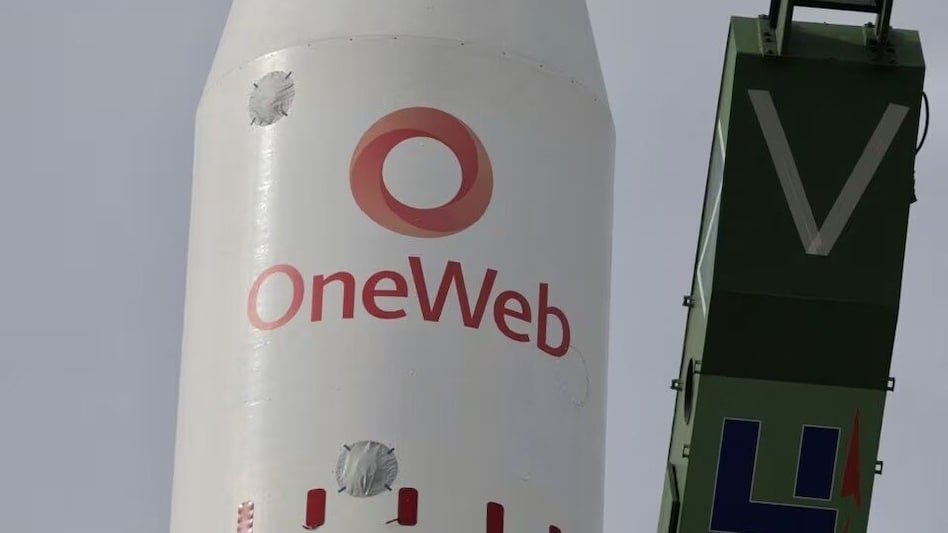
BT EXCLUSIVE | India not unique in satellite licensing process; compliance rules apply globally, says Eutelsat OneWeb's Neha Idnani
Eutelsat OneWeb has addressed concerns regarding India's satellite communications licensing process, asserting that the regulatory challenges faced by low-Earth-orbit satellite operators are not exclusive to the country. In an interview during the India Mobile Congress in New Delhi, Neha Idnani, the Asia-Pacific head at Eutelsat OneWeb, emphasized that nations worldwide are establishing regulatory frameworks for a relatively new technology. Idnani noted, "When we ventured into the realm of low Earth orbit or non-geostationary satellites, we encountered similar challenges across various nations including Thailand, Malaysia, Korea, and Taiwan." Her remarks come in the wake of intensified scrutiny of India's satellite communications environment, following comments from SpaceX founder Elon Musk, who suggested that the regulatory landscape may favor certain players in the market. Highlighting the significance of telecommunications infrastructure, Idnani stated that governments globally have imposed compliance obligations on satellite operators. "Adhering to local laws is crucial," she explained. She acknowledged that while the licensing process can be lengthy, it is a common experience across multiple countries. Eutelsat OneWeb has actively collaborated with Indian authorities to meet the regulatory and security standards required for launching satellite services. "We have fulfilled compliance requirements and continue to work closely with government agencies to meet these necessary standards for operating in such an infrastructure," Idnani mentioned. She also stressed that satellite communications should supplement existing terrestrial networks rather than replace them. "We see satellite technology as a means to enhance connectivity in remote areas and provide essential communications during emergencies when traditional infrastructures fail," she added. The company's strategy in India focuses on forming business-to-business partnerships, with telecom operators expected to play a pivotal role in delivering services to end-users. Addressing concerns about Starlink's ambitions, Idnani reassured that there is no reason for alarm over market dominance by a single operator. "India and Asia should be confident; we represent over half of the global population and are leaders in innovation and technology," she asserted. Drawing parallels with the telecom industry, Idnani noted that multiple operators with various business models will coexist. "In any country, there are typically three to four operators that thrive together in different niches. There’s no reason to fear competition; we should embrace it," she concluded. As India's satellite communications sector approaches commercial launch, operators anticipate final decisions on spectrum pricing and allocation before large-scale service deployment begins.
realme P4x 5G vs vivo Y31t 5G: Which Smartphone Offers the Best Bang for Your Buck?
When it comes to choosing between the realme P4x 5G and the vivo Y31t 5G, potential buyers are faced with distinct advan...
Business Today | Nov 24, 2026, 01:50
Mathematicians React to Controversial Joke Over Lengthy Proof of Riemann Hypothesis
Tensions are rising in the mathematical community following a controversial comment made by Levent Alpöge, a researcher ...
Business Insider | Nov 24, 2026, 17:30Instagram Integrates AI Assistant Muse for Enhanced User Experience
In a significant move, Meta has announced the integration of its AI assistant, Muse, directly into Instagram's direct me...
TechCrunch | Nov 24, 2026, 17:25
Revolutionizing Cybersecurity: AI's Role in Modern Threat Detection and Defense
As businesses increasingly embrace digital transformation and artificial intelligence, the complexity of cybersecurity t...
Business Today | Nov 24, 2026, 08:30
UK Government Sounds Alarm on Surge of AI-Enhanced Cyber Threats
The United Kingdom's cybersecurity agency has reported a significant increase in cyberattacks driven by artificial intel...
TechCrunch | Nov 24, 2026, 18:30