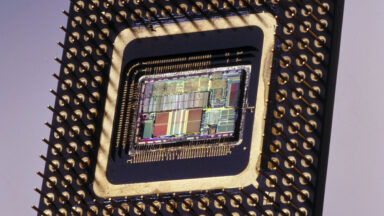
Linux kernel maintainers are following through on removing Intel 486 support
The expansive Linux ecosystem is renowned for its extensive hardware compatibility, spanning from vintage 1990s PC components to the latest Arm-based Apple Silicon. This remarkable support is the result of years of collaboration between hardware manufacturers and dedicated community contributors. However, change is on the horizon as Linux maintainers, including prominent figure Linus Torvalds, have set the stage for the discontinuation of support for Intel’s 80486 processor. Originally launched in 1989 and succeeded by the Intel Pentium in 1993, the 486 processor was officially phased out in 2007. Recent code commits indicate that Linux kernel version 7.1 will mark the definitive end of support for this aging chip. Following this release, users will be unable to build a version of the kernel compatible with the 486, with subsequent versions expected to eliminate 486-related code entirely. Despite the 486's long-standing presence in computing history, maintaining support for such outdated hardware within modern software incurs costs. Ingo Molnar, a Linux kernel contributor, highlighted this issue in his initial patch aimed at removing 486 support. He stated that the complexity of hardware emulation for ancient 32-bit CPUs, which are rarely utilized with contemporary kernels, can lead to unnecessary complications. Molnar emphasized that resolving these compatibility issues diverts valuable development time that could be better spent on more pressing matters. Linus Torvalds echoed this sentiment in 2022, suggesting that there was no substantial justification for developers to expend time on 486-related challenges. The removal of support for the 486 processor is also likely to impact a few other compatible chips from different manufacturers, such as the Cyrix 5×86 and AMD’s Am5x86. This decision follows a previous instance where Linux dropped support for the Intel 80386 processor family in kernel version 3.8 back in early 2013, a move that Molnar was instrumental in advocating.
Navigating the AI Landscape: Insights from a Former OpenAI Intern
As the demand for expertise in artificial intelligence surges, many are seeking ways to break into this dynamic field. H...
Business Insider | Jul 26, 2026, 10:10Reclaiming Control: Librarians Host Workshops to Help People Navigate AI Tools
In a lively library setting in South Philadelphia, Charlie Bailey, a local librarian, humorously noted, "Everybody’s on ...
TechCrunch | Jul 25, 2026, 16:20
The Elusive Phineas Fisher: The Hacktivist Who Took Down Spyware Giants
In the realm of cybersecurity, few figures are as intriguing as Phineas Fisher, a hacker who has evaded capture for near...
TechCrunch | Jul 25, 2026, 21:00
Revolutionizing Startup Living: Inside London's Unique Lift House
In East London, a group of six young entrepreneurs is redefining the concept of collaborative living for tech founders. ...
TechCrunch | Jul 26, 2026, 17:10
The Rise of AI Distillation: A Controversial Technique Sparks Debate in Tech and Government
In recent discussions, a once-obscure topic in artificial intelligence has surged to the forefront of debates among tech...
CNBC | Jul 25, 2026, 12:15