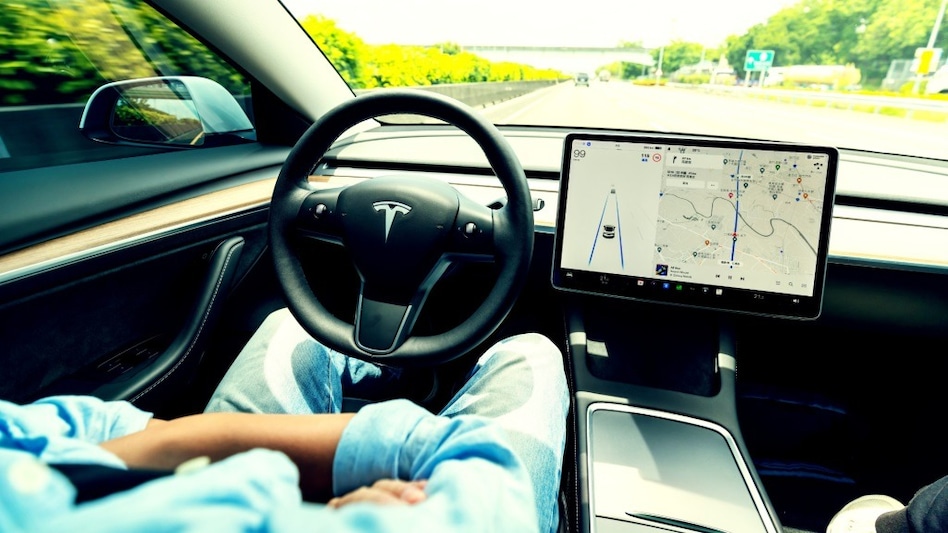
‘Necessity is the...’: Musk praises Tesla AI leap enabling 8-bit chips to deliver 32-bit intelligence
Elon Musk has once again made headlines with his bold assertions about Tesla's technological advancements. Recently, he took to X to share his thoughts, stating, "Necessity is the mother of invention," while praising the company's AI team as "epicly hardcore" and unparalleled in the realm of real-world artificial intelligence. This statement came in response to a viral claim that Tesla had discovered a 'mathematical cheat code' enabling low-cost 8-bit chips to perform tasks typically reserved for more robust 32-bit processors. At the core of this excitement is a newly leaked Tesla patent that reveals how the company is tackling a significant challenge within modern AI hardware: the quest to find the right balance between precision, power consumption, and affordability. The key to Tesla's Full Self-Driving (FSD) system and the Optimus humanoid robot lies in advanced AI models known as Transformers. These models utilize a technique called Rotary Positional Encoding (RoPE), which is crucial for spatial awareness—essential for tasks such as remembering a stop sign or ensuring a robot maintains balance while carrying shifting loads. However, RoPE calculations traditionally require 32-bit floating-point precision, which can be power-hungry, generate excess heat, and necessitate costly silicon components. Attempting to perform these calculations on efficient 8-bit hardware often leads to rounding errors that can severely impair perception and control. The innovative solution proposed in Tesla's patent is the "Mixed-Precision Bridge." This system allows low-energy 8-bit hardware to execute calculations that would otherwise need 32-bit precision. Instead of processing high-precision calculations across the entire chip, Tesla converts essential positional values into a logarithmic format. This method enables compressed data to traverse narrow, energy-efficient pathways without losing critical information. To enhance efficiency, the system utilizes pre-computed lookup tables for these logarithms, maintaining data stability as it moves through the chip. After the low-precision hardware completes its computations, a high-precision arithmetic unit reconstructs the original values using optimized mathematical methods, achieving near-32-bit accuracy while consuming significantly less power. This precision is particularly vital for what is known as "long-context" memory. Previous autonomous systems often lost track of objects once they went out of sight. In contrast, Tesla’s approach allows its AI to maintain an intricate world model for up to 30 seconds, effectively keeping objects 'pinned' to their precise 3D coordinates, even when temporarily out of view. Additionally, Tesla is optimizing the AI’s working memory by storing positional data in logarithmic format and employing paged memory techniques, which reportedly reduces memory usage by half while enabling the system to track many more objects simultaneously. The patent goes even further, detailing hardware-level support for sparse data, which conserves energy by excluding empty spaces in calculations, and logarithmic techniques for audio processing. This allows the system to detect sounds like sirens and potential collisions across a wide volume spectrum using low-precision hardware. Crucially, Tesla combines this hardware innovation with quantisation-aware training, preparing its neural networks to work effectively within 8-bit constraints right from the start, thus avoiding the accuracy pitfalls associated with later compression of high-precision models. Overall, the "Mixed-Precision Bridge" represents more than just a technical enhancement; it signifies a potential leap forward for Tesla's next-generation AI5 chip, which is anticipated to provide substantial performance improvements without being hindered by issues related to memory bandwidth or thermal constraints. For the Optimus robot, which operates on a much smaller battery compared to an electric vehicle, this innovation could mean the difference between a few hours of use and an entire work shift. Furthermore, the patent suggests a broader strategy aimed at reducing reliance on GPU ecosystems such as NVIDIA’s CUDA, allowing collaboration with multiple foundry partners and eventually bringing high-end AI capabilities to smaller, edge-based devices. This vision could enable powerful AI perception and reasoning to function locally—in vehicles, robots, or even consumer electronics—without a constant need for cloud data centers.
The Shift in Human Cognition: Embracing AI as a Collaborative Tool
As technology continues to evolve, a notable shift is occurring in the relationship between humans and artificial intell...
Business Insider | Jul 25, 2026, 09:50Market Turbulence: Four Key Factors Impacting Stocks This Week
This past week has been challenging for the stock market, driven by several significant forces that have created turbule...
CNBC | Jul 25, 2026, 20:05
The Aluminum Foil Trend: A DIY Shield Against Wireless Identity Theft
Have you noticed an unusual trend where people are wrapping their wallets in aluminum foil? This peculiar practice has e...
Business Today | Jul 25, 2026, 02:45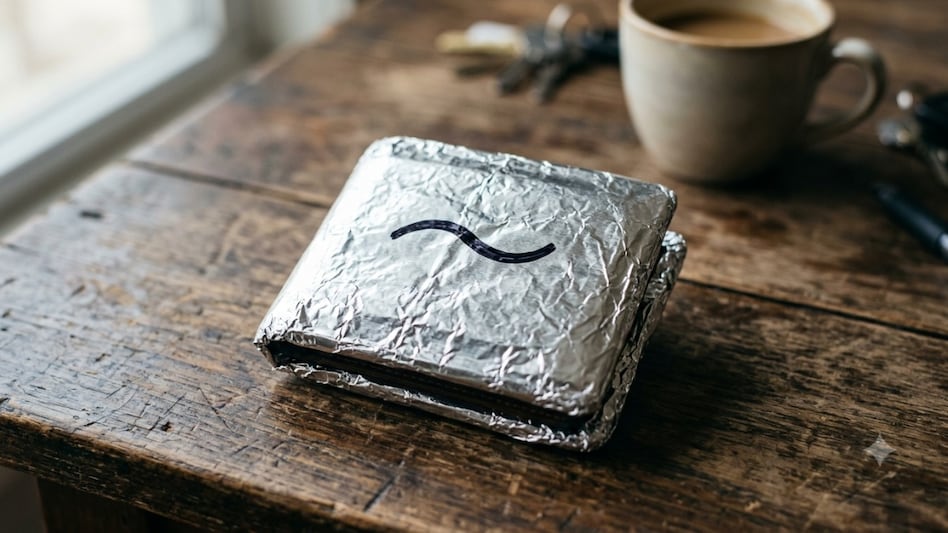
The Boring Company Eyes $4 Billion Funding Boost Amid Expanding Tunnel Ventures
Elon Musk's tunneling enterprise, The Boring Company, is reportedly negotiating a substantial funding round of $4 billio...
TechCrunch | Jul 25, 2026, 19:50
Warner Bros. Takes Legal Action Against Amazon Over Executive Poaching Allegations
Warner Bros. Discovery has initiated legal proceedings against Amazon, accusing the tech giant of unlawful interference ...
TechCrunch | Jul 25, 2026, 21:25