China's DeepSeek launches next-gen AI model. Here's what makes it different
Chinese startup DeepSeek has stirred excitement in the tech community with the launch of its latest experimental AI model, DeepSeek-V3.2-Exp. This new iteration aims to boost efficiency and significantly reduce operational costs while enhancing the AI's ability to process vast amounts of information. Last year, DeepSeek made headlines with its unexpected release of the R1 model, showcasing the potential to train large language models (LLMs) swiftly, even on less powerful hardware. The new model builds on its predecessor, DeepSeek-V3.1-Terminus, and emphasizes efficiency, cost-effectiveness, and open-source collaboration, as highlighted by Adina Yakefu, the Chinese community lead at Hugging Face. A standout feature of DeepSeek-V3.2 is the introduction of DeepSeek Sparse Attention (DSA), which enhances the AI's capability to manage lengthy documents and conversations. This innovative feature reportedly reduces the operational costs of running the AI by half compared to earlier versions. Nick Patience, vice president at The Futurum Group, noted that this advancement will make the model both faster and more affordable, thus broadening access for developers, researchers, and smaller enterprises. The potential for groundbreaking applications is significant. The sparse attention mechanism employed in the model allows it to focus solely on relevant data, thereby optimizing decision-making processes. For instance, when determining the best flight route, the AI can efficiently filter out less viable options, conserving time and resources. While this approach enhances efficiency, some experts express concerns regarding the reliability of such models. Ekaterina Almasque, cofounder of BlankPage Capital, cautioned that this method may overlook critical nuances, raising questions about the effectiveness of the AI's decision-making capabilities. DeepSeek maintains that the experimental model matches the performance of its predecessor, V3.1-Terminus. Despite ongoing discussions about a potential tech bubble, AI technology remains a central focus in the competitive landscape between the U.S. and China. Notably, DeepSeek's models are designed to operate seamlessly with domestic AI chips, facilitating local deployment without additional configuration. In line with its open-source philosophy, DeepSeek has made the programming code and necessary tools available, encouraging further innovation within the community. However, Almasque pointed out that the nature of this open-source approach could limit DeepSeek's ability to protect its technology. As the company continues to evolve, it acknowledges that V3.2-Exp is a stepping stone toward a more advanced architecture. The emphasis on efficiency as a core value proposition highlights the changing landscape of AI, where cost-effectiveness is becoming increasingly vital alongside raw computational power. Yakefu concluded that consumers will gravitate toward solutions that are economical, reliable, and effective.
ClickHouse Achieves $250 Million Revenue Milestone, Eyes IPO
ClickHouse, a prominent database provider, has announced a remarkable achievement, surpassing a $250 million annualized ...
TechCrunch | May 27, 2026, 19:15
Astronomers Uncover Early Supermassive Black Hole in the Expanding Universe
The James Webb Space Telescope (JWST) has opened a window to the nascent stages of the Universe, revealing the extraordi...
Ars Technica | May 27, 2026, 18:40
Nvidia's Bold Investment Plans Position Taiwan at the Heart of AI Innovation
In a significant announcement, Nvidia's CEO Jensen Huang declared that the company will invest a staggering $150 billion...
Ars Technica | May 27, 2026, 20:00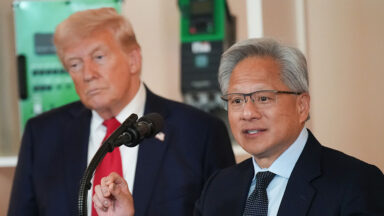
Silicon Valley's Tokenmaxxing Debate: A Double-Edged Sword for AI Adoption
The discussions surrounding tokenmaxxing in Silicon Valley have intensified significantly. Recently, Uber's COO, Andrew ...
Business Insider | May 27, 2026, 19:40Roku's Bold Redesign: A New Home for Ads on Your Screen
Roku has announced a significant update to its smart TV operating system, marking the first major change in a decade. Th...
Ars Technica | May 27, 2026, 19:26