
Nuclear startup Deep Fission says it’s going public, again, and I have questions
Nuclear startup Deep Fission is making headlines once again with its announcement of a new public offering, aiming to attract investor interest for the development of underground reactors intended to power artificial intelligence data centers. This situation may feel familiar, as Deep Fission previously claimed to have gone public last September through a reverse merger with Surfside Acquisition, a Delaware-based shell company. That transaction raised $30 million through a private placement at $3 per share, but it appears that the initial public listing was more of a formality than a reality. Despite being classified as a reporting company with obligations to the SEC following the merger, Deep Fission's stock did not trade publicly as expected. The company had planned to list on the OTCQB, a market for companies not meeting the requirements of larger exchanges like the NYSE or Nasdaq. However, searches for Deep Fission on OTCQB yield no results, and the company later confirmed in its S-1 filing that its stock had indeed never been publicly traded. Now, with its new Nasdaq IPO, Deep Fission is pursuing a more conventional route and seeks to raise $157 million, valuing the company at as much as $1.66 billion. This ambitious figure comes as a surprise, especially considering that just a year ago, the startup struggled to secure a $15 million funding round. However, the company’s financial outlook appears to have deteriorated, with its latest S-1 revealing a more somber picture than its previous filings. The timeline for launching its first reactor has also been pushed back, with the company previously aiming for criticality by July 2026 but now withholding an estimated date. Deep Fission is currently drilling a test well to gather data at depths of up to 6,000 feet, but the well's diameter is significantly smaller than what will be necessary for commercial operations. The transition from testing to full-scale production presents considerable challenges that the company must navigate. Despite receiving an $80 million equity investment, including $20 million from data center developer Blue Owl, the company still faces a “going concern” warning in its S-1. This indicates that if the IPO does not go through, Deep Fission could exhaust its finances within a year. As of March, the company’s financial deficit had escalated to $88.1 million, a stark rise from $56.2 million just months prior. While there are indications that investor excitement around nuclear fission technology may be influencing Deep Fission's push for an IPO, the company’s lack of progress in technology and regulatory approvals raises questions about the sustainability of its valuation. Unlike peers such as X-energy, which recently entered the public market and is generating revenue, Deep Fission’s path forward remains clouded and uncertain, leaving many to speculate on its future viability in the competitive nuclear sector.
Kalshi Challenges Netflix Over Controversial Documentary Trailer
Kalshi, the prediction market platform, has taken significant legal steps against Netflix, sending a cease-and-desist le...
TechCrunch | Jul 25, 2026, 17:10
The Aluminum Foil Trend: A DIY Shield Against Wireless Identity Theft
Have you noticed an unusual trend where people are wrapping their wallets in aluminum foil? This peculiar practice has e...
Business Today | Jul 25, 2026, 02:45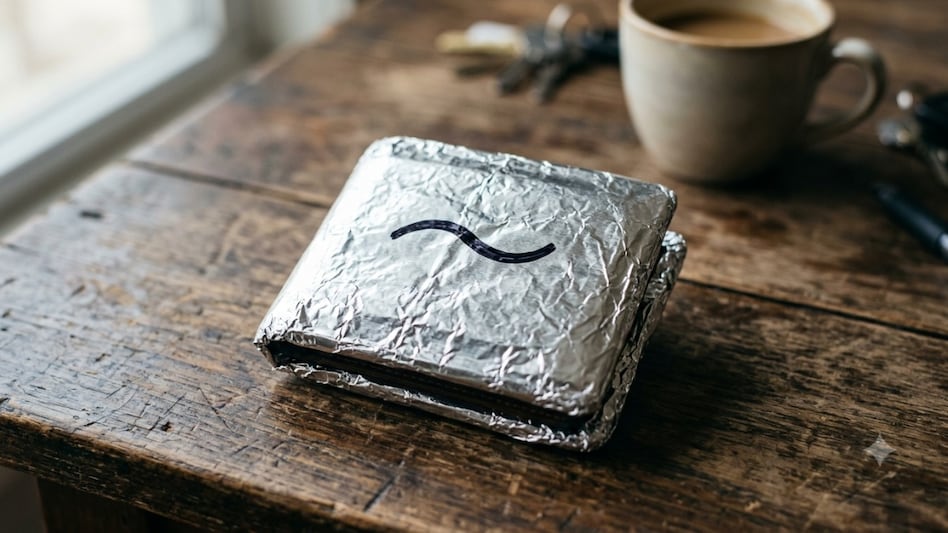
AI Transformations Lead to Major Job Cuts at Tech Giants
Monday.com, the innovative work management platform based in Tel Aviv, has recently announced significant layoffs, attri...
TechCrunch | Jul 26, 2026, 01:45
Unlocking the Secrets of Quantum Gravity: Can AI Help Physics Make a Leap?
The realm of scientific research is undergoing a profound transformation, fueled by the rapid advancements in artificial...
Business Today | Jul 25, 2026, 24:30
The Boring Company Eyes $4 Billion Funding Boost Amid Expanding Tunnel Ventures
Elon Musk's tunneling enterprise, The Boring Company, is reportedly negotiating a substantial funding round of $4 billio...
TechCrunch | Jul 25, 2026, 19:50