
Trump Adviser David Sacks Says China Adept at Evading Chip Curbs
In a recent interview with Bloomberg Television, David Sacks, the White House's advisor on cryptocurrency and artificial intelligence, expressed significant concerns regarding China's ability to circumvent U.S. export controls. He stated that China is now only two years behind the United States in semiconductor design, raising alarms about the rapid advancement of companies like Huawei Technologies Co. Sacks noted that the development of DeepSeek’s innovative AI model earlier this year has shifted perceptions about China's technological capabilities, revealing that they might only lag months behind rather than years. Sacks emphasized that these developments underline the need for the U.S. to maintain pressure on China in the ongoing competition for technological supremacy, particularly in AI. The tension surrounding export controls has become a contentious issue in U.S.-China trade discussions, with Beijing pushing back against American restrictions on advanced technologies, while the U.S. remains vigilant over China's control of critical mineral sales. Critically, Sacks criticized the Biden administration's recent AI diffusion rule, which was repealed by the Trump administration last month. He advocated for a more sophisticated approach to chip export controls, asserting that U.S. allies are prepared to adhere to security protocols while collaborating with American tech firms. He remarked, "The leading American semiconductor should not go to China, but we have export controls on that. I don’t think that we need a new globalized regime on every single GPU transaction to achieve the objective." Sacks also warned that overly stringent U.S. restrictions could inadvertently benefit Huawei and similar companies by steering nations toward Chinese technology. “If we are overly restrictive in terms of U.S. sales to the world, I think that there will be a time where we kick ourselves and say, ‘All of a sudden Huawei is everywhere when we used to have the market to ourselves. Why didn’t we take advantage of that and lock it in?’” he cautioned. In a separate development, Sacks welcomed the Senate's recent approval of stablecoin legislation, which he believes will provide regulatory clarity for the sector and encourage traditional financial institutions to adopt digital currencies. The next step lies with House lawmakers, who must decide whether to pursue the Senate's version of the bill or negotiate an alternative solution.
Tech Industry Unites Against DOD's Controversial Labeling of Anthropic
A coalition of hundreds of tech professionals has come together to voice their opposition to the Department of Defense's...
TechCrunch | Mar 02, 2026, 17:50
Anthropic's Claude Faces Performance Hiccups While Dominating App Store Rankings
On Monday, Anthropic's Claude AI models experienced notable performance issues, marked by what the company described as ...
CNBC | Mar 02, 2026, 15:35
Apple Unveils Next-Gen iPad Air Featuring M4 Chip, Starting at ₹64,900
In an exciting announcement just days before its anticipated launch event, Apple has introduced two highly awaited devic...
Business Today | Mar 02, 2026, 15:45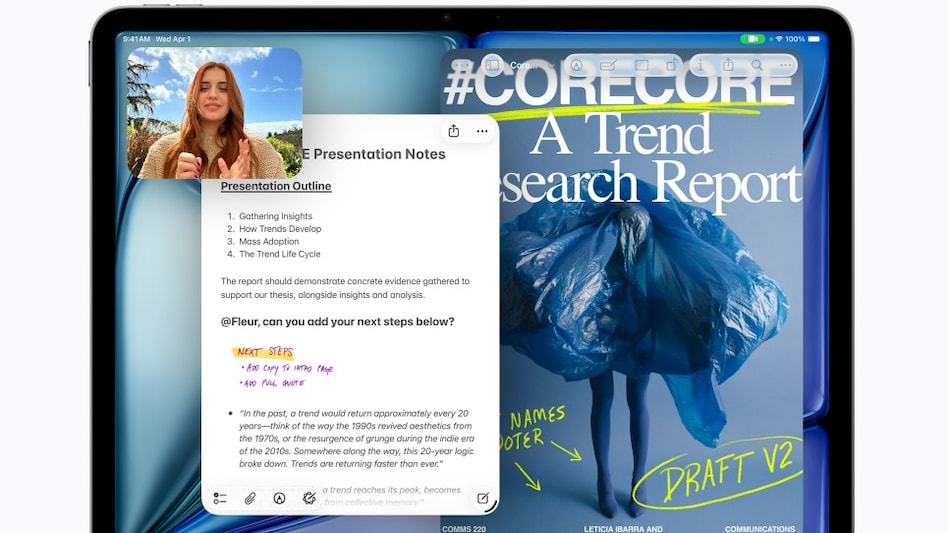
Revolutionizing Customer Support: How 14.ai is Disrupting the Industry with AI
The landscape of customer service is undergoing a significant transformation, largely influenced by advancements in arti...
TechCrunch | Mar 02, 2026, 15:45
A Solar Revolution: Morning-Opening Panels Harness the Sun's Energy
Imagine a solar panel that opens up like a flower each morning, ready to capture the sun's energy. This innovative techn...
CNN | Mar 02, 2026, 17:10