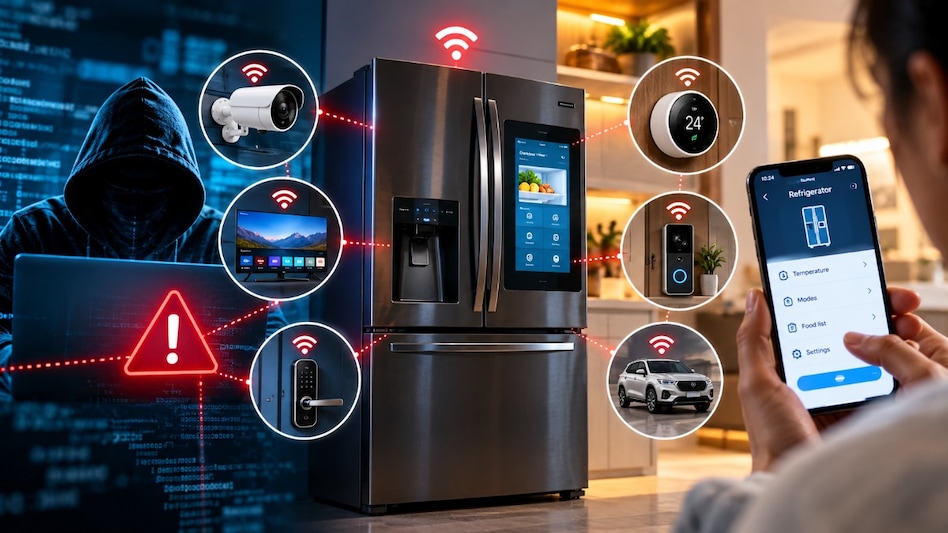
Can hackers take control of your smart fridge? France attack highlights risks of connected devices
Your internet-connected refrigerator might keep your food fresh, but it also opens the door to significant cybersecurity threats. A recent cyberattack targeting refrigeration systems in numerous French supermarkets has revealed the potential dangers of digital vulnerabilities. Attackers successfully activated defrost cycles remotely, resulting in dangerously high temperatures and spoiled food. While the incident primarily involved commercial refrigeration units rather than household smart fridges, it raises alarming questions about the safety of all devices that can be monitored or controlled online. Smart TVs, security cameras, video doorbells, locks, and thermostats are all susceptible to similar risks. A compromised device can disrupt its own functionality and potentially grant attackers access to other systems on the same network. Smart refrigerators, which connect to Wi-Fi and cloud services for remote management, depend on various security measures such as regular software updates, robust authentication methods, and secure remote access protocols. According to reports, the French attack impacted approximately 350 supermarkets, with refrigeration temperatures reportedly soaring to 50 degrees Celsius. Investigators are currently looking into the incident, with outdated software identified as a significant vulnerability in several affected systems. This alarming event underscores the importance of maintaining connected devices with the latest updates and security patches. The risks extend well beyond refrigerators; in 2015, researchers exposed vulnerabilities in a Samsung smart fridge that allowed it to intercept internet traffic. That same year, a remote hack of a Jeep's entertainment system led to the recall of around 1.4 million vehicles. More recently, flaws in certain Kia models were discovered, enabling attackers to track, unlock, and start vehicles using just a license plate number, a vulnerability that was subsequently addressed by the manufacturer. Routers, which link multiple devices, represent another critical target for cyberattacks, accounting for over three-quarters of attacks on connected devices, according to security industry data. However, the source of this statistic remains unspecified. To safeguard consumer Internet of Things (IoT) devices, India's Telecommunication Engineering Centre has issued guidance emphasizing the need for software and firmware updates, changing default passwords, utilizing strong and unique credentials, securing Wi-Fi routers, and enabling two-factor authentication wherever possible. When selecting connected appliances, it's also advisable to check for the duration of security updates provided by manufacturers. While connected devices can simplify daily tasks, their security cannot be overlooked. Regularly updating devices and securing the networks they connect to can significantly diminish the likelihood of cyberattacks.
Investing in the Future: Solar and Battery Solutions for AI Data Centers
The challenge of powering AI data centers has emerged as a pivotal issue in the current technological landscape. Over th...
TechCrunch | Nov 24, 2026, 16:25
Amazon's $7.5 Billion Acquisition of Decart: A Strategic Move in the AI Chip Landscape
In a significant development for the tech industry, Amazon has announced its acquisition of Decart, a startup specializi...
TechCrunch | Nov 24, 2026, 15:55
Figma Engineer Files Lawsuit Claiming Workplace Harassment and Retaliation
A former engineer at Figma has initiated legal action against the design software firm and its CEO, Dylan Field, citing ...
TechCrunch | Nov 23, 2026, 23:15
Tidal Takes Bold Step Against AI Music Flood, Set to Remove Millions of Tracks
In a decisive move to combat the overwhelming influx of AI-generated music, Tidal announced on Tuesday its plans to ban ...
TechCrunch | Nov 24, 2026, 17:10
Nvidia's Leadership Shakeup: CFO Excluded from CEO Reinstatement Talks
Nvidia's chief financial officer, Colette Kress, who had a brief stint as interim CEO, was reportedly not included in se...
Business Today | Nov 24, 2026, 15:15