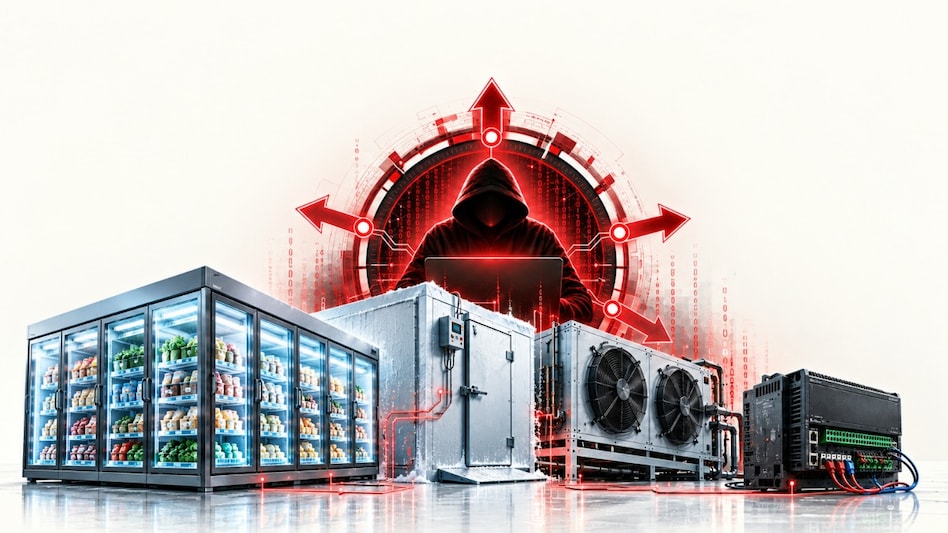
Supermarket freezers hacked in European countries: Could India’s smart refrigeration systems be next?
Recent cyberattacks targeting supermarket refrigeration systems across several European nations have raised serious concerns about the vulnerability of connected cooling technologies. These incidents have highlighted a disturbing trend where attackers accessed cooling controls, leading to dangerously high temperatures and resulting in significant food spoilage. Such disruptions go beyond mere data breaches, inflicting financial loss on retailers and raising questions about the security of similar systems globally. Reports indicate that supermarkets in countries including Sweden, Belgium, Luxembourg, and Ireland have been compromised. Notably, both IKEA and various grocery chains like ICA and Coop in Sweden, Carrefour in Belgium, and Musgrave in Ireland reported significant temperature management failures. One alarming incident occurred at an ICA franchise in Stockholm, where freezers reached temperatures as high as 50 degrees Celsius. This series of events followed a prior attack in France, where hackers manipulated cooling systems at numerous supermarkets, leading to similar food spoilage and even fires. The situation is further complicated by investigations into freezer malfunctions at U.S. military grocery stores, with the Pentagon looking into potential cyber links. In Arizona, for example, freezers switched to defrost mode, causing food to spoil—though the exact cause remains undetermined. As these incidents unfold, concerns are being raised about the security of India's own connected refrigeration systems. While there are currently no reports linking Indian supermarkets to similar cyberattacks, the potential risks posed by remotely monitored refrigeration equipment cannot be overlooked. If these systems are not properly secured against unauthorized access, they could become targets for cyber threats. In response to these growing concerns, India's Telecommunication Engineering Centre has released guidelines aimed at improving the security of Internet of Things (IoT) devices, including remote monitoring systems. These guidelines advocate for secure communication, regular software updates, and robust access controls. Although these measures are not specific to refrigeration technology, they underline the critical need for enhanced cybersecurity practices across all connected devices used in business environments. The emerging pattern of attacks on commercial cooling systems serves as a stark reminder that while household smart appliances may not be directly at risk, the infrastructure supporting business operations must be fortified against potential cyber intrusions.
Supertake Secures $20 Million to Revolutionize AI-Driven Investment Portfolios
Supertake, an innovative AI investing startup, is on a mission to transform how individuals engage with the stock market...
TechCrunch | Nov 23, 2026, 22:10
Pinterest Empowers Parents with New Controls Over AI Content for Teens
This week, Pinterest unveiled an enhancement to its parental controls, introducing a feature that allows parents to regu...
TechCrunch | Nov 24, 2026, 16:25
Nvidia's CEO Jensen Huang Returns Amid Scandal and Government Intervention
In a surprising turn of events, Nvidia's board has reinstated Jensen Huang as CEO and president just two weeks after his...
TechCrunch | Nov 24, 2026, 13:45
Revolutionizing Cybersecurity: AI's Role in Modern Threat Detection and Defense
As businesses increasingly embrace digital transformation and artificial intelligence, the complexity of cybersecurity t...
Business Today | Nov 24, 2026, 08:30
Staggering Recovery Rates Highlight Digital Payment Fraud Challenges
The battle against digital payment fraud continues to be an uphill struggle for consumers, with official data revealing ...
Business Today | Nov 24, 2026, 09:30