
There aren’t enough rockets for space data centers. Cowboy Space raised $275 million to build them.
The growing appetite for AI computing power has led entrepreneurs in the data center sector to consider the possibilities of space. However, a significant hurdle remains: the scarcity and high cost of rockets available for launching data centers into orbit. Many in the industry are pinning their hopes on SpaceX's Starship, which is set to conduct its twelfth test flight soon. Yet, even when operational, it may take years before the vehicle is available for commercial use, due to SpaceX's focus on its internal satellite initiatives. Similarly, Blue Origin's New Glenn rocket has faced setbacks, including a failure to deploy a satellite during its third launch earlier this year. This leaves aspiring space data center projects, such as Google's Suncatcher, eyeing a launch date in the mid-2030s. Others, like Starcloud, are starting with edge processing tasks for space sensors. In an ambitious move, Cowboy Space Corporation has announced plans to develop its own rocket program. CEO Baiju Bhatt revealed to TechCrunch that the company anticipates its first launch by the end of 2028, following a successful $275 million Series B funding round, which values the company at $2 billion. The investment came from notable firms including Index Ventures, Breakthrough Energy Ventures, Construct Capital, IVP, and SAIC. Bhatt, a co-founder of the popular trading platform Robinhood, originally launched this startup in 2024 under the name Aetherflux, intending to harness solar energy in space and transmit it back to Earth. However, the vision for space data centers prompted a strategic pivot toward utilizing energy generated in orbit, which in turn led to the need for developing an in-house rocket. Bhatt has explored various launch providers to find a feasible path focused solely on satellite construction but found the current capacity insufficient to support a viable orbital data center business model that could compete with terrestrial options. He expressed concerns about the limited number of rockets expected to be available in the coming years, stating that many providers are likely to specialize their launches for their own payloads. While the decision to develop a rocket internally is bold, it is fraught with challenges. Currently, only a few private companies, such as SpaceX and Rocket Lab, consistently launch commercial rockets, while others, including Blue Origin and United Launch Alliance, have faced ongoing developmental delays. Additionally, numerous startups, including Stoke Space and Firefly Aerospace, are still striving to bring their systems to operational status. This new direction will position Cowboy Space directly against established players like SpaceX and Blue Origin. Bhatt believes the potential of the market is substantial enough to accommodate multiple successful entrants. He noted the escalating demand for AI capabilities and the increasing limitations of options available on Earth. One of Cowboy Space’s unique selling propositions is its focused approach to data centers, aiming to integrate them directly into the second stage of their rockets. This concept harks back to the early days of space exploration when the first US satellite, Explorer 1, was essentially the final stage of a rocket equipped with scientific instruments. The company estimates that each satellite will weigh between 20,000 and 25,000 kilograms and will deliver approximately 1 MW of power to nearly 800 onboard GPUs. This configuration indicates that their rocket will be slightly more powerful than SpaceX’s Falcon 9, albeit smaller than the upcoming Starship. Eventually, Bhatt envisions a reusable booster design. To support its ambitious goals, Cowboy Space has recruited experienced professionals from the aerospace sector, including former Blue Origin propulsion engineer Warren Lamont and ex-SpaceX launch director Tyler Grinne. The startup is also set to develop its own rocket engine, which is a critical component of any launch system. Currently, Cowboy Space is addressing essential development requirements, including the facilities necessary for testing, manufacturing, and launching its rockets. With this new vision and a fresh name, the company is committed to its mission of powering humanity from the high frontier, with Bhatt humorously noting that it gives him a reason to don a cowboy hat and grow a distinctive mustache.
Unlocking the Secrets of Quantum Gravity: Can AI Help Physics Make a Leap?
The realm of scientific research is undergoing a profound transformation, fueled by the rapid advancements in artificial...
Business Today | Jul 25, 2026, 24:30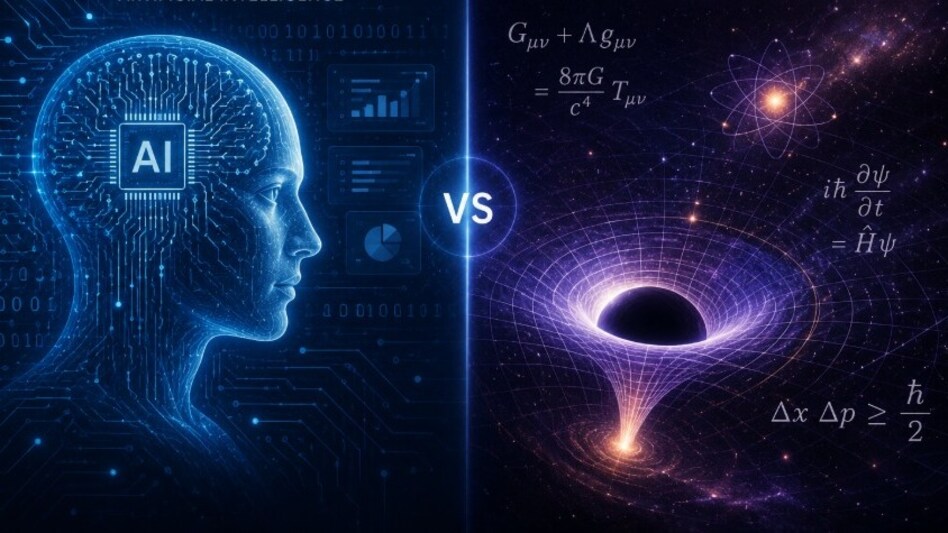
Kalshi Challenges Netflix Over Controversial Documentary Trailer
Kalshi, the prediction market platform, has taken significant legal steps against Netflix, sending a cease-and-desist le...
TechCrunch | Jul 25, 2026, 17:10
Finland Unveils World's Largest Sand Battery to Tackle Renewable Energy Challenges
In a groundbreaking move to address the critical issue of renewable energy intermittency, a small town in southern Finla...
CNBC | Jul 25, 2026, 05:35
The Boring Company Eyes $4 Billion Funding Boost Amid Expanding Tunnel Ventures
Elon Musk's tunneling enterprise, The Boring Company, is reportedly negotiating a substantial funding round of $4 billio...
TechCrunch | Jul 25, 2026, 19:50
The Elusive Phineas Fisher: The Hacktivist Who Took Down Spyware Giants
In the realm of cybersecurity, few figures are as intriguing as Phineas Fisher, a hacker who has evaded capture for near...
TechCrunch | Jul 25, 2026, 21:00