A federal judge sides with Anthropic in lawsuit over training AI on books without authors’ permission
In a landmark ruling, Federal Judge William Alsup has determined that Anthropic, an artificial intelligence company, is permitted to train its AI models on published books without needing permission from the authors. This decision represents a significant moment in the ongoing debate over the intersection of AI development and copyright law, affirming the stance that the fair use doctrine can protect AI firms when utilizing copyrighted materials. The implications of this ruling are profound, especially for authors, artists, and publishers who have initiated numerous lawsuits against major tech entities, including OpenAI, Meta, and Google. While this verdict does not guarantee that other judges will echo Judge Alsup’s interpretation, it establishes a potential precedent that favors technology companies at the expense of creative rights. The legal disputes surrounding fair use are complex, often hinging on the specific circumstances of each case. Fair use considerations include the purpose of the use, whether it is for commercial gain, and the transformative nature of the resulting work. Prior to this ruling, the outcome of similar cases remained uncertain, with companies like Meta also advocating for fair use in their defense. In the particular case of Bartz v. Anthropic, the plaintiff authors raised concerns about how Anthropic obtained and stored their works. They claimed that the company aimed to build a comprehensive "central library" of all published texts, with allegations that many of these books were illegally downloaded from piracy websites. Although the judge ruled in favor of Anthropic's training practices under fair use, the court has ordered a trial to further examine the implications of the alleged piracy related to the central library. Judge Alsup stated, "We will have a trial on the pirated copies used to create Anthropic’s central library and the resulting damages." He emphasized that while Anthropic's later acquisition of a legitimate copy of a book does not erase the liability for prior theft, it could influence the calculation of statutory damages in the case.
Introducing the iPhone 17e: Apple’s Budget Powerhouse with Advanced AI Features
On Monday, Apple introduced its latest budget-friendly smartphone, the iPhone 17e, priced at $599. Set to hit the market...
TechCrunch | Mar 02, 2026, 15:20
Apple Unveils the iPhone 17e: A Budget-Friendly Powerhouse
Apple has officially launched its latest budget-friendly smartphone, the iPhone 17e, in India, just days ahead of its an...
Business Today | Mar 02, 2026, 15:00
Chatbot Showdown: What You Gain and Lose When Switching
The landscape of chatbot technology is rapidly evolving, and users are finding themselves at a crossroads. Recent defect...
Business Insider | Mar 02, 2026, 16:50Apple Unveils Next-Gen iPad Air Featuring M4 Chip, Starting at ₹64,900
In an exciting announcement just days before its anticipated launch event, Apple has introduced two highly awaited devic...
Business Today | Mar 02, 2026, 15:45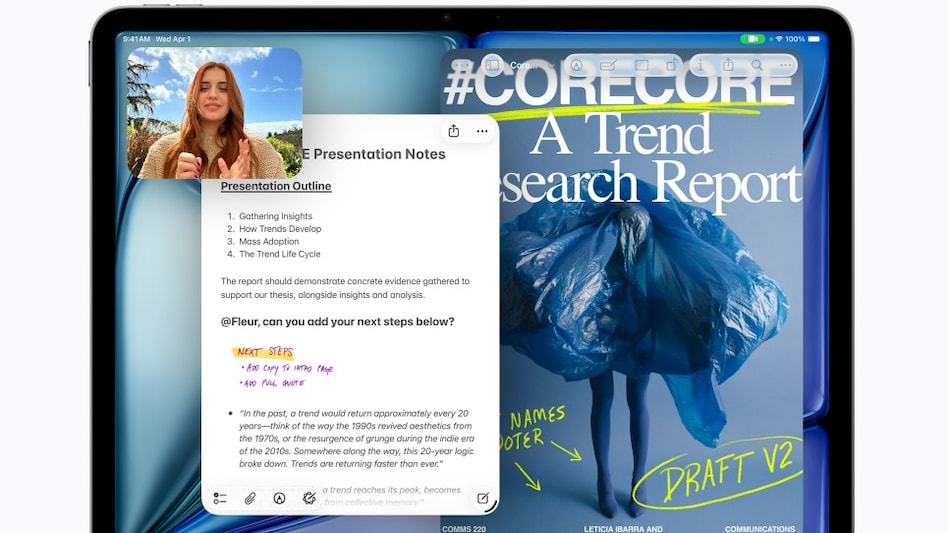
Charter Gains FCC Approval for Cox Acquisition, Set to Become Largest ISP in the U.S.
Charter Communications, known for its Spectrum cable services, has secured approval from the Federal Communications Comm...
Ars Technica | Mar 02, 2026, 18:20