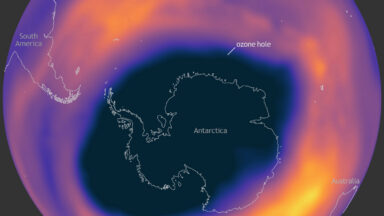
Ozone damage could have been detected decades earlier
The global ban on substances that deplete the ozone layer is widely viewed as a successful environmental initiative that helped reverse the growth of the ozone hole. However, a recent study raises a provocative question: Could this environmental crisis have been identified even earlier with modern scientific advancements? Chlorofluorocarbons (CFCs), the chemicals notorious for their role in ozone depletion, were first recognized for their detrimental effects in 1974. Following that revelation, measures to ban these substances were swiftly implemented, largely in response to the alarming evidence presented by the seasonal ozone hole observed over Antarctica in 1985. By 1987, the Montreal Protocol was established, leading to a global phase-out of CFCs. Research spearheaded by Jian Guan at MIT now suggests that earlier detection of ozone-depleting substances might have been feasible. CFCs began entering the market in the 1950s, but they were not the first culprits. The industrial solvent carbon tetrachloride, which had been in use for decades prior, may have also contributed significantly to ozone depletion. Historical data indicates that in 1950, carbon tetrachloride levels were approximately three to four times higher than those of initial CFC concentrations. While this chemical did pose a risk to the ozone layer, assessing its impact was complex due to the natural variation in ozone levels caused by several factors. The formation of ozone (O3) is influenced by sunlight interacting with oxygen (O2), and it is affected by the 11-year solar cycle and volcanic eruptions, both of which can disrupt chemical balances in the atmosphere. Additionally, since ozone levels can fluctuate at different altitudes, a simple measurement of total ozone might obscure significant depletion trends occurring at specific heights. This exploration into the past sheds light on the importance of utilizing advanced scientific tools to potentially avert future environmental crises. The findings could inform ongoing discussions about how best to monitor and protect our planet's vital atmospheric layers.
Alibaba Prohibits Use of Anthropic AI Amid Security Concerns
Alibaba, the prominent Chinese e-commerce company, has announced a ban on the use of Anthropic's AI tools by its employe...
CNBC | Jul 06, 2026, 20:55
Microsoft Restructures Xbox Division, Laying Off Thousands as Gaming Strategy Shifts
In a significant restructuring move, Microsoft has announced plans to eliminate 4,800 jobs, which represents approximate...
Business Today | Jul 07, 2026, 05:00
Siri Gets Personal: New iOS 27 Beta Allows Voice Customization
Apple has rolled out an exciting feature in the latest iOS 27 developer beta, allowing users to tailor Siri's speaking s...
TechCrunch | Jul 06, 2026, 19:20
Unveiling the ASUS ExpertBook Ultra (2026): A Revolutionary Blend of Style and Power for Professionals
For years, business laptops have been synonymous with practicality and sturdiness but have lacked excitement in design. ...
Business Today | Jul 07, 2026, 07:45
Protect Your Privacy: How to Opt Out of Google’s AI Data Training
In a significant shift to its privacy policies, Google has updated its settings, allowing the company to collect and sto...
TechCrunch | Jul 06, 2026, 17:15