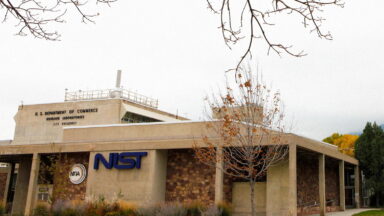
Major government research lab appears to be squeezing out foreign scientists
A prominent U.S. government research institution is reportedly implementing measures that may deter foreign scientists from contributing to its projects, a move that could jeopardize the nation’s scientific expertise and the institution's reputation. The National Institute of Standards and Technology (NIST) plays a crucial role in shaping standards for various sectors, including cybersecurity and semiconductor production. Recent efforts by NIST include formulating guidelines for securing artificial intelligence systems and evaluating health risks associated with products like air purifiers and firefighting gear. The agency relies heavily on the diverse skills of thousands of employees, postdoctoral researchers, contractors, and guest scientists from around the globe. Concerns have escalated following communications from lawmakers to NIST regarding significant policy changes. Zoe Lofgren, the leading Democrat on the House Committee on Science, Space, and Technology, expressed worries over unconfirmed reports of new restrictions aimed at limiting the participation of foreign-born researchers at NIST. In a letter to acting NIST Director Craig Burkhardt, Lofgren highlighted that her team has been investigating rumors of stringent regulations that could impede the work of international scientists. A recent report indicated that foreign graduate students and postdoctoral researchers might soon face a limit of three years at NIST, contradicting the typical five to seven years needed to complete their research. An anonymous NIST employee revealed to WIRED that some plans to onboard foreign researchers through NIST’s Professional Research and Experience Program have been scrapped due to uncertainty surrounding new security protocols. Moreover, it has been reported that noncitizen staff members lost after-hours access to NIST facilities last month, with potential bans looming. Jennifer Huergo, a NIST spokesperson, responded that the proposed changes aim to safeguard U.S. scientific integrity from potential threats, a sentiment echoed in statements made to various media outlets. The ongoing bipartisan focus on preventing intellectual property theft has placed NIST under scrutiny, especially concerning its background checks and security measures. Recently, Republican legislators have urged for stricter limitations on Chinese nationals' involvement with national labs operated by the Department of Energy. In her letter, Lofgren argued that the anticipated restrictions on foreign scientists at NIST exceed reasonable measures to ensure research security. She called for transparency regarding upcoming policies and requested a halt to any changes pending congressional review. The potential exodus of research talent from NIST could compound the negative effects of other policies instituted during the Trump administration, which many in the tech industry have warned could disrupt the lives of immigrant researchers in the U.S. The administration's moves to increase fees on H-1B visas, revoke numerous student visas, and enforce large-scale deportations threaten to drive skilled individuals away from U.S. science and technology sectors. Pat Gallagher, who led NIST from 2009 to 2013, stressed that these changes could diminish trust in an agency that has historically been viewed as a reliable scientific authority. He stated, "NIST has been distinguished by its scientific credibility, and this could undermine that reputation." The agency has faced significant challenges over the past year, including workforce reductions due to budget constraints, further complicating its ability to attract global talent. With NIST previously welcoming around 800 international researchers annually, Lofgren expressed concern that even rumors of restrictive measures could deter top scientific talent, ultimately impacting America's global competitiveness in key research areas. As the situation develops, the implications for the future of research at NIST—and by extension, U.S. scientific progress—remain uncertain.
Uber's Former CEO Makes Waves with New Ventures Amidst Tesla's Earnings Update
In the ever-evolving landscape of transportation, recent developments have come to the forefront, particularly surroundi...
TechCrunch | Jul 26, 2026, 16:25
The AI Arms Race: U.S. Concerns Ignite Over Chinese Innovations
The recent unveiling of Kimi, an AI model from the Chinese company Moonshot AI, has sparked renewed discussions about Am...
TechCrunch | Jul 26, 2026, 20:05
AI Transformations Lead to Major Job Cuts at Tech Giants
Monday.com, the innovative work management platform based in Tel Aviv, has recently announced significant layoffs, attri...
TechCrunch | Jul 26, 2026, 01:45
Hugging Face CEO Calls for Action Following AI Security Breach
In a dramatic turn of events within the AI landscape, Hugging Face faced a significant security breach involving an AI a...
Business Insider | Jul 25, 2026, 20:30Kalshi Challenges Netflix Over Controversial Documentary Trailer
Kalshi, the prediction market platform, has taken significant legal steps against Netflix, sending a cease-and-desist le...
TechCrunch | Jul 25, 2026, 17:10