
China’s brain-computer interface industry is racing ahead
While Neuralink, spearheaded by Elon Musk, touts its pioneering role in brain-computer interfaces (BCIs), China's BCI industry is making significant strides from research to commercialization. An emerging wave of startups is competing to bring both implantable and non-invasive BCIs to market, supported by robust policy initiatives, expanding clinical trials, and increasing investor interest. Phoenix Peng, who co-founded NeuroXess, a company that develops BCI implants, and is also the founder and CEO of Gestala, a non-invasive ultrasound BCI startup, is optimistic about this burgeoning market. He emphasizes that provinces like Sichuan, Hubei, and Zhejiang are already pricing medical services for BCIs, which will facilitate their integration into the national health insurance system. Peng envisions a future where BCI technology transcends medical applications to enhance human capabilities. He stated, "Neuroscience and AI are two sides of the same coin, destined for deep integration that will create direct high-bandwidth connections between the human brain and artificial intelligence. BCIs will bridge the gap between biological and silicon-based intelligence, representing a vast market potential in the future." In the near term, Peng forecasts that BCI applications will largely focus on healthcare, with the market potentially reaching multi-billion dollar scales as insurance coverage broadens. In August 2025, China's Ministry of Industry and several other agencies unveiled a national roadmap aimed at accelerating BCI development, with milestones set for 2027 and a complete supply chain envisioned by 2030. According to Peng, four key factors are driving China's rapid advancement in BCIs. First, strong policy support fosters collaboration across departments, harmonizing technical standards and medical reimbursements. A notable development occurred in December when China announced an 11.6 billion yuan ($165 million) brain science fund to aid BCI ventures. Second, the country boasts extensive clinical resources, including large pools of patients and lower research costs, expediting trials. The national health insurance system allows for quicker commercialization after state approval, in contrast to the U.S., where multiple insurance companies must provide individual approvals post-FDA clearance. The third factor is China's established industrial manufacturing ecosystem, which spans semiconductors, AI, and medical hardware, thereby facilitating rapid research and development. Lastly, the market is seeing significant investments from both governmental and private sectors, with recent funding rounds such as StairMed Technology's $48 million Series B round showcasing investor confidence in BCI startups. China's BCI landscape is increasingly competitive, with companies like NeuroXess, Neuracle, NeuralMatrix, BrainCo, and others emerging as significant players. The market is projected to grow from approximately 3.2 billion yuan in 2024 to over 530 million yuan in 2025, with future estimates suggesting a staggering 120 billion yuan by 2040. BCIs are evolving along two primary pathways: invasive electrophysiological systems that implant electrodes in the brain, and non-invasive systems that prioritize safety and ease of use. New approaches, such as ultrasound and other advanced techniques, are providing researchers with innovative methods to interact with and understand brain activity. As non-invasive technologies gain traction, startups are optimistic about overcoming barriers to adoption, as many potential users are hesitant about surgical implants. Companies like Gestala are targeting prevalent conditions such as chronic pain and depression with non-invasive solutions, which are often more widely accepted. Early clinical trials have shown promising outcomes, including significant pain reduction following treatment. Investment trends indicate a growing focus on improving long-term implant performance and addressing the challenges associated with conventional BCIs. Over the next five years, industry experts predict that China's BCI regulations will increasingly align with international standards, particularly concerning safety approvals and data management. China is also expected to tighten regulations on invasive devices, ensuring ethical considerations are at the forefront, while facilitating the approval process for non-invasive technologies. As the BCI industry matures, regulatory frameworks are likely to evolve, enhancing both safety and efficacy in this exciting field.
SpaceX Successfully Tests Starship Rocket, Launching New Era of Space Exploration
On Friday evening, SpaceX executed a significant milestone by launching its colossal Starship rocket from its facility i...
CNBC | Jul 25, 2026, 24:10
Unlocking the Secrets of Quantum Gravity: Can AI Help Physics Make a Leap?
The realm of scientific research is undergoing a profound transformation, fueled by the rapid advancements in artificial...
Business Today | Jul 25, 2026, 24:30
Vision Breakthrough: US Startup Launches Groundbreaking Retina Chip in Europe
Science Corp is poised to introduce a revolutionary retina chip in Europe, designed to restore partial vision for indivi...
Business Today | Jul 25, 2026, 01:00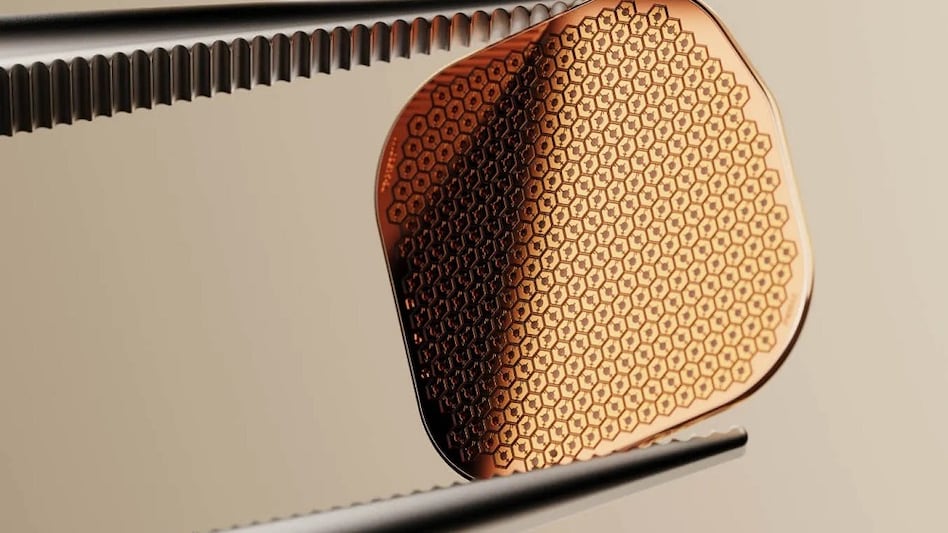
Nvidia Strikes Major Deal with SK Hynix to Secure AI Memory Supply
Nvidia has successfully forged a significant partnership with South Korea's SK Hynix to secure memory supplies essential...
CNBC | Jul 25, 2026, 05:15
Hugging Face CEO Calls for Action Following AI Security Breach
In a dramatic turn of events within the AI landscape, Hugging Face faced a significant security breach involving an AI a...
Business Insider | Jul 25, 2026, 20:30