
This is how far Nvidia's Chinese rivals are in the race to develop homegrown AI chips
In a remarkable turn of events, shares of MetaX Integrated Circuits skyrocketed by 700% during its debut on the Shanghai stock market this Wednesday. Just two weeks prior, Moore Threads experienced a staggering 400% jump on its first trading day. These companies are the latest entrants in the burgeoning Chinese AI chip sector, drawing significant investor interest as China accelerates its efforts to develop indigenous semiconductors and challenge Nvidia's market leadership amidst U.S. export restrictions. Both MetaX and Moore Threads are focused on creating graphics processing units (GPUs), the crucial type of chip also produced by Nvidia that powers advanced AI applications. According to Eugene Hsiao, an equity analyst at Macquarie, this investor enthusiasm is fueled by the belief that China is on a path to achieving self-sufficiency in semiconductor technology, particularly as tensions with the U.S. escalate. The U.S. government has restricted the sale of Nvidia's most sophisticated chips to China, with reports suggesting that plans are in motion to further limit access to these processors. While President Trump had previously eased some export controls on certain Nvidia products, regulatory actions are now aimed at reducing reliance on foreign technology in the AI sector. Despite the challenges, including stringent export controls affecting parts of the supply chain, China's AI chipmakers, which include tech giants like Huawei, Alibaba, and Baidu, are making notable progress. Huawei is developing its Ascend series of chips, with a new model, the Ascend 950, slated for release in 2026. Although previous Ascend models have not matched Nvidia's performance on a chip-by-chip basis, Huawei has successfully created high-performance clusters by interlinking multiple processors. This innovative approach leverages high-speed data connections, allowing it to compete effectively without relying solely on top-tier chips. Baidu, China's leading search engine, is actively investing in AI and holds a majority stake in the chip designer Kunlunxin. The company recently announced a five-year plan for its Kunlun AI chip development, with new processors expected to launch in 2026 and 2027. Utilizing a mix of self-developed chips and Nvidia products in its data centers, Baidu aims to establish itself as a comprehensive provider in the AI ecosystem. Analysts from Deutsche Bank highlighted Kunlunxin as a prominent homegrown AI chip developer, noted for its focus on high-performance chips for training large language models and supporting cloud computing and enterprise workloads. Meanwhile, JPMorgan has identified Kunlun as well-positioned to cater to China's growing demand for local chip solutions. E-commerce titan Alibaba, often likened to Amazon, began its journey into AI chip development in the late 2010s and is currently working on a new chip tailored for inference tasks. Reports of significant customer interest have positively impacted Alibaba's stock, with its self-developed chips contributing to revenue growth in its cloud segment. Cambricon, another player in this space, is witnessing unprecedented growth, with a reported revenue increase of over 4,000% year-on-year, reaching approximately 2.88 billion yuan ($402.7 million) in the first half of 2025. Investment experts view Cambricon as a potential frontrunner in China’s AI accelerator market, which is still emerging compared to the U.S. MetaX's impressive IPO raised nearly $600 million, further solidifying its presence in the AI chip arena. Founded in 2020 by a former Nvidia executive, Moore Threads is preparing to unveil its latest GPU architecture at an upcoming developer conference in Beijing, aiming to enhance its research and development efforts in AI chip technology. In addition, Enflame, a company founded by former AMD staff in 2018, is focused on designing chips for AI training in data centers, while Biren Technology, established in 2019, is making strides in high-performance GPU design and has received approval for an IPO from Chinese regulators.
Nvidia's Jensen Huang Addresses Employees Amid Controversy and Personal Growth
In a recent company-wide meeting, Nvidia CEO Jensen Huang expressed his remorse to employees following a tumultuous peri...
CNN | Nov 24, 2026, 20:05
Maple Secures $5.3 Million to Revolutionize Data Privacy in AI
As artificial intelligence becomes increasingly capable of accessing sensitive information such as files, emails, and ca...
TechCrunch | Nov 24, 2026, 21:30
LinkedIn CEO Highlights Gen Z's Potential Edge in AI-Driven Job Market
As the job landscape becomes increasingly challenging for young professionals, LinkedIn's CEO, Daniel Shapero, suggests ...
Business Today | Nov 25, 2026, 24:25
Nvidia's Jensen Huang Opens Up About Personal Struggles and Commitment to Improvement
In a heartfelt address to Nvidia employees, Jensen Huang revealed that he has been attending daily therapy sessions as h...
Business Today | Nov 25, 2026, 02:10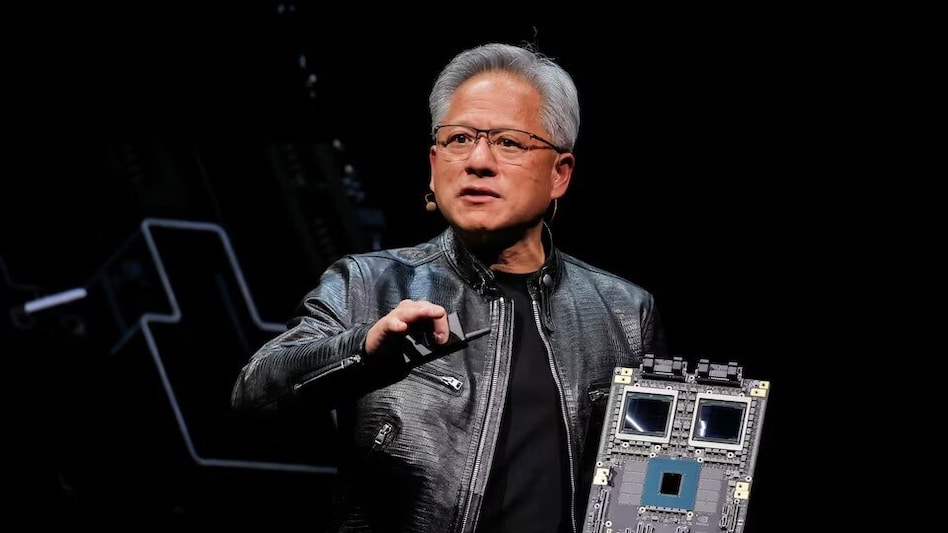
AI Assistants Struggle to Handle Everyday Tasks, New Research Reveals
In recent months, AI firms have been promoting personal AI agents as solutions to alleviate the mundane aspects of daily...
TechCrunch | Nov 24, 2026, 21:45