China jumps ahead in the race to achieve a new kind of reuse in space
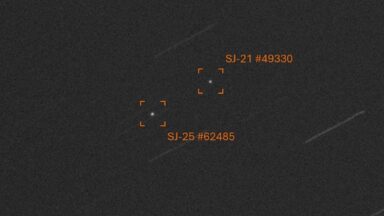
In a groundbreaking achievement, two Chinese satellites have successfully made contact at an altitude exceeding 20,000 miles above Earth, marking a significant step in the realm of orbital refueling. The Shijian-21 and Shijian-25 satellites, often referred to as SJ-21 and SJ-25, are believed to have docked in geosynchronous orbit last week, as confirmed by civilian satellite trackers analyzing open-source imagery. This remarkable event saw the two satellites merge into a singular entity, a feat that has caught the attention of global observers. While Chinese officials have not provided recent updates on the specific activities of these satellites, prior announcements have shed light on their missions. SJ-25, which was launched in January, focuses on verifying technologies related to satellite fuel replenishment and extending operational life, as outlined by the Shanghai Academy of Spaceflight Technology, the organization responsible for its development. Meanwhile, SJ-21, which launched in 2021, previously demonstrated its capabilities by docking with a defunct Beidou navigation satellite, towing it for disposal, and returning to its original orbit—a demonstration aimed at mitigating space debris. The technologies involved in such operations have both civilian and military implications. The ability to dock and potentially refuel in geosynchronous orbit raises concerns about China's capability to approach and incapacitate foreign satellites. Concurrently, the US Space Force has expressed interest in orbital refueling to enhance the longevity of its military satellites, which often face limitations due to fuel constraints. This initiative, referred to as dynamic space operations, is gaining traction, although some military officials remain doubtful about its practical benefits. Looking ahead, the Space Force has partnered with Astroscale to conduct its first refueling of a military asset in orbit, projected for next year. However, with the recent docking of SJ-21 and SJ-25, it appears that China may be on the verge of outpacing the US in this arena. Observing closely, two US Space Force inspector satellites, known as GSSAP, have positioned themselves nearby to monitor the ongoing developments involving SJ-21 and SJ-25.
Navigating the New Reality: A Graduate's Struggle in the Age of AI
Recently, I received an eye-opening email from Kiran Maya Sheikh, a computer science graduate from the University of Cal...
Business Insider | Mar 13, 2026, 18:00Travis Kalanick Unveils Atoms: A New Venture in Robotics
Travis Kalanick, the founder of Uber, has officially launched his latest enterprise, Atoms, which is set to focus on rob...
TechCrunch | Mar 13, 2026, 19:40
AI Industry's Tumultuous Journey: Key Developments of 2023
As the year unfolds, the landscape of the AI industry has been marked by pivotal moments that are reshaping our understa...
TechCrunch | Mar 13, 2026, 20:15
New Wave of Supply-Chain Attacks: Invisible Code Targets GitHub and More
Cybersecurity experts have uncovered a sophisticated supply-chain attack that is inundating code repositories, including...
Ars Technica | Mar 13, 2026, 20:25
Travis Kalanick Launches New Self-Driving Venture with Uber's Support
Travis Kalanick is reportedly embarking on a new venture focused on self-driving vehicles, with substantial support from...
TechCrunch | Mar 13, 2026, 19:10